PNAS paper explains the structural basis of tirzepatide's dual agonism
Researchers published cryo-EM structures showing how tirzepatide (Mounjaro/Zepbound) grips the GIP and GLP-1 receptors differently, a lab finding that may help explain its dual-hormone effects.
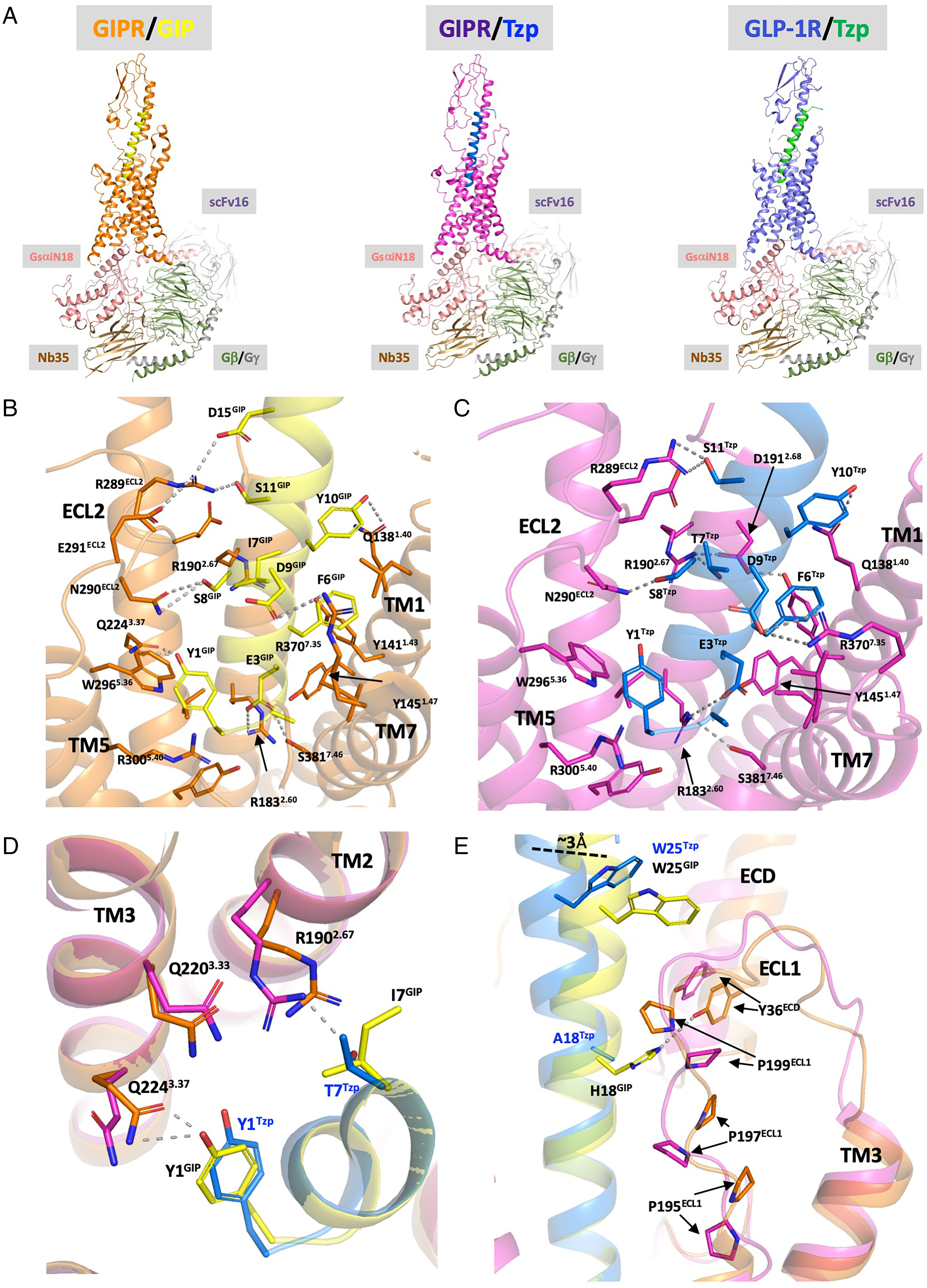
A team led by researchers working with Brian Kobilka's group published structures in PNAS showing, at near-atomic detail, how tirzepatide switches on two different gut hormone receptors. The work helps explain why the drug behaves almost like the natural GIP hormone at one receptor while acting quite differently from GLP-1 at the other [1].
Tirzepatide is a 39-amino-acid peptide that activates both the glucose-dependent insulinotropic polypeptide receptor (GIPR) and the glucagon-like peptide-1 receptor (GLP-1R) [1]. At the time of publication, the paper describes it as an investigational agent that had outperformed selective GLP-1 receptor agonists in type 2 diabetes trials [1].
What the researchers found
Using cryogenic electron microscopy, the group solved three structures: the GIP receptor bound to native GIP at 3.2-angstrom resolution, the GIP receptor bound to tirzepatide at 3.1 angstroms, and the GLP-1 receptor bound to tirzepatide at 2.9 angstroms [1]. Residues 1 through 32 of both GIP and tirzepatide were resolved [1]. The GLP-1 receptor–tirzepatide structure was deposited in the Protein Data Bank as entry 7RGP, with the associated map as EMD-24453 [2].
In both receptors, tirzepatide forms a helix whose N-terminal end reaches deep into the receptor's transmembrane core [1]. At the GIP receptor, that binding closely mirrors how natural GIP binds, with some extra contacts: a threonine at position 7 of tirzepatide (an isoleucine in GIP) hydrogen bonds with Arg190 of the receptor, and the N-terminal tyrosine points toward Arg190 and Gln220, with the map suggesting water-mediated interactions [1]. The authors write that these extra contacts "may foster higher affinity and potency properties at the GIPR" [1].
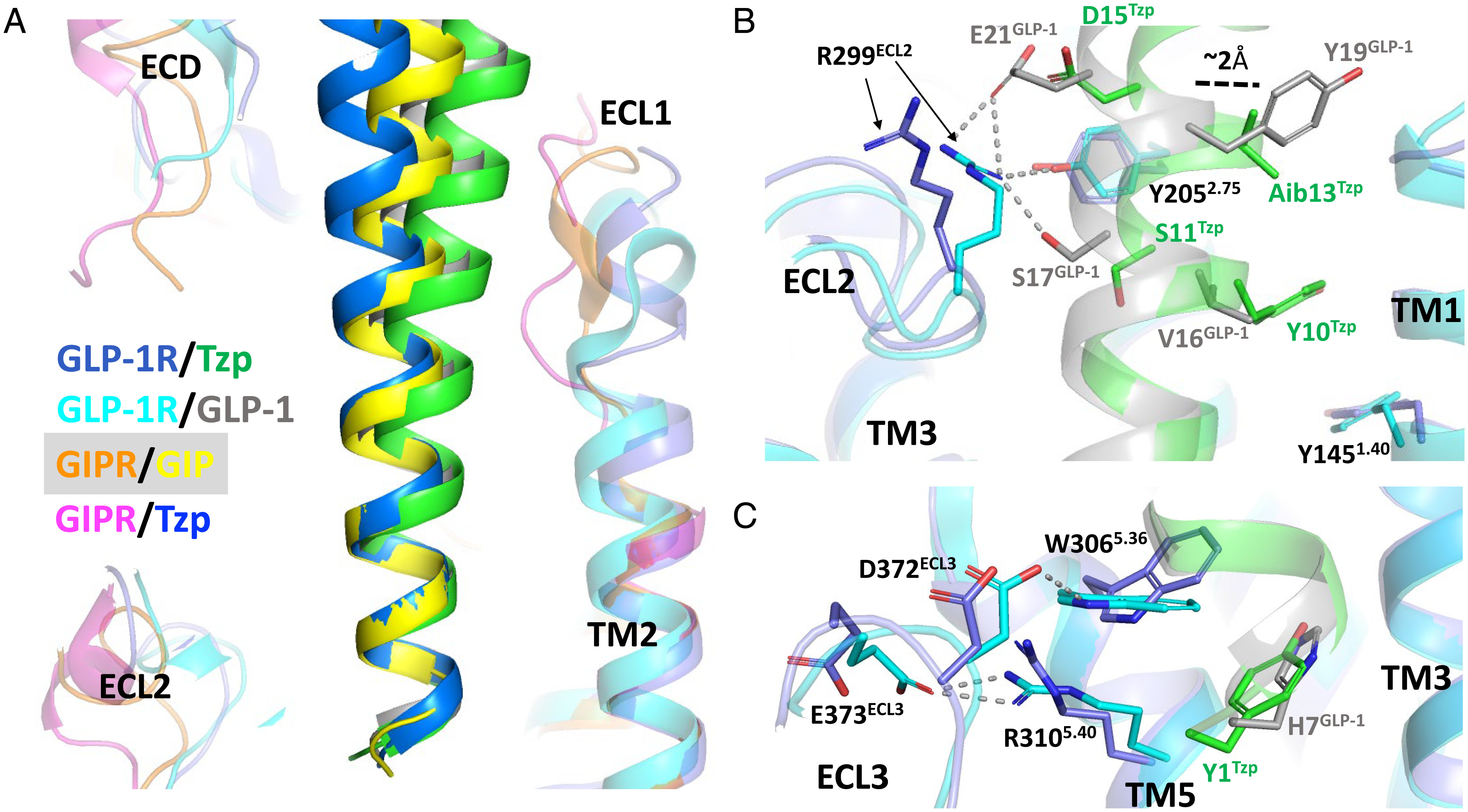
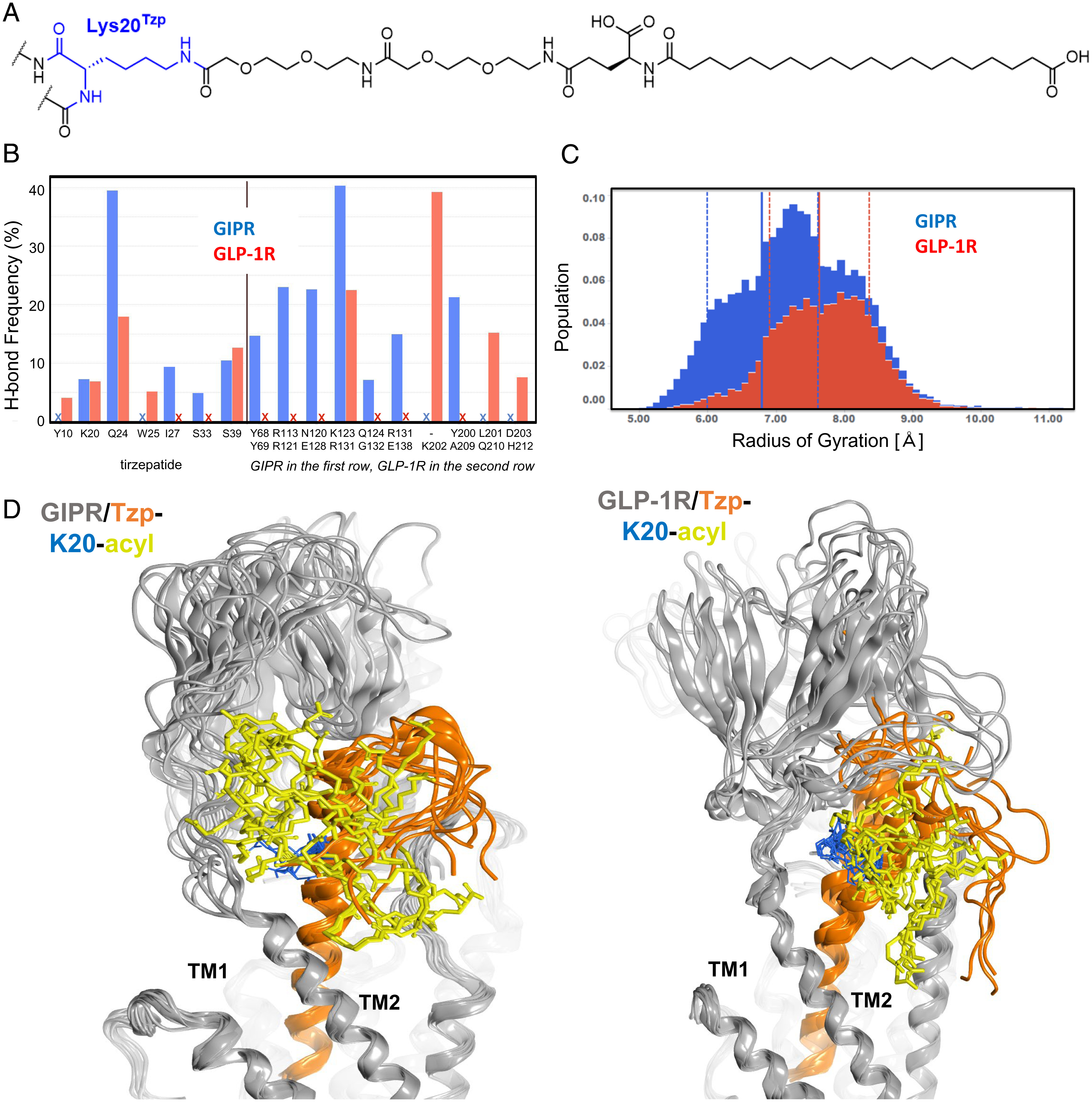
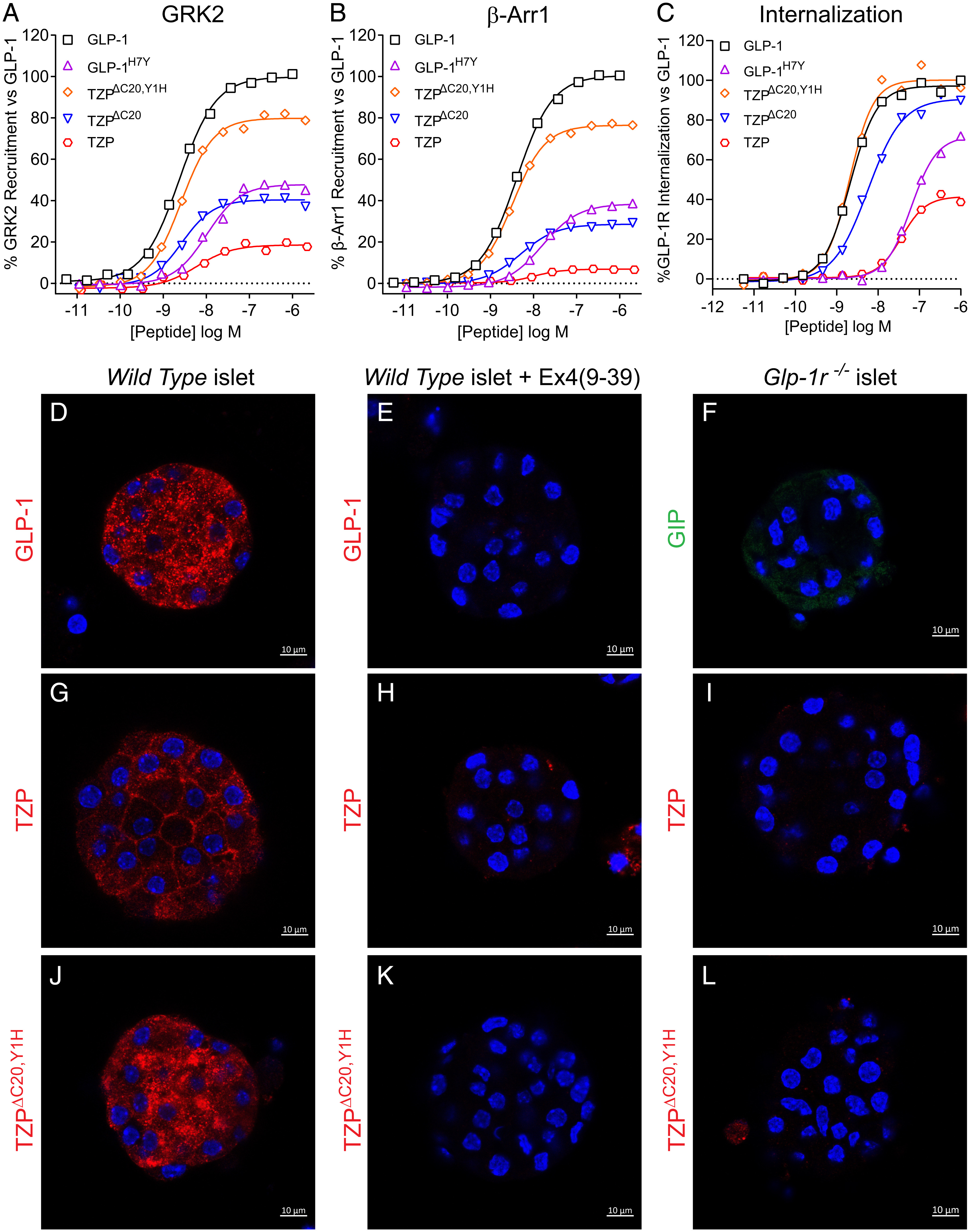
At the GLP-1 receptor, the picture differs. The N-terminal tyrosine makes only a weak interaction [1]. Molecular dynamics simulations indicated more frequent intermittent hydrogen bonding between tirzepatide's fatty acid portion and the GIP receptor than the GLP-1 receptor, consistent with a more compact tirzepatide–GIPR complex [1]. The authors conclude that strong binding to the GLP-1 receptor's extracellular domain, combined with reduced stability from the tyrosine and the lipid, produce biased signaling and reduced receptor desensitization [1].
That lipid is not incidental. Tirzepatide is attached through a lysine near the middle of the peptide to a C20 fatty diacid via a hydrophilic linker [1]. This modification lets the drug bind reversibly to human serum albumin, which supports once-weekly dosing [1].
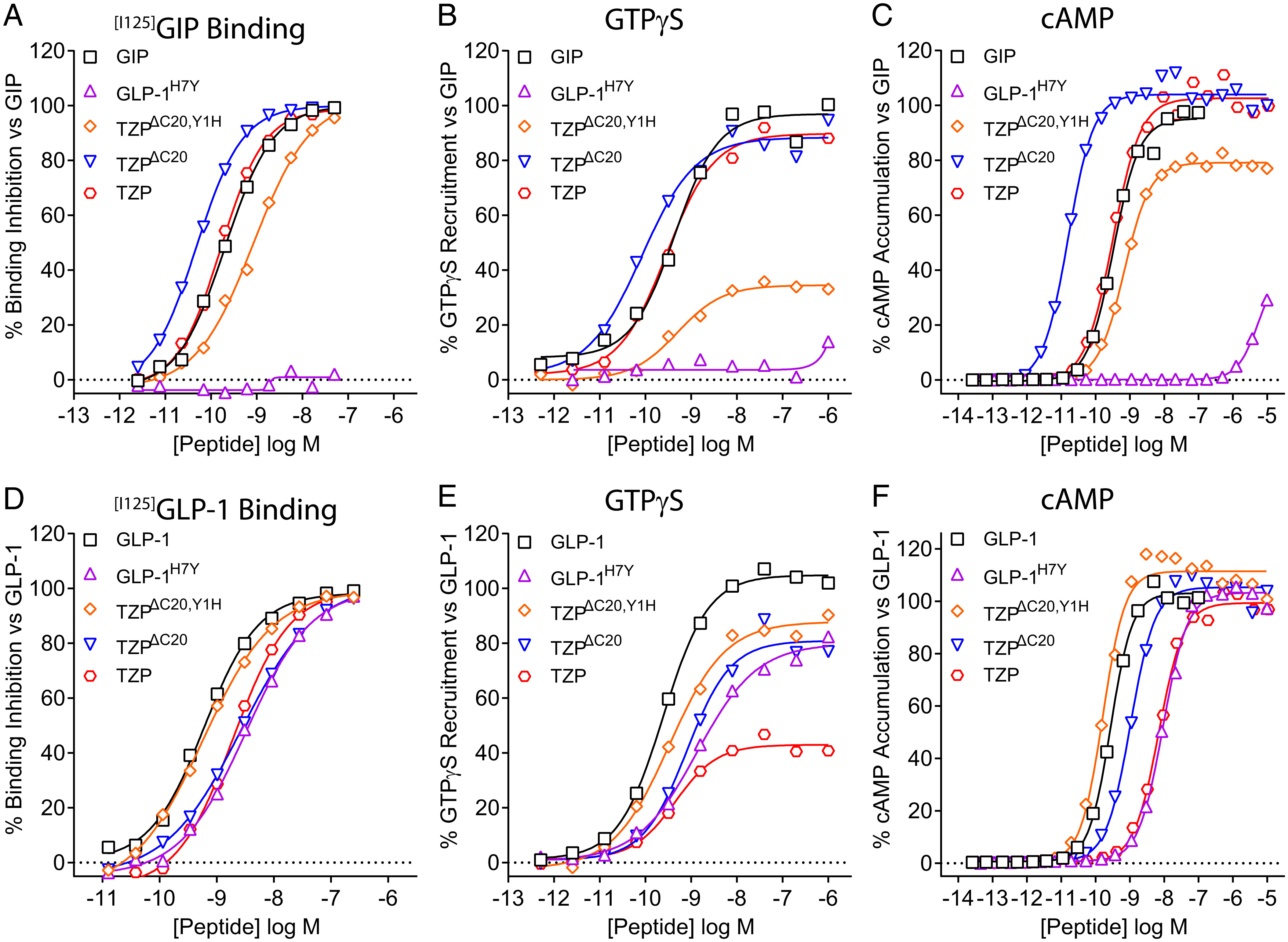
On measured pharmacology, cAMP assays show tirzepatide is an imbalanced agonist favoring GIPR over GLP-1R activity, and binding data indicate its affinity for the GIP receptor equals that of GIP but is roughly fivefold weaker than GLP-1's affinity at the GLP-1 receptor [1]. At the GLP-1 receptor, tirzepatide shows pathway bias for cAMP signaling over beta-arrestin recruitment [1].
Why it matters for patients
This is laboratory and computational work, not a clinical trial. It does not report how much weight anyone lost or how anyone's blood sugar changed. What it offers is a mechanism-level account of why a dual agonist might behave differently from a GLP-1-only drug like semaglutide.
The paper places that mechanism against clinical context it cites: in SURPASS-2, a 40-week pivotal trial in people with type 2 diabetes, all three tirzepatide doses delivered greater glucose and weight reductions than the highest approved dose of semaglutide [1]. The structural work is an attempt to explain that difference, not to prove it.
The authors themselves flag uncertainty. They write that the significance of the GLP-1 receptor signaling bias "is not fully realized," while noting reports that biased analogs of exenatide were more effective than the unbiased parent molecule in rodent models [1]. Whether reduced receptor desensitization translates into any specific benefit or side-effect difference for people is not established in these sources.
For readers weighing GLP-1 options, the practical takeaway is narrow: tirzepatide and semaglutide are not simply different doses of the same idea. They engage receptors in structurally distinct ways [1]. What that means for individual outcomes still comes from clinical trials, not from cryo-EM maps.
Images from the sources
Sources
Semaglutides.org is for information only and is not medical advice. Always talk to a licensed healthcare provider about your own care. Some links to telehealth services are affiliate links, labeled where they appear.