Review questions how completely the gastric emptying effect fades
A new medical review in a top endocrinology journal finds that the slowed stomach emptying caused by GLP-1 drugs may fade with long-term use for some, but the way scientists measure this effect has real flaws.
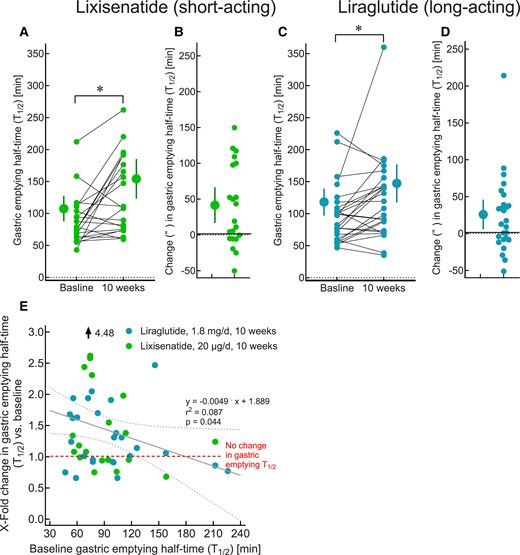
A review published October 10, 2024, in the Journal of Clinical Endocrinology & Metabolism examines what happens to the well-known side effect of delayed gastric emptying in people who take GLP-1 receptor agonists and tirzepatide over time [1]. The paper, titled "Clinical Consequences of Delayed Gastric Emptying With GLP-1 Receptor Agonists and Tirzepatide," looks at evidence that this slowing of digestion may lessen with continued use, a phenomenon researchers call tachyphylaxis [1].
GLP-1 receptor agonists, which include semaglutide (sold as Ozempic, Wegovy, and Rybelsus) and tirzepatide (sold as Mounjaro and Zepbound), work partly by slowing how fast food leaves the stomach. This effect is thought to contribute to the appetite reduction and weight loss these drugs produce, but it is also linked to common side effects like nausea, bloating, and, in rarer cases, more serious digestive complications [1].
The review reports evidence supporting tachyphylaxis with long-acting versions of these drugs, meaning the gastric-slowing effect may not stay as strong the longer someone stays on treatment [1]. But the authors raise a significant caution: much of the data behind this conclusion comes from a test that measures how quickly acetaminophen (the active ingredient in Tylenol) is absorbed into the bloodstream, used as an indirect stand-in for measuring stomach emptying speed [1]. The review points out that this test has real limitations as a measurement tool [1].
Because the acetaminophen absorption test is indirect, it may not fully or accurately capture what is happening inside the stomach in every patient. The review does not specify in the available material exactly how large this measurement problem is or how it might change existing conclusions about long-term drug effects, and further detail from the full paper was not accessible in the sources reviewed for this story.
Why it matters for patients
Many patients and doctors have assumed that nausea and other digestive side effects from GLP-1 drugs settle down over time because the stomach eventually adapts to the medication. This review suggests there is scientific support for that idea in the case of long-acting formulations, but it also warns that the tools used to study this adaptation are imperfect [1]. That matters because gastric emptying speed affects more than comfort — it can influence how other medications taken at the same time are absorbed, and it has been discussed in connection with rare but serious risks like aspiration during procedures requiring anesthesia.
For someone currently taking semaglutide or tirzepatide, this review does not change the basic facts about how the drugs work or their approved uses. Instead, it highlights that scientists are still working out exactly how much the gastric-slowing effect changes over months or years of treatment, and how confident researchers can be in the methods used to measure that change [1].
What happens next
The review was published in the Journal of Clinical Endocrinology & Metabolism on October 10, 2024 [1]. The authors' call for more reliable measurement methods suggests that future studies using better tools than the acetaminophen absorption test may be needed to settle the question of how completely, and how quickly, the gastric emptying effect fades with long-term use of these drugs [1]. No specific timeline for such follow-up studies is given in the available material.
Sources
Semaglutides.org is for information only and is not medical advice. Always talk to a licensed healthcare provider about your own care. Some links to telehealth services are affiliate links, labeled where they appear.