SURPASS-CVOT published in the New England Journal of Medicine
The full four-year tirzepatide heart-outcomes trial is now in print, with detailed side-effect numbers: more stomach problems than dulaglutide, but similar rates of severe low blood sugar and pancreatitis.
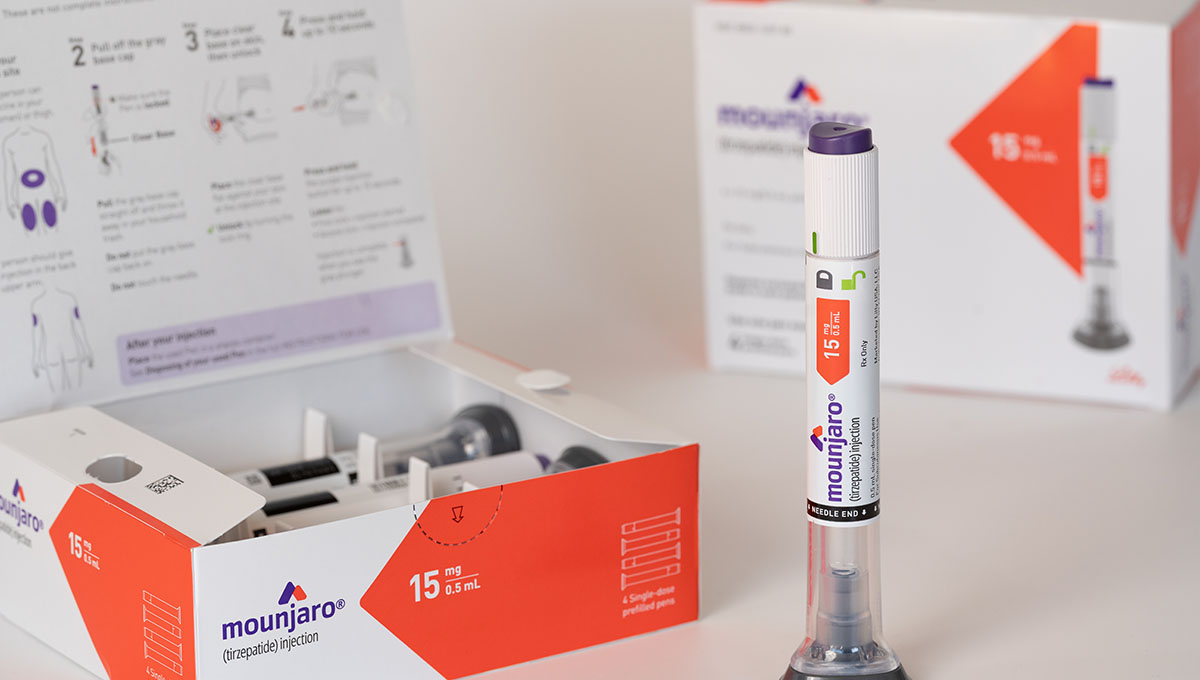
The New England Journal of Medicine published the complete results of SURPASS-CVOT on December 17, 2025, giving doctors and patients their first full look at the safety and outcome data from a four-year trial comparing tirzepatide (Mounjaro) with dulaglutide (Trulicity) in people who have type 2 diabetes and atherosclerotic cardiovascular disease [1][4].
The trial randomly assigned 13,299 people; 134 were later excluded because they did not meet entry criteria, leaving 13,165 in the main analysis — 6,586 on tirzepatide and 6,579 on dulaglutide [1]. Participants averaged 64.1 years old, 29.0% were women, average body-mass index was 32.6, average A1C was 8.4%, and people had lived with diabetes for a mean of 14.7 years [1]. Most were already on other diabetes drugs at enrollment: 81.4% on metformin, 48.8% on insulin, 30.2% on an SGLT2 inhibitor and 21.6% on a sulfonylurea [4].
Over a median of four years, the main outcome — cardiovascular death, heart attack or stroke — happened in 801 tirzepatide patients (12.2%) and 862 dulaglutide patients (13.1%), a hazard ratio of 0.92 (95.3% confidence interval, 0.83 to 1.01) [1]. That met the bar for noninferiority (P=0.003) but not superiority (P=0.09) [1]. In other words, tirzepatide was at least as good as dulaglutide, a drug already shown to cut cardiovascular events, but the trial did not prove it was better on that endpoint [4].
What the safety numbers showed
Gastrointestinal side effects were more common with tirzepatide: 42.5% versus 35.9% with dulaglutide [1]. Discontinuation because of side effects followed the same pattern, at 13.2% versus 10.1%, largely driven by GI problems [4].
Several closely watched risks looked the same in both groups. Severe hypoglycemia occurred in 0.7% of each group, and adjudicated pancreatitis in 0.6% of each group [1]. Investigator-reported acute kidney injury was 3.4% with tirzepatide and 2.7% with dulaglutide [1]. Medullary thyroid cancer — the rare tumor behind the boxed warning on these drugs — was reported in two tirzepatide patients, and one of those tumors carried a RET mutation, a genetic change associated with this cancer independent of drug exposure [1].
On the metabolic side, tirzepatide produced more weight loss (−11.6% versus −4.5%) and a bigger A1C drop (−1.66 versus −0.88 percentage points), plus larger reductions in triglycerides [4]. An expanded composite that added coronary revascularization favored tirzepatide (hazard ratio 0.88, reported in one summary with a confidence interval of 0.88 to 0.96, which appears to contain a typographical error) [4]. All-cause death was lower with tirzepatide in what the investigators describe as an exploratory analysis, and lead author Stephen Nicholls said that difference "seemed to be driven by a reduction in noncardiovascular death" [4].
Why it matters for patients
The practical takeaway is that this trial does not show a large cardiovascular gap between two incretin drugs. As obesity specialist Jaime Almandoz put it, treatment decisions are "likely to be guided less by expectations of large differences in cardiovascular outcomes and more by other factors, including weight loss, glycemic control, tolerability, and patient preference" [4].
The safety table is the new information here. Nausea, vomiting and diarrhea were clearly more frequent on tirzepatide, and roughly one in eight people stopped the drug because of side effects [1][4]. But the numbers that worry people most — severe low blood sugar and pancreatitis — were identical between the two groups over four years [1]. Two medullary thyroid cancers in more than 6,500 tirzepatide users, one with a RET mutation, is too small a count to establish or rule out a causal link, and the trial was not designed to answer that question [1].
One limit is the comparison itself: everyone got an active drug, with dulaglutide dosed at 1.5 mg weekly [1]. There was no placebo group, so the trial cannot measure how much either drug lowers risk compared with no incretin therapy [4].
What happens next
The results were first released as topline data in summer 2025 and presented at the European Association for the Study of Diabetes meeting before this full publication [4]. NEJM later published several letters responding to the trial [2]. Whether findings change labeling or guidelines is not stated in these sources. The trial was funded by Eli Lilly, which makes both drugs [1].
Images from the sources
Sources
Semaglutides.org is for information only and is not medical advice. Always talk to a licensed healthcare provider about your own care. Some links to telehealth services are affiliate links, labeled where they appear.