EMBRAZE trial tests drugs to protect muscle during GLP-1 treatment
Phase 2 EMBRAZE results published in Nature Medicine tested whether adding apitegromab to tirzepatide can limit the muscle loss that comes with rapid weight loss.
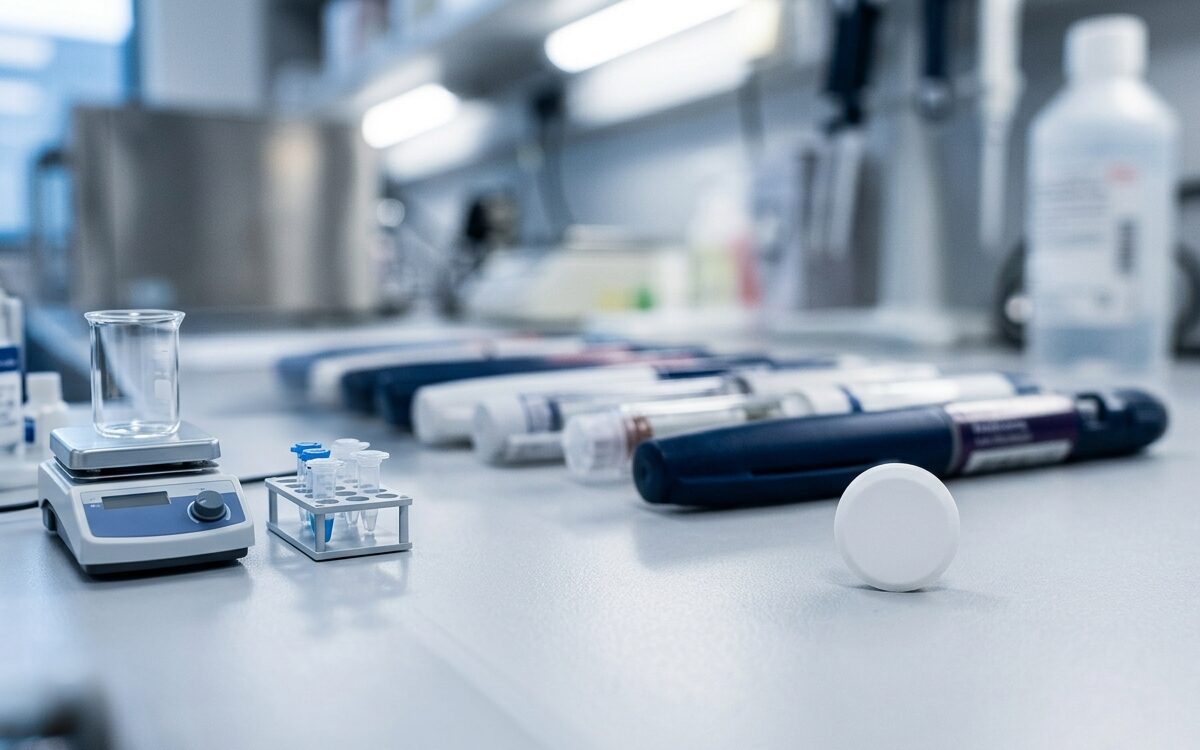
Researchers reported Phase 2 results from a trial called EMBRAZE in Nature Medicine, testing whether adding an investigational muscle-targeted drug, apitegromab, to tirzepatide can protect lean mass while people lose weight. It is the clearest evidence so far that drug treatment might blunt the muscle loss that accompanies GLP-1 therapy.
The question matters because weight lost on these medicines is not all fat. Across GLP-1 trials, lean mass has accounted for roughly 25% to 40% of total weight lost. Lean mass is not the same thing as muscle alone \u2014 it includes water, organs and connective tissue \u2014 but a meaningful share of it is skeletal muscle. Some loss of lean tissue is expected with any substantial weight loss, including from diet or surgery. What researchers have been trying to work out is whether the amount lost on GLP-1 drugs is different enough, or consequential enough, to justify treating it.
EMBRAZE paired apitegromab with tirzepatide, the molecule sold as Mounjaro for type 2 diabetes and Zepbound for obesity. Phase 2 trials are designed to test whether a drug does what it is supposed to do biologically and whether it is reasonably tolerated. They are generally too small and too short to show whether people feel stronger, walk farther, fall less often or stay healthier years later. Whether preserving lean mass in this way translates into better physical function or fewer long-term problems has not been established.
The bigger picture on weight loss depth
The muscle question is getting more attention as newer drugs push weight loss further. Eli Lilly reported that in the Phase 3 TRIUMPH-3 trial, adults with severe obesity and established cardiovascular disease lost up to 22.6% of body weight at 80 weeks on retatrutide, a triple agonist, while participants with type 2 diabetes in TRIUMPH-2 lost up to 20.8% at the same timepoint [1]. Lilly said on 5 August 2026 that the retatrutide data package is complete and that it plans to submit the drug to the US Food and Drug Administration in the first quarter of 2027 [1].
Other options are moving too. The FDA approved orforglipron, an oral small-molecule GLP-1 receptor agonist branded Foundayo, for obesity in April 2026, and Lilly submitted it for type 2 diabetes in the US during the second quarter [1]. Novo Nordisk's CagriSema, a once-weekly combination of a GLP-1 and an amylin analogue, remains under FDA review for weight management, with a decision expected by late 2026 [1].
Why it matters for patients
For people taking or considering a GLP-1 medicine, EMBRAZE does not change anything available at the pharmacy today. Apitegromab is not approved for use alongside obesity treatment, and a Phase 2 result is an early step, not a finish line. Products marketed online as muscle-preserving add-ons are not the same thing as a tested, regulated combination.
What the trial does signal is that muscle is now a formal target in obesity drug development, not just a talking point. If later trials show that protecting lean mass improves strength, mobility or the ability to keep weight off, combination regimens could eventually become part of standard care \u2014 with added cost, added injections and an added side effect profile to weigh. If the functional benefit does not appear, the lean-mass numbers may end up being a lab finding rather than a clinical one.
It also matters for how people read weight-loss percentages. A 20% drop in body weight, as seen in the retatrutide trials [1], includes tissue that is not fat. Body composition, not just the number on a scale, is likely to feature more prominently in how these drugs are compared going forward.
What happens next
Whether apitegromab moves into a larger Phase 3 obesity program, and on what timeline, has not been reported. Further readouts from Lilly's TRIUMPH program are expected before the end of 2026 [1], and Novo Nordisk has guided to starting a higher-dose CagriSema trial in the second half of 2026 [1]. Those trials, and how they measure body composition, will shape how quickly muscle preservation becomes a routine part of obesity treatment decisions.
Images from the sources
Sources
Semaglutides.org is for information only and is not medical advice. Always talk to a licensed healthcare provider about your own care. Some links to telehealth services are affiliate links, labeled where they appear.