Two brain regions found to explain the GIP paradox
A mouse study maps the long-standing "GIP paradox" to two separate brain regions, which could help explain why both GIP-activating and GIP-blocking obesity drugs add weight loss on top of GLP-1.
Researchers report in Nature Metabolism that two different brain areas explain one of the strangest puzzles in obesity drug development: why turning the GIP receptor on and turning it off both appear to boost weight loss when combined with a GLP-1 drug [1].
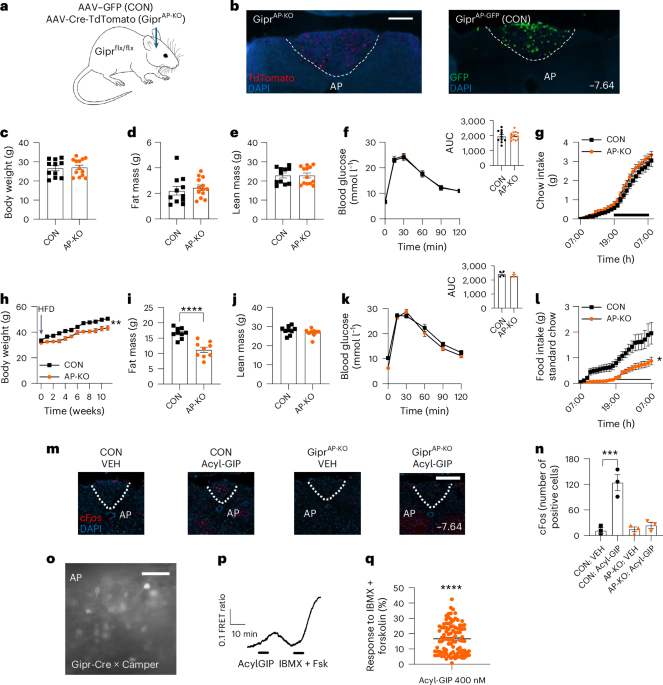
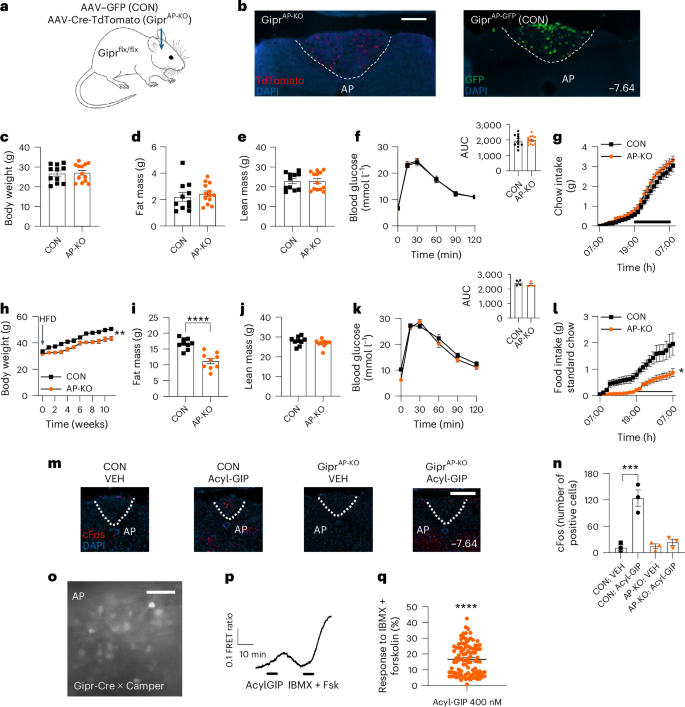
Using mice, the team knocked out the GIP receptor gene (Gipr) in one brain region at a time and found that the area postrema — a small brainstem structure — drives the appetite-suppressing effect of GIP receptor agonists, while GIP receptors in the hypothalamus are what allow a GIP receptor blocker to add extra weight loss on top of GLP-1 or amylin drugs [1].
The paradox
Tirzepatide (Mounjaro/Zepbound) activates both the GLP-1 receptor and the GIP receptor, and produces more weight loss than GLP-1 alone [1]. But drugs that block the GIP receptor while activating GLP-1 — such as the once-monthly maridebart cafraglutide tested in a phase 2 trial — also produce added weight loss [1]. Researchers have long suspected that the two approaches must be hitting different cell populations [2].
To test that, the scientists used mice with a "floxed" Gipr gene and injected a virus carrying Cre recombinase directly into either the area postrema (GiprAP-KO) or the hypothalamus (Giprhypo-KO); control mice got a virus carrying GFP instead [1]. The two regions differ in important ways: the area postrema sits outside the blood–brain barrier and is packed with GIP receptor cells, most of them GABAergic, while many hypothalamic GIP receptor neurons sit behind the barrier and include both GABAergic and glutamatergic cells [1].
What the mice showed
Mice missing the receptor in the area postrema looked normal on a chow diet — same body weight, fat mass and lean mass as controls, with no differences in circulating GIP, GLP-1 or insulin, glucose tolerance, food intake, energy expenditure or activity [1]. But they were partially protected against diet-induced obesity, and they lost the response to acyl-GIP, a long-acting GIP receptor agonist [1]. Control mice given acyl-GIP had significantly lower food intake and body weight; the knockout mice showed no reduction in either, including when they were already obese from a high-fat diet [2].
Those mice also lost some of GIP's anti-nausea effect: acyl-GIP was less able to prevent avoidance behavior triggered by peptide YY [1]. Importantly, weight loss on the GLP-1 drug liraglutide was similar in area postrema knockouts and controls, and adding a GIP receptor–blocking peptide produced similar extra weight loss in both groups [1].
The hypothalamic knockouts showed the mirror image. Acyl-GIP still suppressed appetite normally, but these mice lost more weight on liraglutide than controls — and knocking out the receptor there completely abolished the added benefit of the GIP receptor blocker [1]. The effect did not appear to run through preproglucagon neurons in the nucleus tractus solitarius [1]. Both GIP receptor antagonism and the hypothalamic knockout also made mice more sensitive to weight loss from cagrilintide, an amylin receptor agonist [1].
Why it matters for patients
This is mouse work, and none of it tells you how a specific person will respond to a specific drug. But it offers a mechanistic explanation for something patients have reasonably found confusing: two obesity drug programs that do opposite things to the same receptor, both claiming added weight loss.
If the pattern holds in humans, it suggests GIP activation and GIP blockade are not competing versions of the same idea but separate levers acting in different parts of the brain — one tied to appetite suppression and nausea control in the brainstem, the other tied to amplifying GLP-1 and amylin effects in the hypothalamus [1]. The finding that GIP agonism in the area postrema reduced nausea-related avoidance behavior [1] is also relevant to the tolerability differences patients often ask about, though the study did not test nausea in people.
What is not yet known: whether human brains divide the labor the same way, whether either approach produces more durable weight loss, and whether targeting one region could separate weight loss from side effects. The authors' data come from mice with surgically targeted gene deletions, which has no direct equivalent in clinical care [1].
Images from the sources
Sources
Semaglutides.org is for information only and is not medical advice. Always talk to a licensed healthcare provider about your own care. Some links to telehealth services are affiliate links, labeled where they appear.