Cell Reports study identifies an 'obesity memory' in fat cells that drives regain
A Cleveland lab found a lasting epigenetic change in fat cells that keeps hunger hormones high after weight loss, offering a possible reason patients regain weight when they stop GLP-1 drugs like Ozempic, Wegovy, or Zepbound [1].
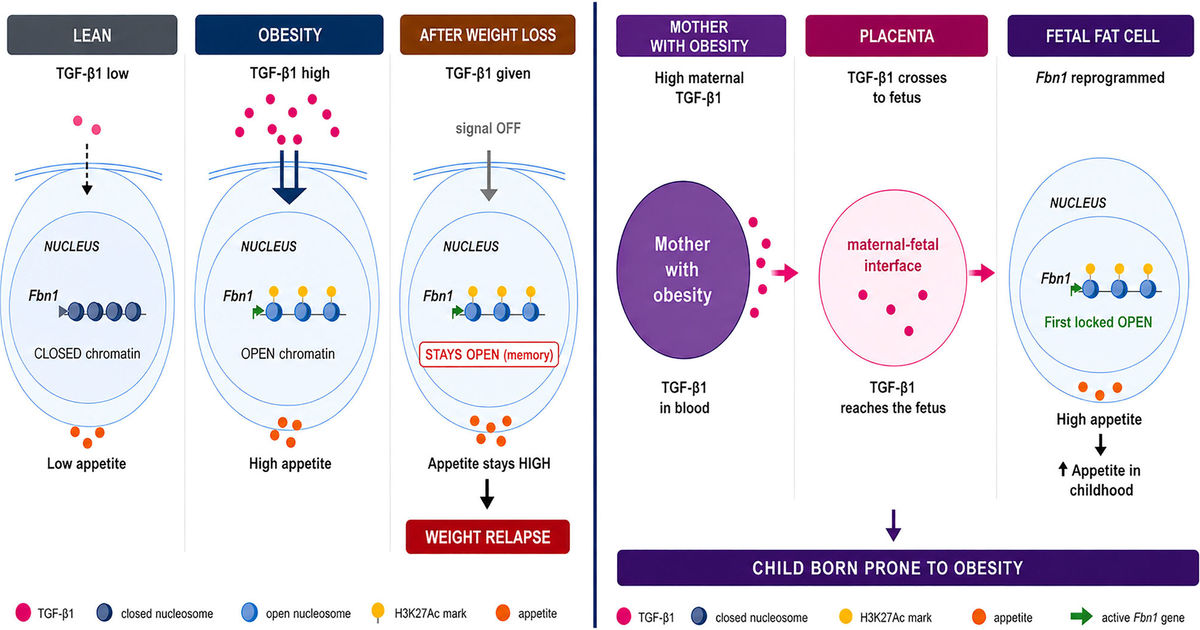
Researchers at Harrington Discovery Institute at University Hospitals and Case Western Reserve University report that obesity leaves behind a lasting change in fat cells that keeps the hunger hormone asprosin turned up, even after weight is lost [1]. The team calls this state "obesity memory," and their study, published in Cell Reports, was done in mice, with supporting evidence from separate lab replication and existing mouse and human datasets [1]. The work has not yet been confirmed in living humans.
According to the study, an inflammatory signal called TGF-β1 triggers the rise in asprosin during obesity [1]. Senior author Atul Chopra, MD, PhD, said the surprise was that even a brief exposure to that signal left a change in fat cells that stuck around for weeks after the trigger itself was gone, like "flipping a light switch that stays on even after you remove your finger" [1]. Mice that lost the excess weight still had elevated asprosin and appetite because the switch in their fat cells stayed flipped [1].
The researchers also found the same asprosin signal can cross the placenta, meaning a mother's obesity could program a child's fat cells before birth to carry higher obesity risk [1]. When the team blocked the asprosin pathway in mice, from the gene that makes it to the brain receptor that responds to it, it prevented both weight regain after dieting and the inherited obesity risk passed to offspring [1].
Chopra said this gives a molecular explanation for why GLP-1 drugs, which suppress appetite only while a person keeps taking them, do not erase the underlying biological memory that drives hunger back up once treatment stops [1]. He said the finding should reframe how relapse is understood. "We need to treat obesity as a condition that leaves lasting biological scars, not just a temporary state of excess weight," he said [1].
Why it matters for patients
Many people who lose weight, whether through diet, surgery, or medications such as semaglutide (Ozempic, Wegovy, Rybelsus) or tirzepatide (Mounjaro, Zepbound), regain some or all of it after stopping treatment. This study offers a possible biological reason: a lasting change in fat cells that keeps hunger signals elevated even when weight has come down [1]. Chopra said this pattern is not a failure of willpower or discipline, but is driven by a durable biological memory embedded in fat tissue [1].
The findings are preclinical, based on mouse models, cell studies, and existing datasets, not on clinical trials in people [1]. It is not yet known whether the same mechanism operates the same way in human fat tissue, or whether any drug that blocks the asprosin pathway would be safe or effective in humans. No such therapy has been tested in people according to the source material.
What happens next
The researchers say the critical next step is testing whether the same epigenetic memory operates in human fat tissue after weight loss, and whether therapies that block asprosin or reset these epigenetic marks could prevent weight regain in people [1]. Chopra said his team is interested in whether asprosin-blocking therapies could be used alongside or after GLP-1 treatment to prevent rebound, though no timeline or human trial has been announced [1].
Images from the sources
Sources
Semaglutides.org is for information only and is not medical advice. Always talk to a licensed healthcare provider about your own care. Some links to telehealth services are affiliate links, labeled where they appear.