Lilly CEO says 700,000 seniors have started GLP-1s under Medicare Bridge, 70% on Lilly drugs
Eli Lilly's CEO says about 700,000 seniors have started GLP-1s since Medicare's $50-a-month Bridge program began July 1, with 70% on Lilly drugs — the first public numbers on the rollout.
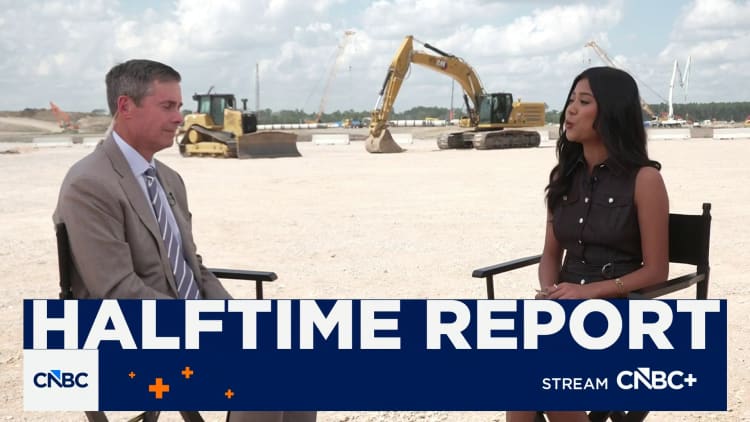
Eli Lilly CEO Dave Ricks said on Monday that about 700,000 seniors have started GLP-1 treatment for obesity since Medicare began covering the drugs on July 1, and that 70% of those patients are taking Lilly medicines [1][2][3]. The figures came in an exclusive CNBC interview timed to the groundbreaking of Lilly's new manufacturing plant in Houston [3].
These are company-provided numbers. A separate federal tally of how many people have enrolled in the program has not been published [5].
What the Bridge program is
The coverage runs through a temporary pilot called the Medicare GLP-1 Bridge, announced by the Centers for Medicare & Medicaid Services, which lets eligible beneficiaries get weight-loss drugs for a flat $50 monthly copay [1][5]. It started July 1, 2026, and is scheduled to run through Dec. 31, 2027 [5]. Medicare covers about 66 million people age 65 and older or with disabilities [1]. Lilly has said 20 million potential patients are eligible under Bridge [2].
The program covers the pill and injectable forms of Wegovy (semaglutide), the KwikPen form of Zepbound (tirzepatide), and the Foundayo pill (orforglipron) [5]. To qualify, a person must be enrolled in a Medicare Part D plan and generally needs a body mass index of 27 or higher plus a condition such as heart disease or prediabetes; a BMI of 35 or higher qualifies automatically [5]. Prescriptions go through a central prior-authorization system run by CMS contractor Humana rather than a beneficiary's own Part D plan [5].
Who is gaining
Ricks described the rollout as "very encouraging" and said the coverage is expanding the overall market. "It's very market expansionary, which is what we had hoped," he said, meaning many enrollees were not previously paying cash for GLP-1s [2].
"We're capturing about seven out of 10 of those new patients, and a lot are still on Zepbound," Ricks said, adding that he still sees "physicians focusing on those with the most body weight and the most complications" [1]. He said Foundayo plays a larger role for patients who want a convenient option and "maybe just need to lose 25 to 30 pounds" [1].
For context, Lilly reported in August that it held roughly 61% of the overall US GLP-1 market in the second quarter, covering obesity and diabetes and both injectables and pills, versus about 39% for Novo Nordisk [2]. Ricks also said one-third of new patients starting oral GLP-1s are choosing Foundayo, up from "nearly one in four" cited in early August [2]. Foundayo launched in the US on April 9, months after Novo's Wegovy pill, and booked $98 million in sales in its first quarter on the market [2][3].
Ricks said he has not heard of many logistical problems, and that CMS "did a nice job rolling this out," including educating physicians [1].
Why it matters for patients
The headline number suggests the $50 copay is pulling in people who previously found these drugs unaffordable. About half of GLP-1 users have said the drugs were difficult to afford, according to KFF polling, and cash prices have typically run from $149 to $699 a month even with discounts [5]. One feature of Bridge is that the $50 copay does not rise as the dose goes up [5].
There are real catches. The $50 copay does not count toward the Part D deductible or the $2,100 annual out-of-pocket cap on prescription drug costs, and people who get the Medicare Extra Help low-income subsidy cannot apply it to Bridge drugs [5]. "Fifty dollars a month sounds like a great deal ... but it's a lot of money for somebody who's living on a $750-a-month Social Security check," said Juliette Cubanski of KFF [5].
The $50 price also applies only to weight-loss use. People prescribed the same drugs for Type 2 diabetes, cardiovascular risk reduction, or sleep apnea stay on their regular Part D plan and may pay more [5].
What happens next
Bridge ends Dec. 31, 2027 [5]. It was extended from six to 18 months after too few insurers signed on to a proposed longer-term program by an April deadline; whether a successor starts in 2028 has not been decided [5]. Lilly's Houston plant, a $6.5 billion site on roughly 240 acres that will make Foundayo's active ingredient, is expected to be operational by 2030 [3].
Images from the sources


Sources
- https://www.cnbc.com/2026/09/21/eli-lilly-ceo-david-ricks-glp-1s-medicare-coverage.html
- https://www.cnbc.com/2026/09/21/eli-lilly-ceo-offers-investors-3-more-reasons-to-stick-with-the-stock.html
- https://www.cnbc.com/2026/09/21/lilly-is-ramping-up-future-manufacturing-for-foundayo-obesity-pill.html
- https://www.cnbc.com/2026/09/22/5-things-to-know-before-the-stock-market-opens.html
- https://kffhealthnews.org/medicare/cheaper-glp-1-weight-loss-medicare-bridge-wegovy-zepbound-foundayo/
Semaglutides.org is for information only and is not medical advice. Always talk to a licensed healthcare provider about your own care. Some links to telehealth services are affiliate links, labeled where they appear.