Nature reports late-life semaglutide extended lifespan 12% in female mice
An NIH-funded study in Nature found semaglutide started in old female mice lengthened median lifespan and improved muscle, memory and blood sugar, but the authors say nothing about human aging follows without long-term trials.
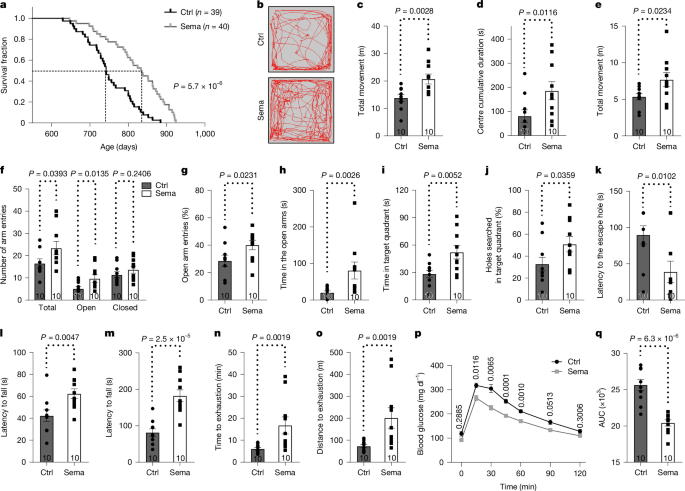
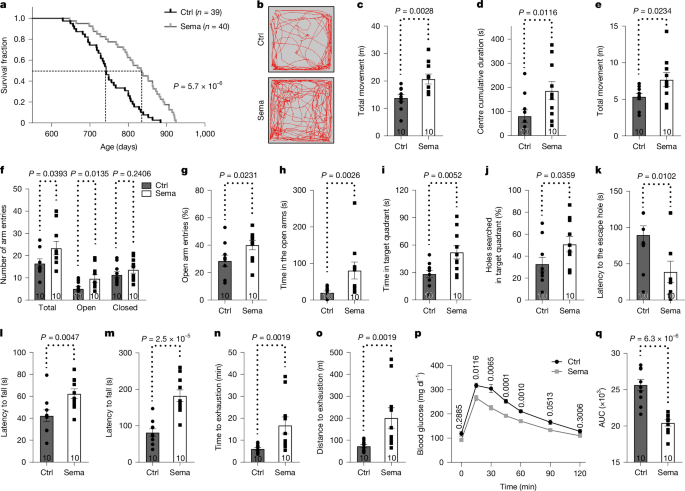
Researchers at the University of California, Berkeley reported on September 2, 2026 that semaglutide, started late in life, slowed measures of aging and extended lifespan in female mice [1][2]. The National Institutes of Health, which funded the work through the National Institute on Aging, said mice treated until the end of life had a median lifespan nearly 100 days longer than untreated mice [2]. In the paper, that works out to a rise in median lifespan from 742 to 834 days, roughly 12% [1].
What the study did
The team, led by Danica Chen, Ph.D., a professor of metabolic biology and nutrition at UC Berkeley, gave daily subcutaneous semaglutide or a vehicle injection to 20-month-old female C57BL/6 mice [1][2]. One cohort was treated for three months for physiological, molecular and cellular tests; a separate cohort stayed on treatment for the rest of their lives for the lifespan analysis [1]. Twenty months in a mouse is late middle age to early old age; the researchers chose it to test the drug "at a time when the effects of aging are most pronounced" [2].
Treated mice ate 24% less food [1]. They lost weight, and the loss came mostly from fat: the share of body weight from white adipose tissue fell, while the percentage of lean mass rose [1]. After adjusting for body weight, the drug did not significantly change locomotor activity, respiratory exchange ratio, oxygen consumption, carbon dioxide production or energy expenditure [1].
Compared with controls, treated mice showed better muscle and cognitive function, and gene expression analysis showed reductions in hallmarks of aging such as increased inflammation and reduced regenerative capacity [2].
Semaglutide versus eating less
The more unusual part of the study was a head-to-head comparison. Over five months, one group of 20-month-old female mice got semaglutide while another was fed a 24% calorie-restricted diet matched to the treated animals' feeding pattern [2]. Calorie restriction is the best-established way to slow aging in animals, but it is hard to sustain, which is why scientists look for drugs that mimic it [1].
The two groups looked similar on many measures, with most physiological readings holding steady [2]. But semaglutide-treated mice went above their own starting levels in exploratory behavior, spatial memory and blood-sugar maintenance, and had more favorable trajectories than the calorie-restricted animals on those measures [1][2]. Metabolic rate fell in the calorie-restricted mice but was largely unchanged with semaglutide [2].
"These differences point to the possibility that GLP-1 drugs tap into a biological pathway independent of calorie restriction," Chen said, calling that pathway "an important direction for future research" [2].
Rafael de Cabo, Ph.D., a senior investigator at NIA who wrote a commentary on the study, framed the bigger idea this way: "Most chronic diseases are deeply rooted in the aging process. If GLP-1 agonists do indeed slow it down, then a wide range of clinical benefits is exactly what you'd expect to see" [2].
Why it matters for patients
This is a mouse study, and NIH said plainly that the findings "do not imply that similar results could be achieved immediately in humans" [2]. The work does offer a possible explanation for why semaglutide has shown benefits in so many different organs in human trials, including heart, kidney and liver disease [1]. But an explanation is not proof, and a longer life in mice is not evidence that any GLP-1 drug extends human life.
Several limits are worth noting. Only female mice were studied, so the sources do not say whether male mice would respond the same way [1][2]. The animals were healthy older mice, not people with obesity or diabetes, and dosing was a daily injection in mice rather than the weekly regimens used in humans [1]. Effects of calorie restriction itself vary by sex, strain, age and health status [1].
What happens next
The paper was published in Nature on September 2, 2026 [2]. NIH said additional clinical work will be needed to judge any effect on human longevity, pointing to a recent post-hoc analysis of the SLIM LIVER trial as an example [2]. Chen said future clinical investigations may also look at healthy older adults [2]. No such longevity trial, timeline or sponsor is named in these sources, so when or whether one starts is not yet known.
Images from the sources
Sources
Semaglutides.org is for information only and is not medical advice. Always talk to a licensed healthcare provider about your own care. Some links to telehealth services are affiliate links, labeled where they appear.