GLP-1 users report more nail disorders, including detachment, in EADV study
A multinational study presented at EADV 2026 found 66.3% of GLP-1 users reported a nail disorder versus 52.8% of controls, but the adjusted analyses were mixed.
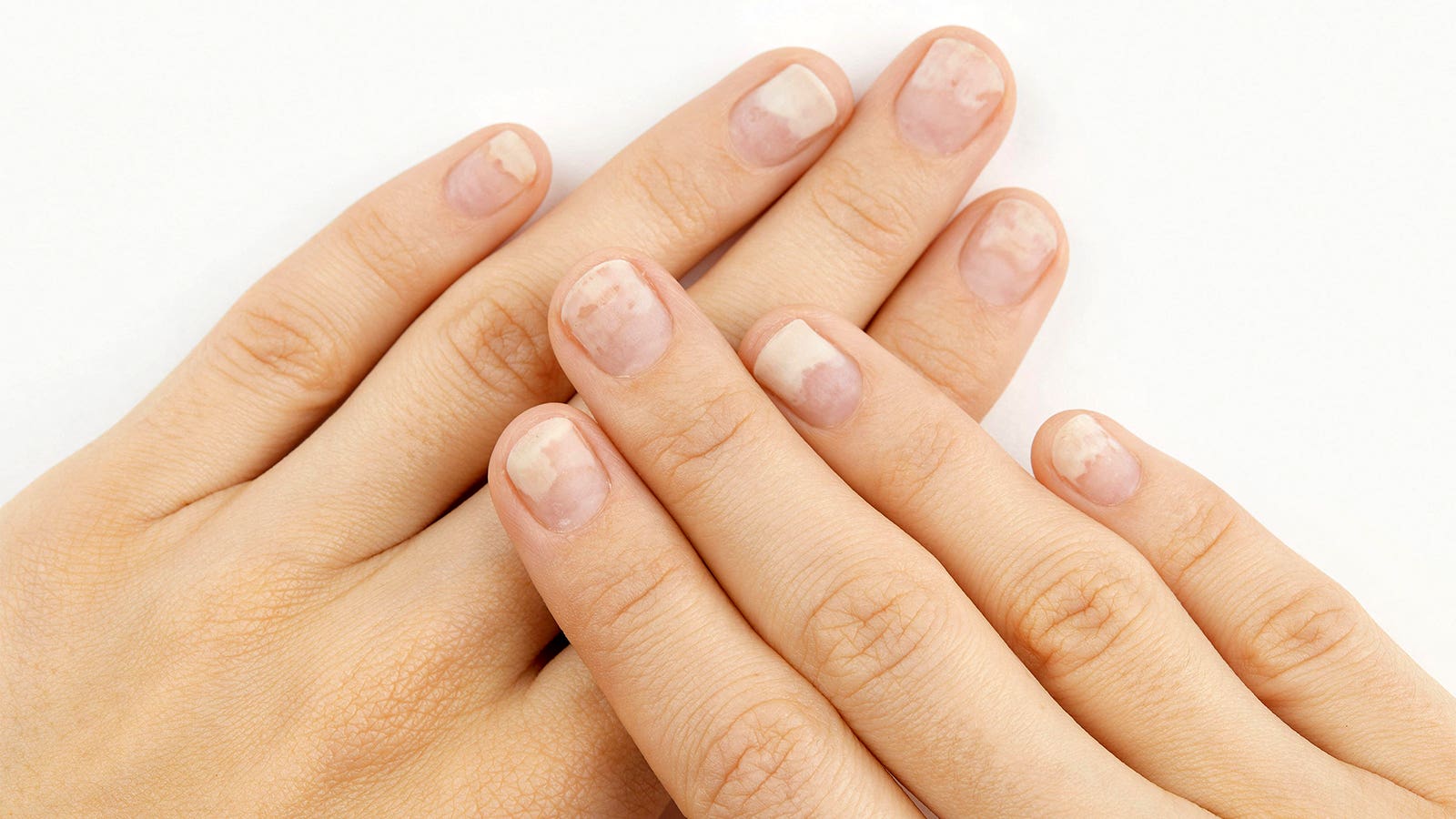
Two studies presented at the European Academy of Dermatology and Venereology (EADV) meeting in Vienna found that people using GLP-1 receptor agonists reported nail and hair changes more often than people who had never taken the drugs, with nail detachment showing the widest gap. The meeting ran Sept. 30 to Oct. 3, 2026 [1][2].
The main analysis compared 575 GLP-1 users with 1,329 control participants who had obesity and/or type 2 diabetes and had never used a GLP-1 drug. Participants were recruited in France, the United States, Brazil and Mexico. The control group was older on average, 56.7 versus 45.3 years, and sex distribution was about even in both groups [1][2].
Overall, 66.3% of GLP-1 users and 52.8% of controls reported at least one nail disorder, a statistically significant difference (P<0.001). The most prominent finding was onycholysis, detachment of a fingernail or toenail from the nail bed: 39.3% of users versus 8.7% of controls. Nail discoloration, called dyschromia, was reported by 45.6% of users versus 17.0% of controls. Nail fragility and ridges or grooves were also more common among users. One report put the odds ratio for nail detachment at 6.84; another described the unadjusted difference as a 4.5-fold higher likelihood. The reports do not explain the discrepancy [1][2].
A second analysis of the same group looked at hair. Unusual hair loss was reported by 50.4% of users versus 33.5% of controls, an odds ratio of 4.49; new-onset hair loss by 26.1% versus 11.6%, odds ratio 2.67; and loss of hair volume or density by 42.4% versus 19.3%, odds ratio 3.23. Scalp redness was also more frequent, with an odds ratio of 3.05 [1].
The adjusted numbers are more mixed. Accounting for age, sex and country, the odds ratio for onycholysis was 4.4. Adding other health conditions and nutritional deficiencies brought it to 2.9. Counting only nail changes that began after participants started a GLP-1, the association disappeared: odds ratio 1.0, with a confidence interval of 0.6 to 1.7 that includes no effect. Dyschromia followed the same pattern, falling to 0.9. About half of the GLP-1 users said their nail problems were already present before treatment. The investigators said the true association probably lies between the fully adjusted and new-onset results [2].
The findings have limits. Nail problems were self-reported in an online survey, and no dermatologist examined anyone's nails. One report describes the design as cross-sectional; another calls it a prospective study, and the presentation is titled a multinational case-control study. Because of the design, the results cannot show that the medications caused the nail or hair conditions [1][2]. Neither report names the specific GLP-1 medications participants used or how long they had taken them. The work was conducted with institutional support from Ducray Dermatological Laboratories and supported by Pierre Fabre-Ducray. Presenting author Bianca Maria Piraccini disclosed relationships with Eli Lilly, Pfizer and other companies [1][2].
Joe Tung, MD, of the University of Pittsburgh Medical Center, who was not involved in the study, said the gap "shrank considerably" once researchers accounted for other conditions, and that in the most rigorous analysis "the association disappeared entirely." The findings "should not worry people who are currently doing well on a GLP-1 medication," he said. Piraccini said nail detachment "cannot be related to weight loss." Co-investigator Bruno Halioua, MD, said in a statement that the changes "are frequent, usually benign, and are not a reason to stop an effective treatment on one's own initiative" [1][2].
Why it matters for patients
Nail detachment is not the nail change usually tied to rapid weight loss or low protein intake; those tend to be surface changes such as rough, uneven nails [2]. In this study 76.3% of GLP-1 users reported weight loss over three months, versus 47.3% of controls, and the between-group differences held when the analysis was limited to people who lost weight [1]. At the same time, about half of the users said their nail problems predated treatment, and the new-onset analysis found no difference, so a nail or hair change during treatment is not automatically caused by the drug. Tung said he would encourage patients who notice nail changes to see a dermatologist, because common nail disorders are very treatable, and that these findings alone would not justify stopping an otherwise beneficial GLP-1 medication [2]. Piraccini advised clinicians to look at patients' nails and ask whether abnormalities were present before treatment [2]. No regulatory action tied to these findings has been reported.
What happens next
Piraccini said the results give a basis for more studies of how GLP-1 drugs affect nails, and that the findings "will prompt us to do more studies." No timing, size or design for those studies has been announced. The two analyses were presented at EADV 2026 and covered in reports dated Oct. 1 and Oct. 7, 2026; neither has been described as published in a peer-reviewed journal [1][2].
Images from the sources

Sources
Semaglutides.org provides information only, not medical advice. Talk to a licensed provider about your own care before making changes. Some telehealth links are affiliate links and are labeled where they appear.