Judge denies Novo Nordisk request to block Lilly's Zepbound and Mounjaro ads
A federal judge in New Jersey refused to block Eli Lilly's Zepbound and Mounjaro ads while Novo Nordisk's false-advertising lawsuit continues.
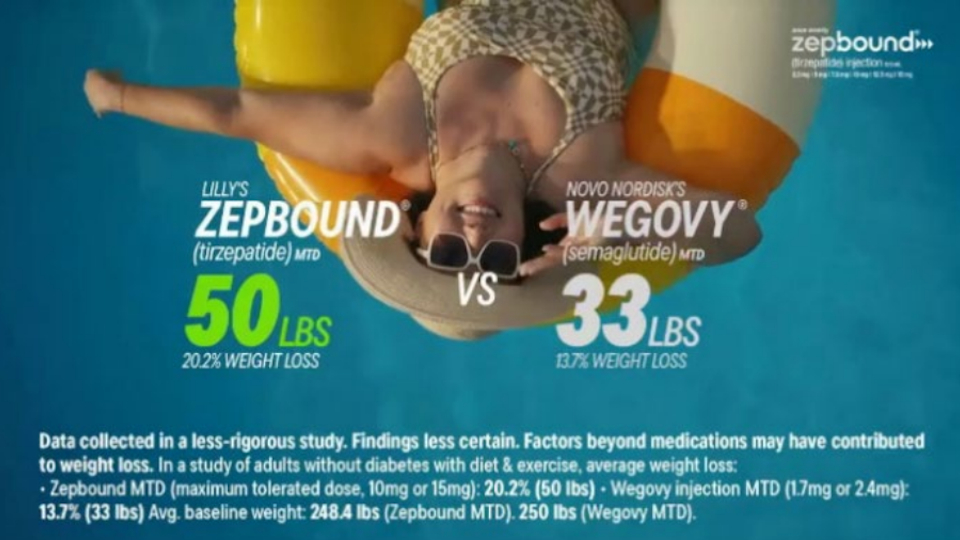
A U.S. federal judge on October 26, 2026 denied Novo Nordisk's request to temporarily block Eli Lilly from running advertisements for its weight-loss and diabetes drugs, Zepbound and Mounjaro [1][2]. Judge Zahid Quraishi of the U.S. District Court in Trenton, New Jersey, ruled that Novo Nordisk had not shown it would suffer harm that money could not later repair [1].
The decision came after a two-day hearing in late August [1]. Novo Nordisk sued Lilly in July 2026, arguing that the ads violated federal and state false-advertising and unfair-competition laws by comparing higher doses of Zepbound and Mounjaro with lower doses of Novo's Wegovy and Ozempic [1]. The case, filed July 21, 2026, is Novo Nordisk Inc. v. Eli Lilly and Company et al., No. 3:26-cv-09027 [3]. All four products are GLP-1-based drugs: Wegovy and Ozempic are semaglutide, and Zepbound and Mounjaro are tirzepatide [1][4].
One commercial cited in the case included a voiceover claim, with a written disclaimer, that people using Zepbound lost an average of 50 pounds (23 kg) while people using Wegovy lost an average of 33 pounds (15 kg) [1]. In his 25-page decision, Quraishi wrote that Lilly's ads had "at most a negligible market impact" between April and July, with prescriptions for Novo Nordisk's products remaining stable [1]. He called Novo's showing of irreparable harm "inadequate to warrant the extraordinary relief it seeks" [1][4], said money damages could compensate the company for any "nontrivial harm," and described the case as "less than persuasive" based on a "very preliminary record" [1]. He did not rule on the underlying claims [1][2].
Lilly, based in Indianapolis, has denied wrongdoing and said it was pleased with the decision [1]. A Novo Nordisk spokesperson said the company was disappointed and that "today's ruling did not decide the question of whether Lilly's advertising is false and misleading, and this litigation is still ongoing" [1]. The spokesperson added: "Everyone deserves clear, accurate and up-to-date information when making decisions about their health" [1].
Novo Nordisk also argued that Lilly relied on outdated trial results, pointing to the original formulation of Wegovy rather than a newer, higher-strength version approved later [4]. Quraishi found that argument not defensible given Novo's own advertising history, noting the company had run similar comparative ads for Ozempic against Lilly's older drug Trulicity (dulaglutide), and wrote that Novo "turns a blind eye to its own advertising history" [4].
Why it matters for patients
The United States is among a handful of countries that allow prescription medicines to be advertised directly to consumers [1], so people choosing among these drugs often form impressions from television and print ads before talking with a clinician.
The ruling means the disputed ads can keep airing while the lawsuit moves forward [1][2]. It does not settle whether the numbers in those ads are accurate or fair. A judge has not decided the false-advertising claims, and no finding has been made that either company's marketing was misleading [1][2]. Patients comparing drugs will continue to see head-to-head claims that a court has neither endorsed nor rejected.
The financial stakes are large. Novo Nordisk reported combined sales of about $32 billion for its obesity medicines and Ozempic in 2025, according to court papers [1], and the market for injectable obesity drugs is projected to exceed $100 billion by the end of the decade [1]. Lilly's tirzepatide products are now outselling Ozempic and Wegovy in the U.S. injectable market, while Novo's oral formulation of Wegovy remains the leader in the daily pill category over Lilly's Foundayo (orforglipron) [4].
What happens next
The lawsuit continues in federal court in New Jersey [1][2]. Novo Nordisk has said the ruling does not end the case [1]. No trial date or schedule for further rulings has been disclosed [1][2].
Images from the sources

Sources
- https://www.reuters.com/world/us-judge-lets-eli-lilly-continue-ads-weight-loss-drugs-rules-against-novo-2026-10-26/
- https://www.bloomberg.com/news/articles/2026-10-26/novo-nordisk-loses-court-ruling-over-eli-lilly-obesity-drug-ads
- https://www.law360.com/healthcare-authority/policy-compliance/articles/2542704/novo-can-t-get-deceptive-lilly-glp-1-ads-blocked-amid-suit
- https://pharmaphorum.com/news/judge-backs-lilly-novo-lawsuit-over-weight-loss-drug-ads
Semaglutides.org provides information only, not medical advice. Talk to a licensed provider about your own care before making changes. Some telehealth links are affiliate links and are labeled where they appear.