Lilly launches fluoxetine as Prozac
Lilly's fluoxetine (Prozac) became the blockbuster that defined the company for a generation — a pattern now repeating with tirzepatide, which made up 56% of Lilly's 2025 revenue [1].
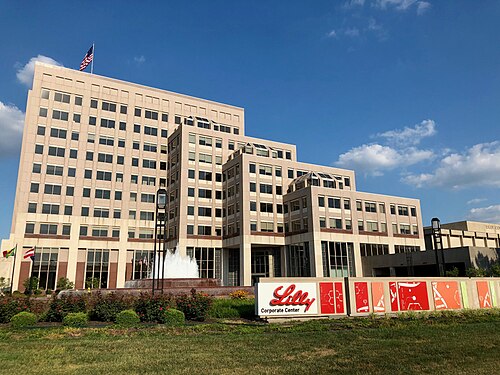
Eli Lilly and Company introduced fluoxetine under the brand name Prozac in the late 1980s, creating one of the best-known prescription drugs of the twentieth century and a template for how a single medicine can come to dominate a drug maker's finances. That same pattern is playing out again today with tirzepatide, sold as Mounjaro and Zepbound [1].
The sources available for this story do not fully agree on the launch date. The development summary describes a 1988 launch, while Lilly's company profile lists Prozac (fluoxetine) with the year 1986 alongside two other mental-health blockbusters, Cymbalta (duloxetine) in 2004 and the antipsychotic Zyprexa (olanzapine) in 1996 [1]. What both accounts agree on is that fluoxetine was a commercial success for the Indianapolis company, which was founded in 1876 by Eli Lilly, a pharmaceutical chemist and Union army veteran [1].
The claim that Prozac accounted for roughly a quarter of Lilly's revenue by 2000 comes from a Fortune archive article that could not be retrieved, so that figure cannot be confirmed from the sources here. All three of those drugs — Prozac, Zyprexa and Cymbalta — are now off patent and are manufactured by other companies as generics [1].
The same company, a different blockbuster
Lilly's history runs through several eras of medicine. It was the first company to mass-produce both insulin and the polio vaccine developed in 1955 by Jonas Salk [1]. It was among the first to make human insulin using recombinant DNA, including Humulin, Humalog (insulin lispro) and Basaglar (insulin glargine), the first approved biosimilar insulin product in the United States [1].
In 2005, Lilly brought exenatide to market — the first of the GLP-1 receptor agonists [1]. That class now includes semaglutide (Ozempic, Wegovy and Rybelsus, made by Novo Nordisk) and Lilly's own tirzepatide, which acts on both the GIP and GLP-1 receptors and is sold as Mounjaro for type 2 diabetes and Zepbound for weight loss and obstructive sleep apnea [1].
The concentration is striking. Tirzepatide accounted for 56% of Lilly's 2025 revenues, according to the company profile [1]. The next-largest contributors were far smaller: abemaciclib (Verzenio) for advanced or metastatic breast cancer at 9%, dulaglutide (Trulicity) for type 2 diabetes at 7%, ixekizumab (Taltz) for autoimmune diseases at 6%, and empagliflozin (Jardiance) for type 2 diabetes at 5% [1].
Lilly reported $65.18 billion in revenue in 2025, with operating income of $26.30 billion and net income of $20.64 billion [1]. In November 2025, it reached a $1 trillion market capitalization, the first health-care company in the world to do so [1]. In 2024, 67% of the company's revenues came from the United States, 18% from Europe, 3% from Japan and 3% from China [1].
Why it matters for patients
The Prozac story is a reminder of two things that shape what patients pay and what they can get.
First, when one product carries a large share of a company's revenue, the company has strong reasons to protect that product — through supply investment, marketing and patent strategy. More than half of Lilly's 2025 revenue came from a single molecule [1]. Decisions about pricing, manufacturing capacity and which studies get funded are made in that context.
Second, patents end. Prozac, Zyprexa and Cymbalta are all off patent now and are made by other companies as generics [1]. That transition has historically brought prices down sharply for older drugs. The sources here do not state when tirzepatide or semaglutide patents expire in the United States, so it is not yet known from this reporting when lower-cost versions might become available.
The long arc also shows that today's dominant drug is rarely permanent. Lilly's revenue base has shifted from insulin to antidepressants and antipsychotics to incretin drugs over roughly a century [1].
What happens next
No dated milestones tied to fluoxetine are described in the available sources. For readers tracking the GLP-1 market, the relevant numbers to watch are Lilly's quarterly revenue disclosures, which currently show tirzepatide as the company's largest product by a wide margin [1].
Sources
Semaglutides.org is for information only and is not medical advice. Always talk to a licensed healthcare provider about your own care. Some links to telehealth services are affiliate links, labeled where they appear.