Lilly begins a manufacturing buildout on the strength of tirzepatide Phase 2 data
Lilly says it started building tirzepatide factories in 2020 on Phase 2 data alone, years before approval — the "since 2020" baseline behind every supply figure the company now cites.
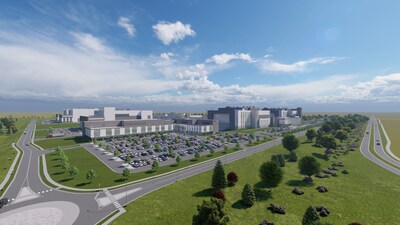
Eli Lilly began a major manufacturing expansion in 2020, before tirzepatide had been approved for anything, based on research results for the drug that later became Mounjaro and Zepbound [1]. The company has described that decision as an at-risk investment — money committed to plants that would have been largely wasted if the trials had failed [1].
Lilly laid out the reasoning in a May 2024 press release: "Lilly embarked on a significant manufacturing expansion in 2020, driven by the research results for tirzepatide. The company made this strategic investment decision at risk so that upon the approval of Mounjaro (2022) and Zepbound (2023), it could make these medicines available to adults living with type 2 diabetes and obesity, respectively" [1].
That 2020 starting point is now the baseline for nearly every capacity number Lilly publishes. As of May 2024, the company said it had committed more than $18 billion since 2020 to build, upgrade and acquire facilities in the U.S. and Europe — more than $16 billion of that for new sites, plus $1.2 billion to update existing plants in Indianapolis and the acquisition of an injectable facility in Pleasant Prairie, Wisconsin, from Nexus Pharmaceuticals [1].
What the money bought
The centerpiece is Lebanon, Indiana, inside the state's LEAP Research and Innovation District. Lilly raised its commitment there from $3.7 billion to $9 billion in May 2024, an increase of $5.3 billion, specifically to expand capacity for active pharmaceutical ingredients (API) for Zepbound and Mounjaro [1]. CEO David Ricks called it "the single largest investment in synthetic medicine API manufacturing in U.S. history" [1]. Lilly broke ground at Lebanon in 2023, expects to begin making medicines there toward the end of 2026, and plans to scale up operations through 2028 [1]. The site is projected to employ about 900 full-time workers when fully operational, with more than 5,000 construction jobs during development [1].
Other new locations announced since 2020 include Research Triangle Park and Concord, North Carolina; Limerick, Ireland; and Alzey, Germany [1].
The totals kept climbing. On February 26, 2025, Lilly said it would build four more U.S. manufacturing sites, bringing total U.S. capital expansion commitments to more than $50 billion since 2020 [2]. Three of the four will focus on API — small molecule chemical synthesis — and the fourth will extend Lilly's global network for injectable therapies [2]. Lilly said its domestic commitments from 2020 through 2024 totaled $23 billion, and that the new plan would add roughly 13,000 manufacturing and construction jobs, including more than 3,000 skilled positions and nearly 10,000 construction jobs [2].
Ricks framed the 2025 expansion as a bet on the broader pipeline, not just obesity drugs, citing "cardiometabolic health, oncology, immunology and neuroscience," and said the goal is to "stay ahead of anticipated demand" [2]. He also said the 2017 Tax Cuts and Jobs Act "has been foundational to Lilly's domestic manufacturing investments" and urged that those policies be extended [2].
Why it matters for patients
During 2022 and 2023, people taking tirzepatide and semaglutide repeatedly hit pharmacy shortages. Lilly's framing is that the supply that did exist came from a decision made years earlier, when tirzepatide was still an experimental compound [1]. In other words, capacity for an injectable drug cannot be turned on quickly — the Lebanon site broke ground in 2023 and is not expected to make medicine until late 2026, with scale-up running through 2028 [1].
That lag is the practical point. Announcements of new plants describe supply that arrives years later, not next month. Lilly said its four newest U.S. sites should "begin making medicines for patients within five years" [2].
It is also worth noting what the sources do not say. Lilly's releases do not break out how many doses of tirzepatide these plants will produce, and they do not say anything about price. Whether more capacity translates into lower out-of-pocket costs or broader insurance coverage is not addressed in these announcements. Lilly's own cautionary language acknowledges "substantial risks and uncertainties" around cost, completion timing and expected capacity [2].
What happens next
Lilly said it expected to announce all four new U.S. site locations during 2025, after negotiations with states that it invited to respond by March 12, 2025 [2]. The Lebanon, Indiana, API facility is the nearest-term milestone, with production targeted for late 2026 and scale-up through 2028 [1].
Sources
Semaglutides.org is for information only and is not medical advice. Always talk to a licensed healthcare provider about your own care. Some links to telehealth services are affiliate links, labeled where they appear.