AWARD-11 adds 3 mg and 4.5 mg doses to Trulicity
A large 2021 trial found higher doses of Trulicity (dulaglutide) lower blood sugar and body weight more than the standard 1.5 mg dose, but the gains are modest and still trail semaglutide.
A phase 3 trial called AWARD-11 tested whether raising the dose of Trulicity (dulaglutide) above its standard 1.5 mg weekly injection could produce bigger benefits for people with type 2 diabetes. The answer, published January 4, 2021, is yes, but only modestly [1].
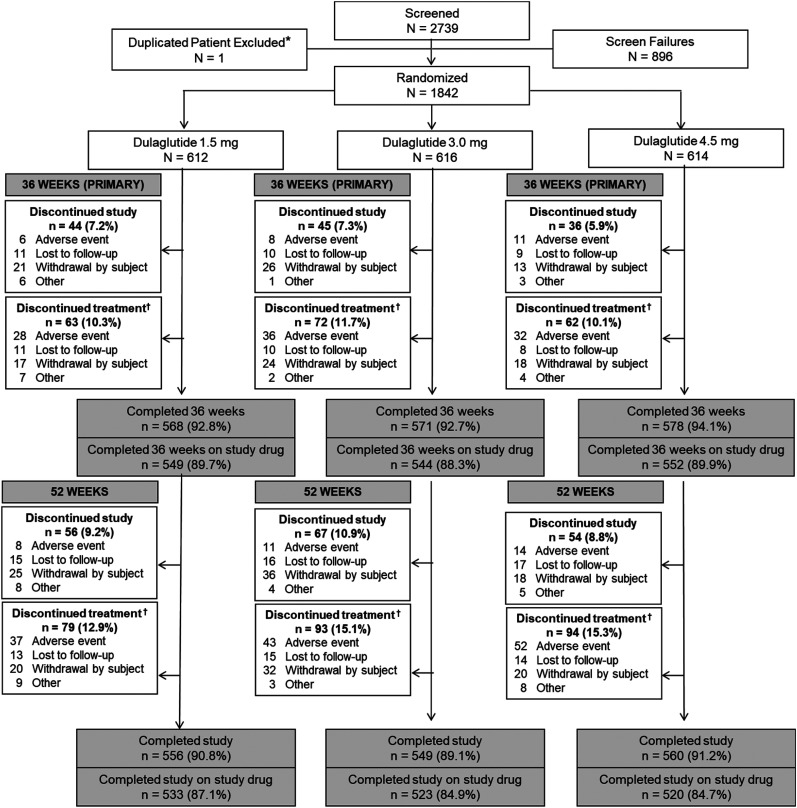
The study enrolled 1,842 adults with type 2 diabetes who were already taking metformin but still had blood sugar levels that were too high. Participants had an average starting A1C of 8.6% and an average BMI of 34.2 [1]. They were randomly assigned to take dulaglutide at 1.5 mg, 3.0 mg, or 4.5 mg once a week for 52 weeks, with the main results measured at 36 weeks [1].
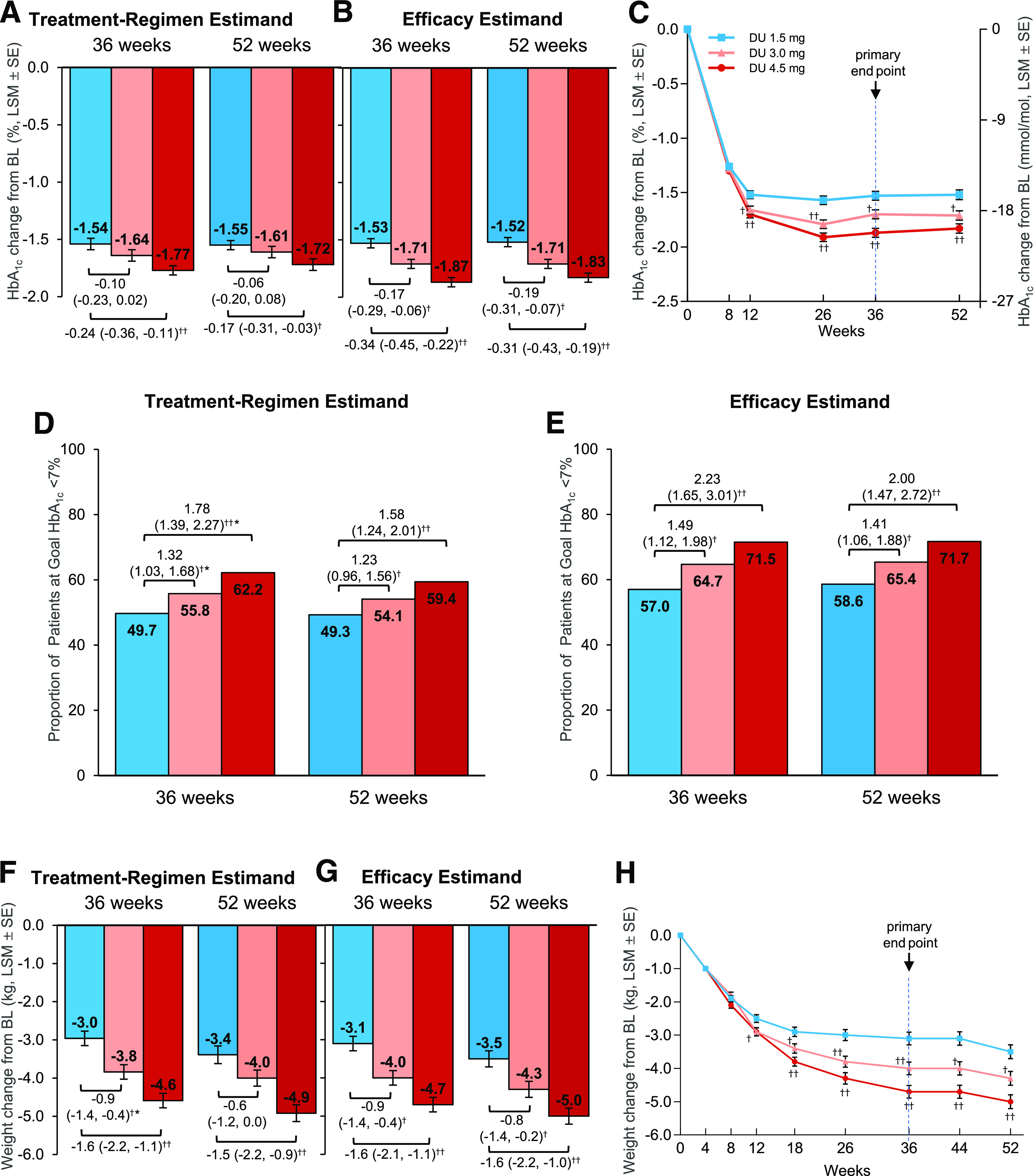
At the 4.5 mg dose, A1C fell by 1.77 percentage points, compared with a 1.54 point drop on the 1.5 mg dose, a difference of 0.24 percentage points that was statistically significant [1]. Weight loss also improved: patients on 4.5 mg lost 4.6 kg on average, versus 3.0 kg on the standard dose, a gap of 1.6 kg [1]. The 3.0 mg dose showed a smaller, less consistent benefit over 1.5 mg depending on how the data were analyzed [1].
The tradeoff was more stomach-related side effects. Nausea occurred in 13.4% of patients on 1.5 mg, rising to 15.6% on 3.0 mg and 16.4% on 4.5 mg. Vomiting followed the same pattern, affecting 5.6%, 8.3%, and 9.3% of patients at the three doses respectively [1]. The study authors concluded that raising the dose provided "clinically relevant" improvements in blood sugar and weight with a similar overall safety profile [1].
Why it matters for patients
These results matter because Trulicity is one of the most widely used GLP-1 drugs for type 2 diabetes, and the higher-dose options give doctors and patients another lever to pull if the standard dose isn't controlling blood sugar or weight well enough. A 0.24 percentage point improvement in A1C and roughly 1.6 kg of extra weight loss are real, measurable gains for someone managing diabetes over the long term.
But the improvements are incremental, not dramatic. The trial itself was designed to test dose escalation within the Trulicity line, not to compare Trulicity against other GLP-1 drugs like Ozempic (semaglutide). Separate research has generally shown semaglutide producing larger reductions in A1C and more weight loss than dulaglutide at comparable doses, meaning that pushing the dulaglutide dose higher narrows the gap somewhat but does not close it. For patients weighing options with their care team, this trial suggests that within the Trulicity family, going higher can help, but it does not turn dulaglutide into a match for semaglutide's typical results.
The side effect pattern is also worth understanding. Nausea and vomiting rates crept up with each dose increase, which is consistent with how GLP-1 drugs behave generally: more drug tends to mean more of these common, usually temporary, gastrointestinal symptoms.
What happens next
The AWARD-11 results, published in the journal Diabetes Care and made available via PMC on January 4, 2021, formed part of the evidence base that supported regulatory review of higher-dose dulaglutide options in the U.S. [1]. The source material does not specify a particular FDA approval date for the 3.0 mg and 4.5 mg doses, so that timeline is not established here. Longer-term data on durability of the glucose and weight effects beyond the 52-week study window are also not detailed in this source and remain unclear from what is available.
Images from the sources
Sources
Semaglutides.org is for information only and is not medical advice. Always talk to a licensed healthcare provider about your own care. Some links to telehealth services are affiliate links, labeled where they appear.