STEP 8 puts a number on the gap: semaglutide 15.8% versus liraglutide 6.4%
A JAMA trial directly compared weekly semaglutide 2.4 mg with daily liraglutide 3.0 mg over 68 weeks and found 15.8% versus 6.4% average weight loss, with similar rates of stomach side effects.
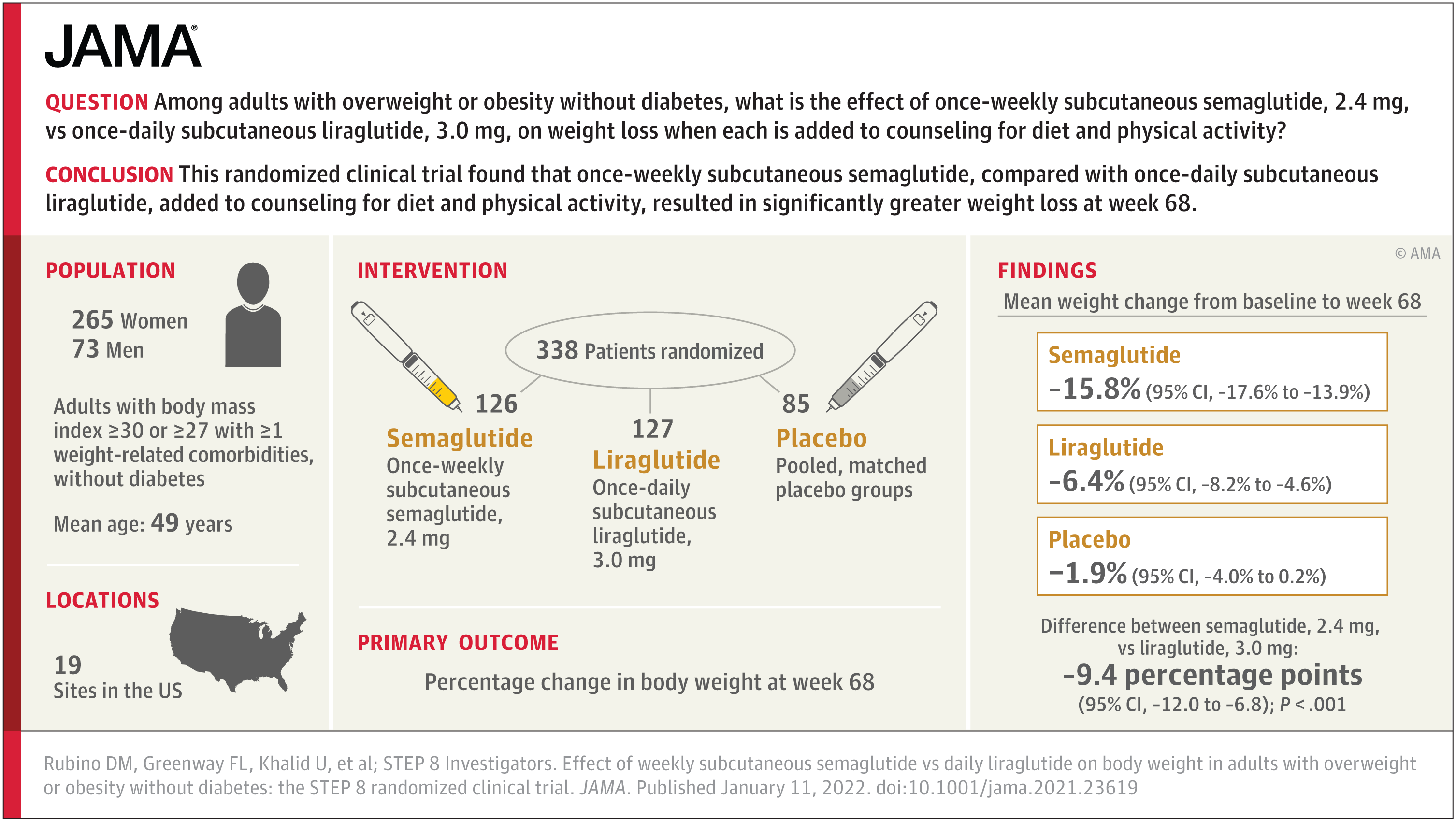
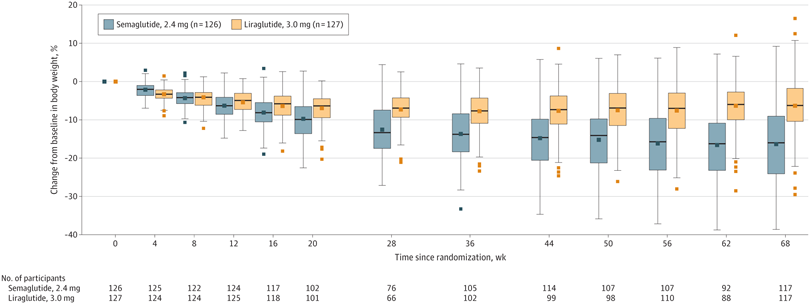
Researchers published the first phase 3b head-to-head trial of two GLP-1 drugs used for weight management in JAMA on January 11, 2022. Over 68 weeks, adults taking once-weekly subcutaneous semaglutide 2.4 mg lost an average of 15.8% of their body weight, compared with 6.4% for adults taking once-daily subcutaneous liraglutide 3.0 mg [2][3].
The STEP 8 trial enrolled 338 adults at 19 US sites, with enrollment running from September 11 to November 26, 2019, and follow-up ending May 11, 2021 [2]. Participants had a body mass index of 30 or higher, or 27 or higher with at least one weight-related condition, and did not have diabetes [2]. At the start, the average age was 49, 265 participants (78.4%) were women, average body weight was 104.5 kg (about 230 pounds), and average BMI was 37.5 [2].
People were randomly assigned in a 3:1:3:1 pattern to semaglutide 2.4 mg with a 16-week dose escalation (n=126), matching placebo, liraglutide 3.0 mg with a 4-week escalation (n=127), or matching placebo, all on top of diet and physical activity counseling [2]. The two placebo groups were pooled (n=85) [2]. Participants who could not tolerate semaglutide 2.4 mg were allowed to stay on 1.7 mg; those who could not tolerate liraglutide 3.0 mg had to stop treatment and could restart the 4-week titration [2]. The semaglutide-versus-liraglutide comparison was open-label, meaning participants and investigators knew which active drug was being used, while each active drug was blinded against its matched placebo [2].
The numbers
The difference in average weight change was 9.4 percentage points in favor of semaglutide (95% CI, −12.0 to −6.8; P < .001) [2]. The pooled placebo group lost 1.9% [2].
The gap was wider at higher weight-loss thresholds. Reaching 10% or more weight loss: 70.9% with semaglutide versus 25.6% with liraglutide (odds ratio 6.3) [2]. Reaching 15% or more: 55.6% versus 12.0% (odds ratio 7.9) [2]. Reaching 20% or more: 38.5% versus 6.0% (odds ratio 8.2) [2]. All three comparisons were statistically significant [2].
Side effects tell a more nuanced story. Gastrointestinal adverse events — nausea, vomiting, diarrhea and similar problems — were reported by 84.1% of the semaglutide group and 82.7% of the liraglutide group, essentially the same [2]. But 27.6% of the liraglutide group stopped treatment for any reason, roughly double the 13.5% in the semaglutide group [2]. Overall, 319 participants (94.4%) completed the trial and 271 (80.2%) completed treatment [2].
Why it matters for patients
Both drugs are GLP-1 analogues approved in the US for long-term weight management, and until this trial there was no phase 3 comparison between them [2]. JAMA noted that five drugs are FDA-approved for long-term weight management in adults — orlistat, phentermine/topiramate, naltrexone/bupropion extended release, liraglutide, and semaglutide — yet fewer than 1% of US adults with obesity use one [1].
For someone weighing whether a weekly or daily injection matters, STEP 8 suggests the choice is not just about convenience. Average weight loss was about 2.5 times greater with semaglutide, and far more people crossed the 15% and 20% marks [2]. At the same time, stomach-related side effects were common in both groups, so switching from daily to weekly dosing did not mean avoiding them [2].
The higher discontinuation rate in the liraglutide arm is worth noting, though the trial design may have contributed: people who could not tolerate the top liraglutide dose had to stop and restart titration, while semaglutide users could simply stay on a lower dose [2].
Limits and context
The trial was funded by Novo Nordisk, which makes both drugs [3]. Company representatives helped design and run the study and analyze the data, and a company-funded medical writer helped draft the manuscript, though the sponsor did not have the right to veto publication or choose the journal [3]. Several authors are Novo Nordisk employees or shareholders [2].
The study was relatively small at 338 people, ran for 68 weeks, and the active-drug comparison was open-label [2]. Results were first presented at the Obesity Society's annual meeting on November 5, 2021, before publication [3]. The trial is registered as NCT04074161 [2]. STEP 8 did not test how either drug compares with tirzepatide or any other newer agent, and it did not measure cardiovascular outcomes.
Images from the sources
Sources
Semaglutides.org is for information only and is not medical advice. Always talk to a licensed healthcare provider about your own care. Some links to telehealth services are affiliate links, labeled where they appear.