Lilly announces its first $2.1 billion for the LEAP District in Lebanon, Indiana
Lilly's first $2.1 billion for two plants in Boone County, Indiana, announced days after Mounjaro's approval, began a build-out that later grew past $13 billion and won't make medicine until late 2026 [3][2][1].
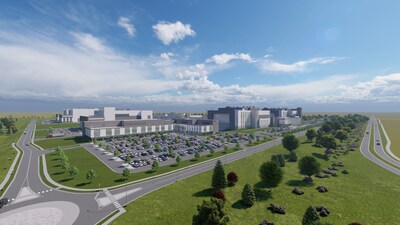
Eli Lilly said on May 26, 2022, that it would spend $2.1 billion to build two new manufacturing plants in Indiana, at the LEAP Lebanon Innovation and Research District in Boone County [3]. The company said it expected to create as many as 500 new corporate jobs at the site, with construction generating roughly 1,500 temporary positions [3].
The announcement came less than two weeks after the Food and Drug Administration cleared Mounjaro (tirzepatide) for type 2 diabetes [3]. Lilly said the new plants would expand its ability to make active pharmaceutical ingredients and more technologically advanced drugs such as genetic medicines, but it did not specify at the time which products would be made in Boone County [3].
The spending was small next to what Lilly had been doing. The company spent about $1.4 billion on capital expenditures in 2020 and $1.3 billion in 2021, according to its annual filing [3]. The 2022 commitment came on top of $2.5 billion earmarked for sites in and around Indianapolis over five years and a $470 million plant in North Carolina [3].
The Lebanon site kept growing
The $2.1 billion was the first of four rounds. Lilly added $1.6 billion in April 2023 and $5.3 billion in May 2024, then another $4.5 billion for a research-and-manufacturing complex it calls the Lilly Medicine Foundry, bringing the total past $13 billion and making it one of the largest capital projects in Indiana history [2].
The May 2024 round lifted the site's total from $3.7 billion to $9 billion and was aimed squarely at active pharmaceutical ingredient production for Zepbound (tirzepatide) and Mounjaro (tirzepatide) [1]. Lilly chair and CEO David Ricks called it "the largest manufacturing investment in our company's history" and said the company believes it "represents the single largest investment in synthetic medicine API manufacturing in U.S. history" [1].
Lilly has said it started its manufacturing expansion in 2020 based on tirzepatide research results, before either drug was approved, so that supply would exist when Mounjaro (2022) and Zepbound (2023) reached the market [1]. Tirzepatide is the only approved treatment that activates two incretin hormone receptors, GIP and GLP-1 [1].
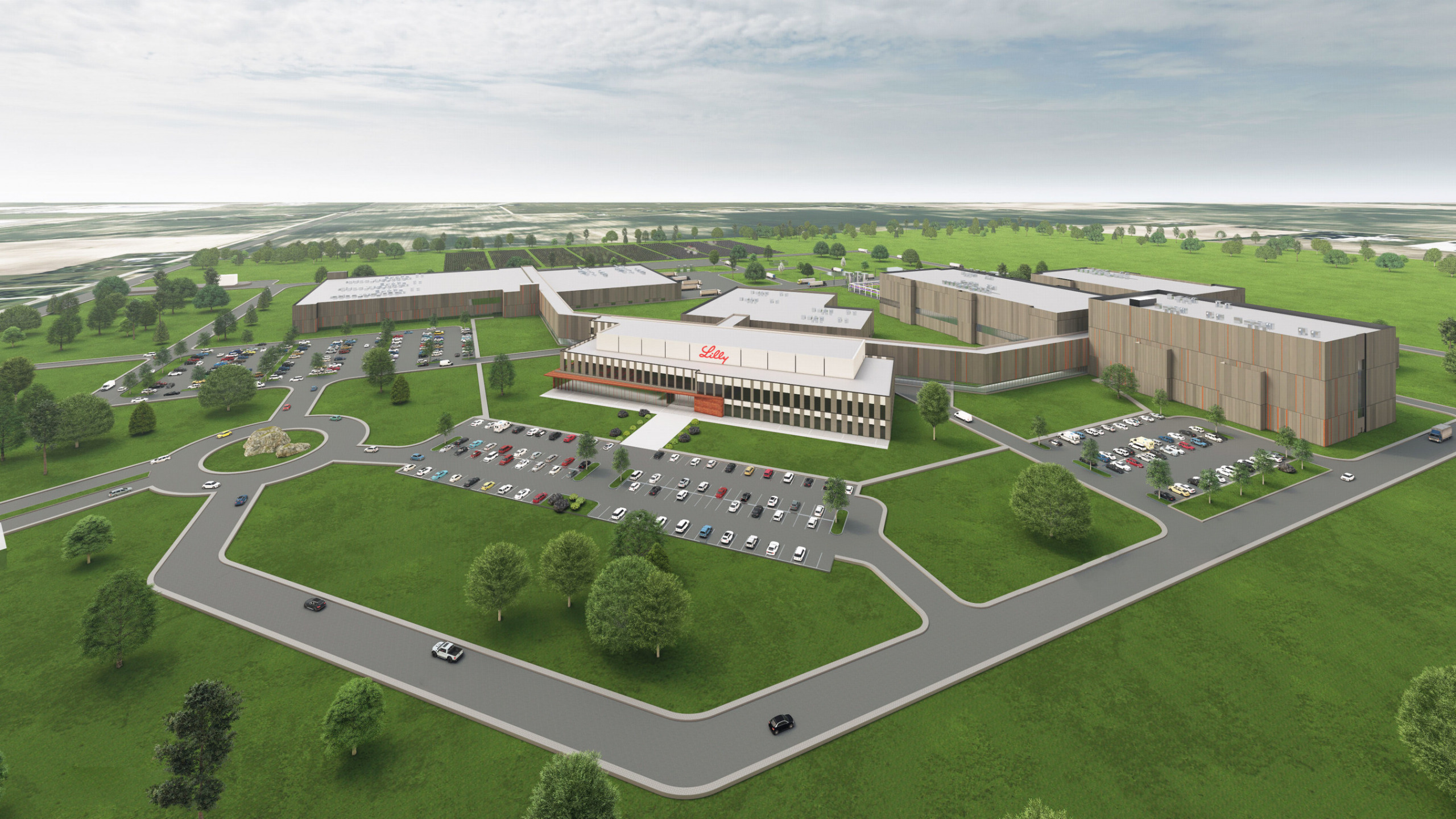
The Lebanon complex covers nearly 600 acres, expanded by about 200 more acres for the foundry [1][2]. Lilly expects about 900 full-time employees when the site is fully operational, plus more than 5,000 construction jobs during development [1].
Why it matters for patients
Factory announcements are the clearest signal of how long supply problems take to fix. Lilly broke ground in Lebanon in 2023 and expects to begin making medicines there toward the end of 2026, with operations scaling up through 2028 [1]. That is more than four years after the first $2.1 billion was announced in May 2022 [3] — a reminder that when a GLP-1 or GIP/GLP-1 medicine runs short, new plants cannot solve it quickly.
The active pharmaceutical ingredient is the bottleneck these projects target [1]. During the 2024 demand crunch, Lilly said it was overwhelmed by demand for Mounjaro, Zepbound and other drugs; the company later said the crunch had eased and that pharmacies were getting much of what they ordered [2].
One caveat worth noting: in 2022 Lilly did not publicly tie the first two Boone County plants to any specific product [3]. The link to incretin medicines was stated explicitly only in later announcements [1]. Whether those first two buildings ended up dedicated to tirzepatide ingredients is not spelled out in these sources.
What happens next
- Late 2026: Lilly expects to begin making medicines at the Lebanon site [1].
- Late 2027: The Lilly Medicine Foundry is scheduled to open; it is meant for process development and clinical-trial batches, not full-scale production, with new technologies transferred to other Lilly sites [2].
- Through 2028: Operations at Lebanon scale up [1].
Indiana is supporting the project with road, water, electric and utility work, plus incentives tied to Lilly hitting investment and employment targets [1][2]. The state's commerce secretary said the LEAP district had drawn $18 billion in committed capital investment on 2,300 acres since its 2022 launch, though Lilly remained the only company to have committed to the district at that point [2].
Images from the sources
Sources
Semaglutides.org is for information only and is not medical advice. Always talk to a licensed healthcare provider about your own care. Some links to telehealth services are affiliate links, labeled where they appear.