JAMA research letter links GLP-1 weight loss drugs to gastroparesis, pancreatitis and bowel obstruction
A JAMA research letter published Oct. 5, 2023 reported higher rates of gastroparesis, pancreatitis and bowel obstruction among people using semaglutide or liraglutide for weight loss, though the study was small and the estimates imprecise.
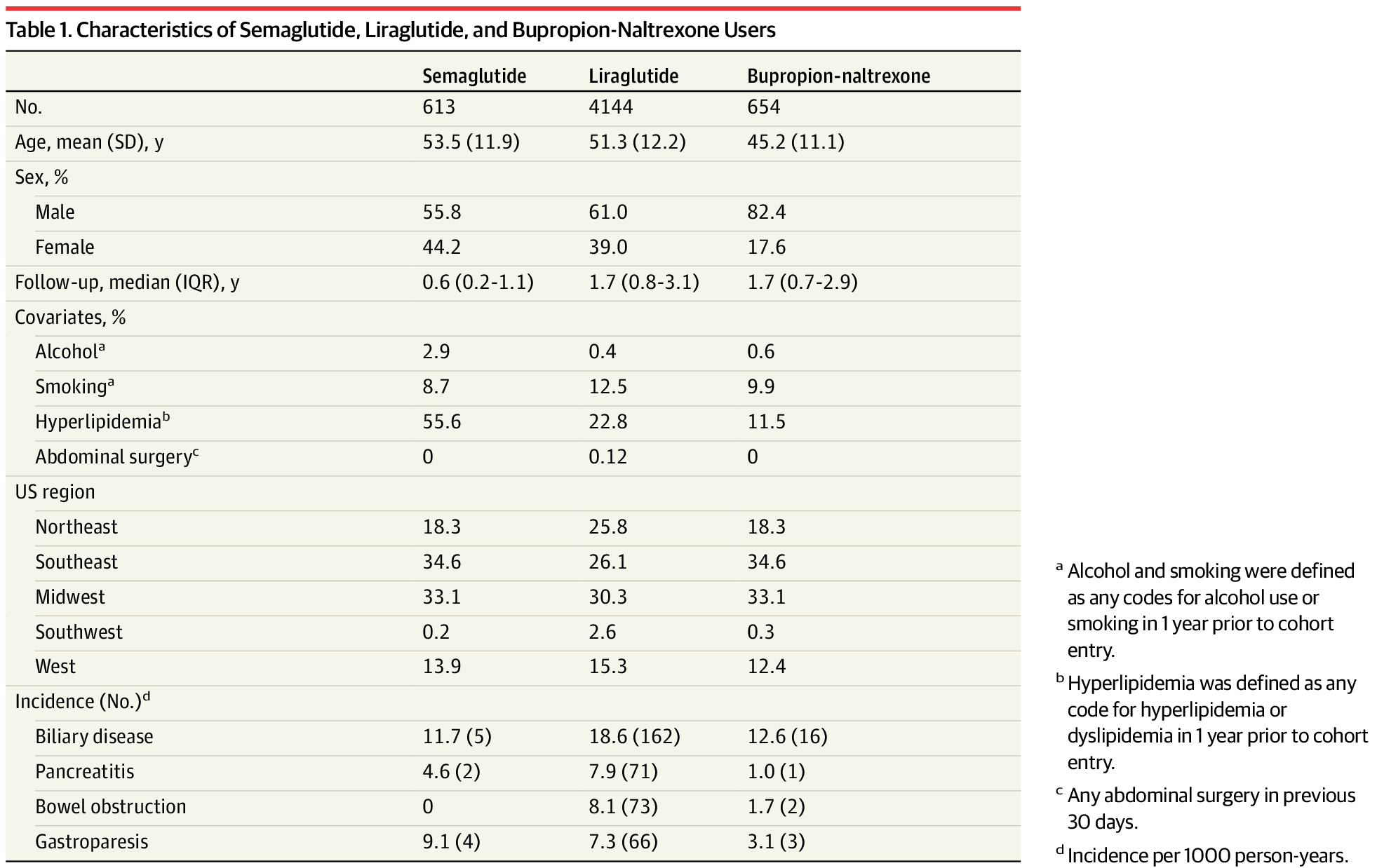
A research letter published in JAMA on Oct. 5, 2023 reported that people who started semaglutide or liraglutide for weight loss had higher rates of three serious digestive problems — stomach paralysis (gastroparesis), pancreatitis and bowel obstruction — than people who started bupropion-naltrexone, a non-GLP-1 weight loss pill [1].
The researchers, based at the University of British Columbia and StatExpert Ltd., used a random sample of 16 million patients from the PharMetrics Plus for Academics claims database (IQVIA), covering 2006 through 2020 [1]. The database captures about 93% of all outpatient prescriptions and physician diagnoses in the US using diagnostic codes [1]. Because semaglutide was not yet marketed for weight loss during the study window, the authors required every person in the analysis to have an obesity code within 90 days before or 30 days after starting the drug, and they excluded anyone with a diabetes diagnosis or an antidiabetic prescription [1].
What the numbers showed
The cohort was small: 613 semaglutide users, 4,144 liraglutide users and 654 bupropion-naltrexone users [1]. Median follow-up was 0.6 years for semaglutide and 1.7 years for both liraglutide and bupropion-naltrexone [1]. The comparison groups differed in ways that matter: semaglutide users averaged 53.5 years old and liraglutide users 51.3, versus 45.2 for bupropion-naltrexone users, and the bupropion-naltrexone group was 82.4% male [1].
After adjustment, the GLP-1 group had a hazard ratio of 9.09 (95% CI, 1.25-66.00) for pancreatitis, 4.22 (95% CI, 1.02-17.40) for bowel obstruction and 3.67 (95% CI, 1.15-11.90) for gastroparesis, compared with bupropion-naltrexone [1]. Biliary disease, including gallstones and cholecystitis, was not statistically significant at 1.50 (95% CI, 0.89-2.53) [1].
The event counts behind those ratios were very small. Pancreatitis occurred in 2 semaglutide users, 71 liraglutide users and 1 bupropion-naltrexone user; gastroparesis in 4, 66 and 3; bowel obstruction in 0 semaglutide users, 73 liraglutide users and 2 bupropion-naltrexone users [1]. That is why the confidence intervals are so wide — the pancreatitis estimate stretches from barely above 1 to 66 [1].
Sensitivity analyses moved some results. When people with hyperlipidemia were excluded, bowel obstruction lost statistical significance (3.63; 95% CI, 0.87-15.10), while gastroparesis held at 3.67 and pancreatitis fell to 7.99 [1]. Using a less restrictive obesity definition, the estimates shrank to 5.94 for pancreatitis, 2.44 for bowel obstruction and 2.35 for gastroparesis [1]. The authors also reported E-values — a measure of how strong an unmeasured confounder would have to be to explain away the result — of 17.67 for pancreatitis, 7.91 for bowel obstruction and 6.80 for gastroparesis [1].
Why it matters for patients
The authors framed the question directly: randomized weight loss trials of GLP-1 drugs were not designed to catch rare gastrointestinal events because they were too small and too short [1]. Claims-database studies like this one can spot signals that trials miss, but they cannot prove cause and effect, and the small number of events here means the true size of any added risk is uncertain.
The practical takeaway is about labeling and awareness rather than a precise risk number. Gastroparesis in particular — delayed stomach emptying, which the study identified through diagnosis codes or use of a promotility drug — had not been a prominent part of the conversation about these medicines before this paper [1].
It is also worth noting what this study does not cover. It looked only at semaglutide and liraglutide, not tirzepatide (Mounjaro/Zepbound) or newer agents, and follow-up ended in June 2020, before the approval of semaglutide for weight loss [1].
What happens next
JAMA later published a Comment & Response exchange in which outside researchers (Suissa, Cromer and Patorno) questioned the findings and the study authors replied [1]. Whether regulators changed any product labels in response to this specific paper is not addressed in the source.
Sources
Semaglutides.org is for information only and is not medical advice. Always talk to a licensed healthcare provider about your own care. Some links to telehealth services are affiliate links, labeled where they appear.