Foundayo's approval letter carries postmarketing safety requirements
FDA's approval letter for Lilly's obesity pill Foundayo (orforglipron) requires follow-up studies on liver injury, heart risks and delayed stomach emptying — standard conditions, but with deadlines that matter.
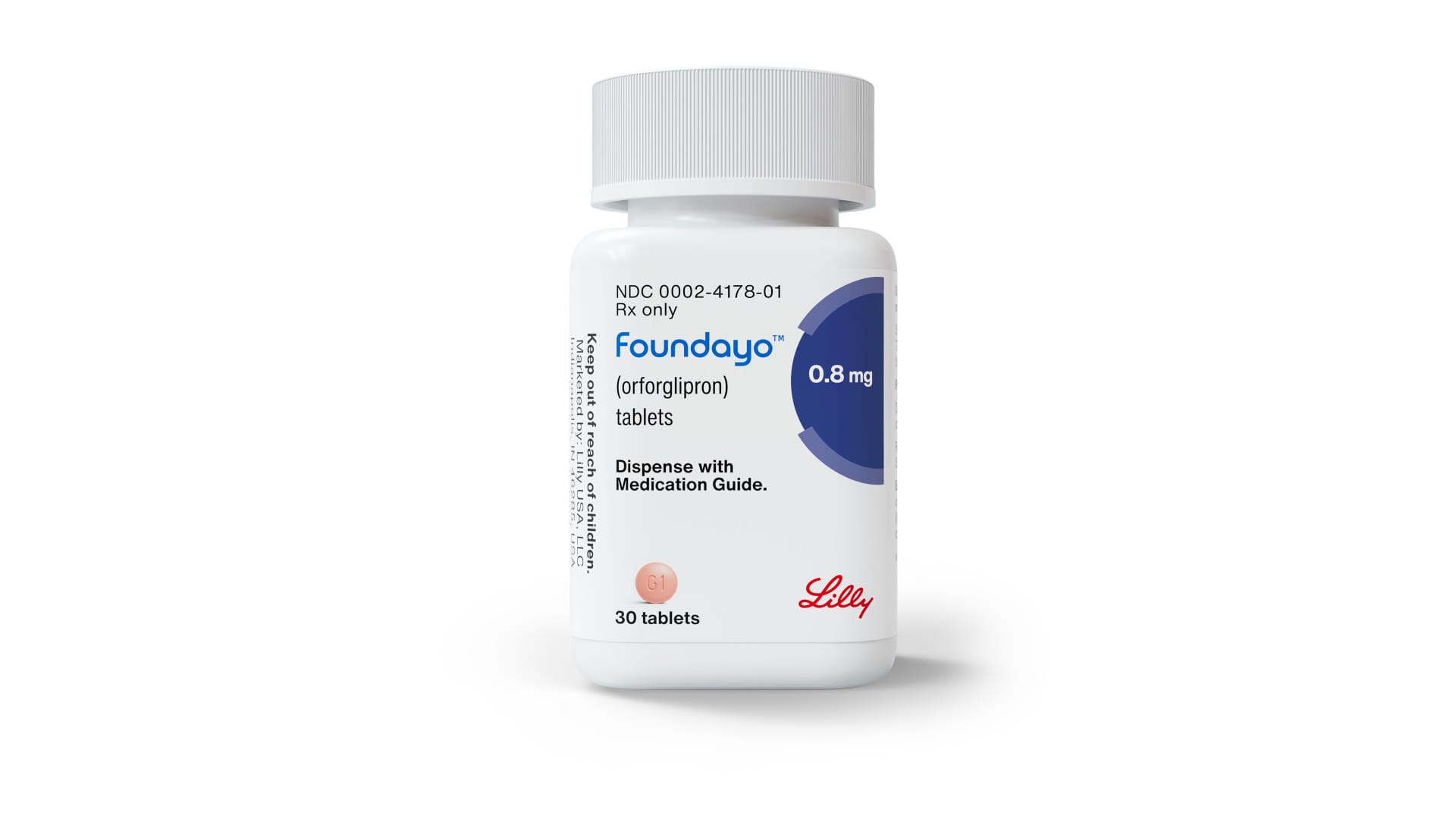
Eli Lilly must run or report on several additional safety studies as a condition of its new obesity pill's approval, according to the Food and Drug Administration's approval letter, which was signed April 1 and posted to the agency's website on April 14 [1]. The letter asks for data on drug-induced liver injury, cardiovascular events and delayed gastric emptying tied to Foundayo (orforglipron), the first pill in the GLP-1 class that is not a peptide [1][2].
What the letter asks for
The FDA asked Lilly to assess and statistically analyze unexpected cases of elevated liver enzymes meeting certain clinical safety criteria, liver harm, and patients who stopped treatment because of liver-related side effects [2]. Specifically, regulators want data on liver enzyme elevations, any cases meeting "Hy's law" — a combination of lab markers suggesting the liver has been damaged — and discontinuations for liver impairment [2]. The agency decided that observational data, without a placebo or comparator drug, would be enough to judge whether there is added liver risk [2].
The letter also requires postmarketing trials on cardiovascular events and on delayed gastric emptying, a known effect of GLP-1 drugs [1]. For the stomach question, the FDA asked Lilly to run a trial using ultrasound to measure how temporary treatment interruption and length of fasting affect retained stomach contents [1]. That issue matters for people scheduled for surgery or procedures requiring anesthesia. Separately, the agency asked for a milk-only lactation study in breastfeeding women who have received a dose, using a validated assay to measure how much drug reaches breast milk [1].
The development summary also refers to a pediatric data requirement, but the details of that request are not described in the available sources.
Lilly said the FDA's requirements are "consistent with the agency's standard approach to ongoing safety evaluation of newly approved medicines" and added that "no hepatic safety signals have been observed for Foundayo across the Phase 3 program to date" [2]. A Lilly webpage for prescribers points to four Phase 3 diabetes trials and Phase 2 data suggesting no elevated risk of liver enzyme increases versus placebo or versus semaglutide, the active ingredient in Wegovy [2].
Much of the liver data will come from ACHIEVE-4, an ongoing outcomes trial comparing Foundayo with long-acting insulin glargine in people with type 2 diabetes and obesity who are at increased cardiovascular risk [1][2]. That trial is designed to detect differences in heart attack, stroke, hospitalization for angina and cardiovascular death [2].
Foundayo was approved earlier in April under the Commissioner's National Priority voucher program, which aims to speed FDA decisions on drugs considered critical to public health or national security, and Lilly began selling it the week before the letter was posted [1].
Why it matters for patients
Postmarketing requirements are a normal part of drug approvals, and none of the items in the letter appear in Foundayo's label, according to Jefferies analyst Michael Leuchten, who wrote that he does not expect the letter to drive more demand for Novo Nordisk's oral Wegovy [2]. In practical terms, that means prescribing information for Foundayo has not changed because of these requests.
Still, the list signals which questions remain open. Long-term heart outcomes, liver effects and how long food stays in the stomach are not fully settled for this pill yet, and answers will arrive over months and years rather than now. Leuchten suggested one reason for the liver request: Foundayo was approved for obesity before diabetes, unlike other GLP-1 drugs on the market, where longer-term outcomes trials in diabetes came first [2].
On effectiveness, the two oral options differ. In trials, Foundayo led to an 11% reduction in body weight over 72 weeks, while oral Wegovy led to about a 14% reduction over 64 weeks [1]. Oral Wegovy must be taken on an empty stomach with a sip of water, 30 minutes before other medications, food or drink; Foundayo can be taken at any time of day without food or water restrictions [1].
What happens next
Investigators were due to complete ACHIEVE-4 in April 2026 and submit a report to the FDA in July 2026 [2]. Timelines for the gastric-emptying ultrasound trial and the lactation study are not stated in the available sources [1].
Images from the sources
Sources
Semaglutides.org is for information only and is not medical advice. Always talk to a licensed healthcare provider about your own care. Some links to telehealth services are affiliate links, labeled where they appear.