Harvard eye researchers report a NAION signal with semaglutide
A Harvard study in JAMA Ophthalmology linked semaglutide to higher rates of a rare, usually permanent form of vision loss, triggering regulatory reviews that later ended with a "very rare" label warning in Europe.
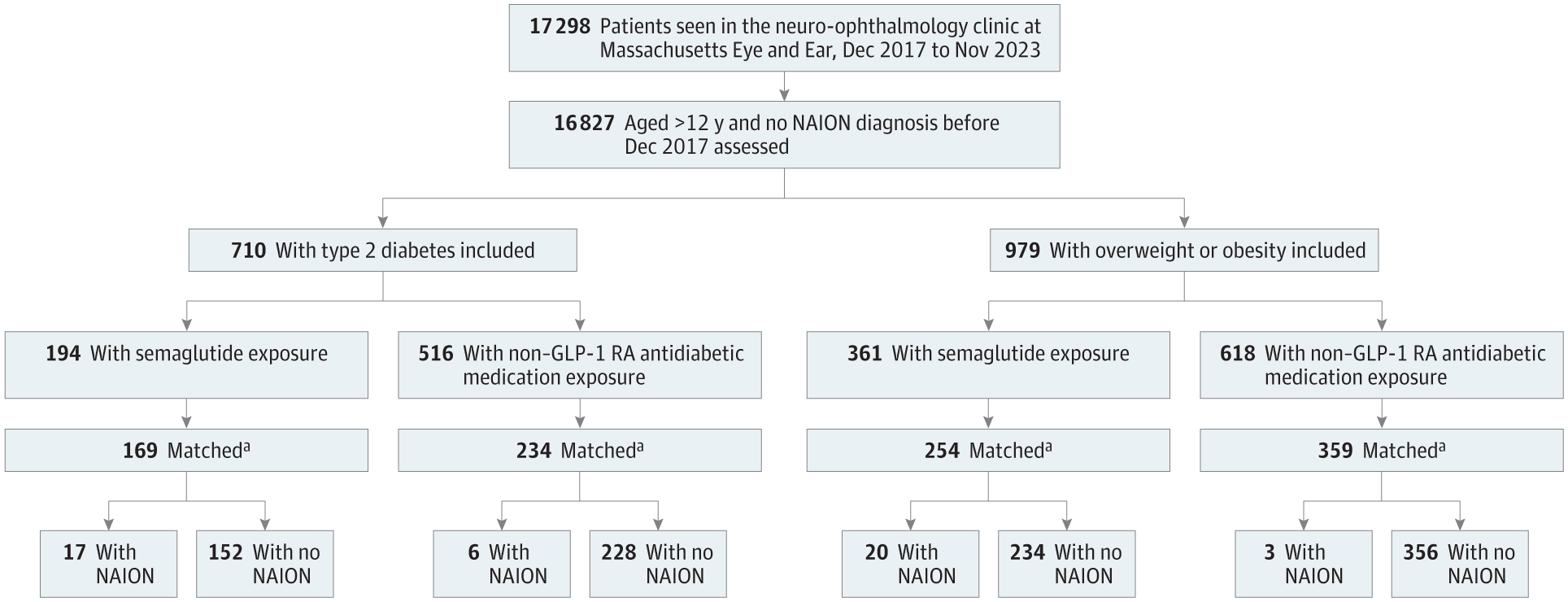
Researchers at Massachusetts Eye and Ear, a Harvard teaching hospital, reported in JAMA Ophthalmology that patients prescribed semaglutide — the drug in Ozempic, Wegovy and Rybelsus — were diagnosed with non-arteritic anterior ischemic optic neuropathy, or NAION, far more often than matched patients on other medicines [1][2]. The study was small and done at a single specialty referral center, and its critics said so immediately, but it set off safety reviews around the world.
What the study found
The matched cohort study compared people with type 2 diabetes and people with overweight or obesity who were prescribed semaglutide against patients prescribed other diabetes or weight-loss drugs. NAION diagnoses were confirmed by manual chart review rather than billing codes alone [2].
Among patients with type 2 diabetes, the hazard ratio for NAION at 36 months was 4.28 (95% CI, 1.62–11.29). Cumulative incidence was 8.9% (95% CI, 4.5–13.1) in the semaglutide group versus 1.8% (95% CI, 0–3.5) in controls [2]. Among the 979 patients with overweight or obesity, the hazard ratio was 7.64 (95% CI, 2.21–26.36), with cumulative incidence of 6.7% (95% CI, 3.6–9.7) versus 0.8% (95% CI, 0–1.8) [2]. A legal-industry summary of the paper describes it as covering records from 16,827 patients treated between 2017 and 2023 [3].
NAION is sometimes described as a stroke of the optic nerve. It usually causes sudden, painless vision loss in one eye. About one-third of patients have mild spontaneous improvement, but the loss is often permanent, there is no known effective treatment, and up to one-quarter of patients later develop it in the other eye [2]. Diabetes, hypertension, cardiovascular disease, metabolic syndrome and obstructive sleep apnea are all established risk factors [2].
The criticism
A later joint consensus statement from the North American Neuro-Ophthalmology Society and the American Academy of Ophthalmology laid out the study's limits: it was run at a single tertiary referral center that treats most of the region's NAION cases, so NAION occurred at a much higher rate than expected in the general population, suggesting selection bias and overestimated risk [2]. Hemoglobin A1c was not compared between groups, leaving open the possibility that sicker patients were the ones getting semaglutide. The authors of the consensus statement also noted it is possible the comparison drugs were simply better at preventing NAION [2].
Studies since then have split. A large analysis across the OHDSI network of 37.1 million adults with type 2 diabetes found higher NAION risk with semaglutide versus empagliflozin (HR, 2.27; 95% CI, 1.16–4.46) but not versus sitagliptin or glipizide [2]. Several TriNetX database studies found elevated risk; several others found none [2]. A meta-analysis of 78 semaglutide trials found an odds ratio of 3.92 (95% CI, 1.02–15.02) for ischemic optic neuropathy, while a meta-analysis of 69 GLP-1 trials found no association (OR, 1.53; 95% CI, 0.53–4.44) [2].
Why it matters for patients
The headline hazard ratios from the Harvard study describe a referral-center population, not the general public, and they say nothing about how many people out of 10,000 are affected. Europe's regulator later put a number on it: after reviewing non-clinical studies, trials, post-marketing surveillance and the literature, EMA's safety committee concluded in June 2025 that NAION is a "very rare" side effect of semaglutide, meaning up to 1 in 10,000 users, with large studies suggesting roughly a two-fold increase in adults with type 2 diabetes — about one extra case per 10,000 person-years of treatment [4].
The eye societies concluded that the overall magnitude of risk remains low, that some studies show no correlation, and that whether to start, continue or stop a GLP-1 drug is a shared decision between a patient and their care team [2]. EMA advised that people who have sudden vision loss or rapidly worsening eyesight while on semaglutide contact their doctor without delay, and that treatment be stopped if NAION is confirmed [4].
What happens next
EMA's PRAC completed its review and recommended the label change on June 6, 2025 [4]. One legal source states the EMA required label updates in August 2024 and that US labels had not been updated as of October 2025 [3]; the EMA's own announcement does not describe a 2024 action [4]. The current status of the US label is not established by these sources.
Images from the sources
Sources
- https://jamanetwork.com/journals/jamaophthalmology/fullarticle/2820255
- https://www.aao.org/Assets/f1be6b78-af02-4faf-b49c-cb94f8efacf1/639143694552330000/glp-1-ras-and-the-risk-of-naion-2026
- https://trulaw.com/ozempic-lawsuit/ozempic-blindness-lawsuit
- https://www.ema.europa.eu/en/news/prac-concludes-eye-condition-naion-very-rare-side-effect-semaglutide-medicines-ozempic-rybelsus-wegovy
Semaglutides.org is for information only and is not medical advice. Always talk to a licensed healthcare provider about your own care. Some links to telehealth services are affiliate links, labeled where they appear.