Lilly announces a $4.5 billion 'Medicine Foundry' research and manufacturing center
Eli Lilly said it will spend $4.5 billion on a Lebanon, Indiana site that develops manufacturing methods and makes clinical-trial supply in one place, with an opening set for late 2027 [1][2].
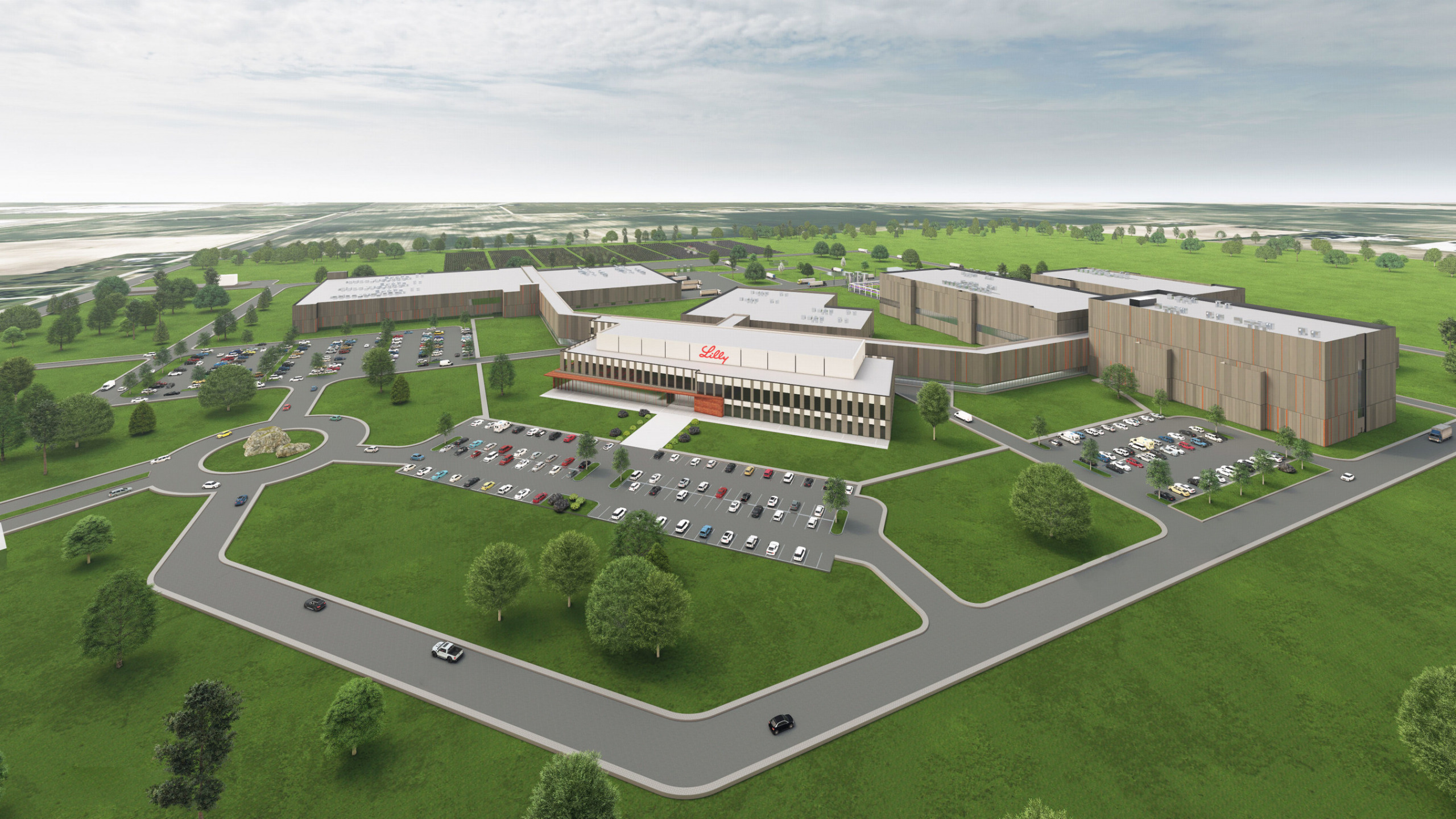
Eli Lilly said on Oct. 2, 2024 that it will invest $4.5 billion to build the Lilly Medicine Foundry in Lebanon, Indiana, a center that will research new ways to manufacture drugs while also producing medicines for clinical trials at the same location [1][2]. The company said the facility is the first of its kind to combine research and production in a single site, and that it is scheduled to open in late 2027 [2][3].
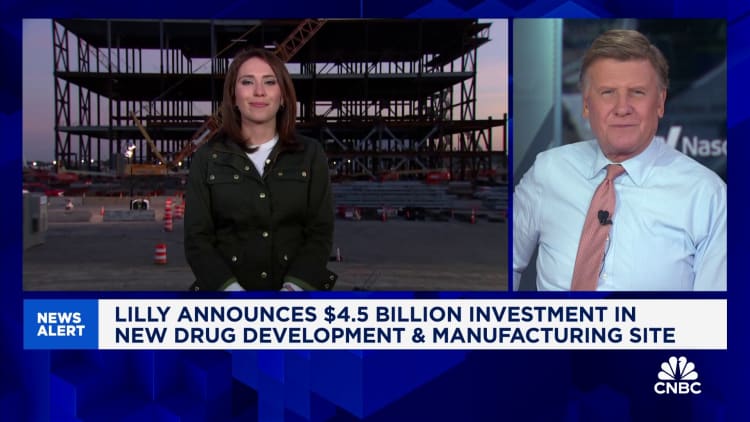
The foundry is expected to add 400 full-time jobs, including engineers, scientists, operations staff and lab technicians [1][3]. It will be a standalone complex of seven main buildings and will expand Lilly's 600-acre Lebanon footprint by about 200 acres [3]. It will be built to handle small molecules, biologics and nucleic acid therapies, including gene therapy work [3][4]. In an interview with CNBC, Lilly CEO David Ricks said the site could increase the company's output by 400% [1].
Importantly, the foundry is not meant to run full-scale commercial production. Lilly said new manufacturing technologies developed there will be transferred to its other plants for full-scale production [1][3]. That distinction matters for anyone reading the announcement as a direct fix for pharmacy shortages: the medicines made at the foundry are small clinical-trial batches, not retail supply [3].
The money behind it
The $4.5 billion is the fourth large investment Lilly has announced at the Lebanon site in about two and a half years, following $2.1 billion in May 2022, $1.6 billion in April 2023 and $5.3 billion in May 2024 [3][4]. That brings Lilly's total commitment in Lebanon to more than $13 billion [3][4], while total U.S. capital commitments since 2020 now exceed $23 billion, the company said [1]. Sources describe the neighboring complex slightly differently: CNBC refers to a $9 billion manufacturing complex under construction in Lebanon to make ingredients such as tirzepatide, the active ingredient in Mounjaro and Zepbound [2], while the Indianapolis Business Journal frames the figure as total site investment topping $13 billion [3].
Indiana is backing the project with road, water, electricity and utility improvements [3]. The Indiana Economic Development Corporation said it would add $456 million in tax incentives tied to Lilly hiring 239 Hoosiers by 2030 [4]. Lilly's incentive package had already passed $1.25 billion as of May 2024 [4].
Why it matters for patients
The practical link to GLP-1 users is indirect but real. Lilly has spent billions expanding tirzepatide production after demand outpaced supply for most of 2024, though the company has said the crunch has eased and pharmacies are getting much of what they ordered [1][3]. The foundry is aimed at the next wave: Ricks told CNBC that Lilly has 11 obesity drugs in its pipeline with different mechanisms and delivery methods, including two in Phase 3 trials — the oral drug orforglipron and the injectable retatrutide [1][2].
If a company can develop a manufacturing process and make trial supply in the same building, it can, in theory, move a drug from lab bench to launch faster. "The idea is to take molecules from a bench in a lab to scaled for medicines in a pharmacy, and this research and development site will do that work," Ricks said [2]. Chief scientific officer Dan Skovronsky said the goal is to be "all in on creating the medicine for the clinical trials as quickly as possible" when a promising molecule appears [4].
What the sources do not say is whether this will lower prices, widen insurance coverage or change how quickly any specific drug reaches pharmacies. Those questions are not answered by this announcement. Analysts quoted by Reuters expect the GLP-1 market to reach $150 billion by the early 2030s [1], and CNBC reported that Mounjaro and Zepbound alone are expected to bring in $50 billion by 2028 [2].
What happens next
Construction continues at the LEAP district, where more than a dozen other Lilly buildings are going up [3]. Lilly said it had not yet pinpointed where on the site the foundry will sit [3]. The Indiana Finance Authority planned to release a regional water study in December 2024 to assess water demand and availability in north central Indiana, after residents raised concerns about pumping water to the district [4]. Gov. Eric Holcomb said there is enough water for all current development at the site [4]. The foundry itself is due to open in late 2027 [1][2][3].
Images from the sources
Sources
- https://www.reuters.com/business/healthcare-pharmaceuticals/lilly-announces-new-45-bln-manufacturing-site-indiana-2024-10-02/
- https://www.cnbc.com/2024/10/02/eli-lilly-to-build-4point5-billion-research-and-manufacturing-center.html
- https://www.ibj.com/articles/lilly-to-invest-another-4-5b-in-lebanon-site-for-new-medicine-foundry
- https://www.reporter-times.com/story/money/2024/10/02/eli-lilly-invests-another-4-5-billion-for-leap-district-in-lebanon/75465073007/
Semaglutides.org is for information only and is not medical advice. Always talk to a licensed healthcare provider about your own care. Some links to telehealth services are affiliate links, labeled where they appear.