Aspiration warning appears on semaglutide, tirzepatide and liraglutide labels
FDA added a pulmonary aspiration warning to labels for semaglutide, tirzepatide and liraglutide, and now tells patients to alert their providers before any surgery or procedure using anesthesia or deep sedation.
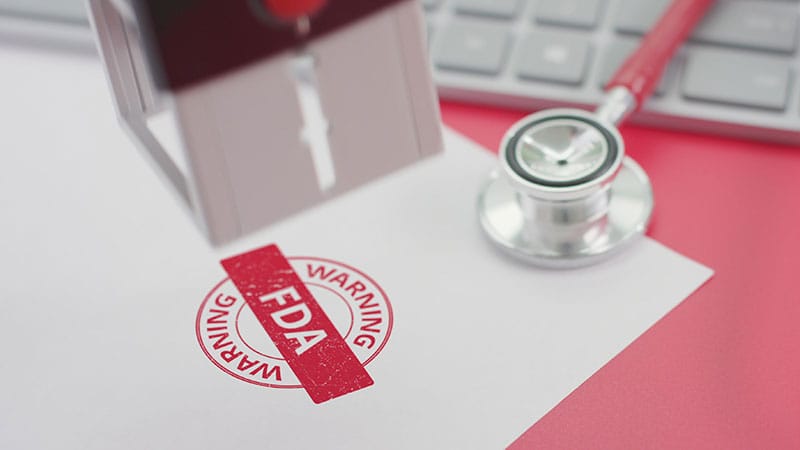
The US Food and Drug Administration has added a new warning about pulmonary aspiration — food or liquid getting into the lungs — to the labels of the entire GLP-1 drug class, including semaglutide (Ozempic, Rybelsus, Wegovy), liraglutide (Saxenda, Victoza) and the dual GIP/GLP-1 drug tirzepatide (Mounjaro, Zepbound) [1]. The updated labels instruct patients to tell their healthcare providers before any planned surgery or procedure that uses general anesthesia or deep sedation [1].
The change came through FDA's safety labeling process. In a September 6, 2024 letter, the agency notified manufacturers under section 505(o)(4) of the Federal Food, Drug, and Cosmetic Act that it had determined new safety information should be added to GLP-1 receptor agonist labeling, specifically about "the serious risk of pulmonary aspiration for patients undergoing elective surgeries or procedures requiring general anesthesia or deep sedation" [2]. Novo Nordisk submitted a supplemental application for Ozempic on October 4, 2024, and FDA signed the approval on November 1, 2024 [2]. Medscape reported on November 6 that the labels across the class had been updated, and an FDA spokesperson described it as "a safety-related labeling change for the glucagon-like peptide 1 receptor agonist product class" [1].
What the new language says
A new subsection under "Warnings and Precautions" states that "there have been rare postmarketing reports of pulmonary aspiration in patients receiving GLP-1 receptor agonists undergoing elective surgeries or procedures requiring general anesthesia or deep sedation who had residual gastric contents despite reported adherence to preoperative fasting recommendations" [1].
Importantly, FDA did not tell clinicians what to do about it. The label says "available data are insufficient to inform recommendations to mitigate the risk of pulmonary aspiration during general anesthesia or deep sedation in patients taking [these drugs], including whether modifying preoperative fasting recommendations or temporarily discontinuing [them] could reduce the incidence of retained gastric contents" [1]. The only instruction is to tell patients to inform their healthcare providers before planned surgeries or procedures [1].
The warning also appears in the Adverse Reactions section and in Postmarketing Experience, which now reads: "Pulmonary aspiration has occurred in patients receiving GLP-1 receptor agonists undergoing elective surgeries or procedures requiring general anesthesia or deep sedation" [1].
The Medication Guide — the plain-language handout that comes with the prescription — was updated too. It tells patients to inform their provider if they are scheduled for surgery or other procedures using anesthesia or deep sedation, and lists food or liquid getting into the lungs during such procedures as a serious possible side effect [1]. In the Patient Counseling section, prescribers are advised to tell patients that the drug "may cause their stomach to empty more slowly which may lead to complications with anesthesia or deep sedation during planned surgeries or procedures" [1].
Why it matters for patients
GLP-1 medicines slow how fast the stomach empties — that is part of how they reduce appetite. The concern raised in the label is that some people may still have food or liquid in the stomach at the time of a procedure even after following standard fasting instructions, which raises the chance of aspiration under anesthesia or deep sedation [1].
The practical consequence is a communication step. The label now puts the burden of disclosure squarely on the conversation between patient and care team: surgeons, anesthesiologists, gastroenterologists doing endoscopies or colonoscopies, and dentists using sedation may all want to know whether someone is on a GLP-1 drug [1].
What the label does not settle is what should happen next. FDA explicitly says the data are not sufficient to recommend longer fasting or pausing the medication before a procedure [1]. That means practices may differ from one hospital or clinic to another, and decisions are left to the treating team. The sources also do not give a rate or number of reported aspiration cases, or say how many reports prompted the change — only that the postmarketing reports are described as "rare" [1]. Whether risk differs between semaglutide, tirzepatide and liraglutide, or by dose or how long someone has been on treatment, is not addressed in these documents.
What happens next
Under the approval letter, Novo Nordisk had 14 days from the November 1, 2024 letter to submit the final labeling content in structured format, which then becomes accessible through public labeling repositories [2]. The company also had to revise promotional materials to match the new safety information, with "prominent disclosure" of it, and to submit a statement of intent to comply within 7 days [2]. Parallel supplements were approved across the other products in the class [1].
Sources
Semaglutides.org is for information only and is not medical advice. Always talk to a licensed healthcare provider about your own care. Some links to telehealth services are affiliate links, labeled where they appear.