Kidney analysis of SURMOUNT-1 and SURMOUNT-2 finds no adverse eGFR signal
A new analysis of two major tirzepatide obesity trials found no sign that the drug harms kidney function, and it modestly lowered a marker of kidney damage.
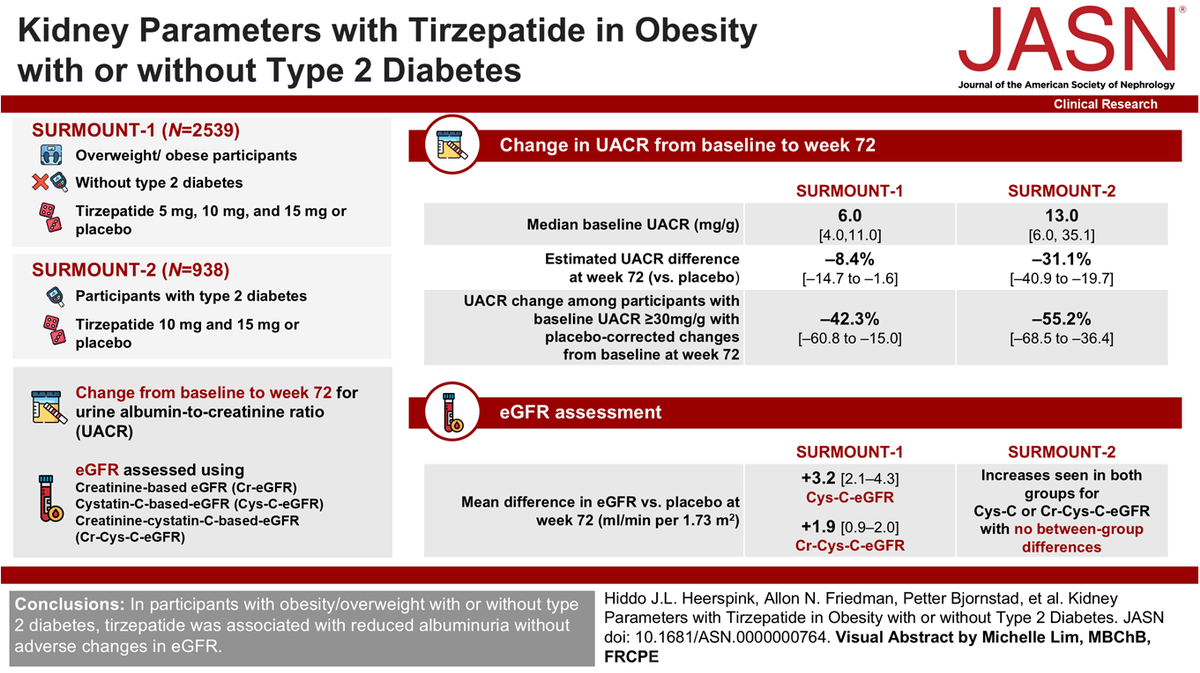
A prespecified analysis of the SURMOUNT-1 and SURMOUNT-2 obesity trials, published in the Journal of the American Society of Nephrology, found no evidence that tirzepatide (the active ingredient in Mounjaro and Zepbound) damages the kidneys over 72 weeks of use [1]. The analysis also found that the drug reduced albuminuria, a marker of kidney damage, in both trial populations [1].
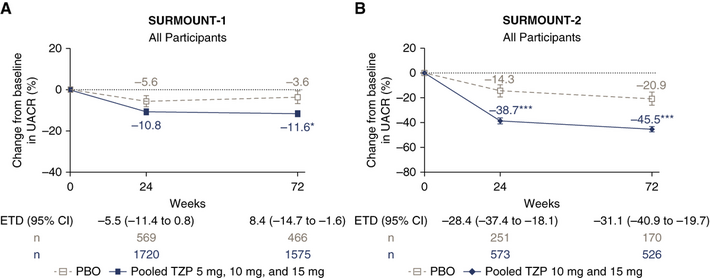
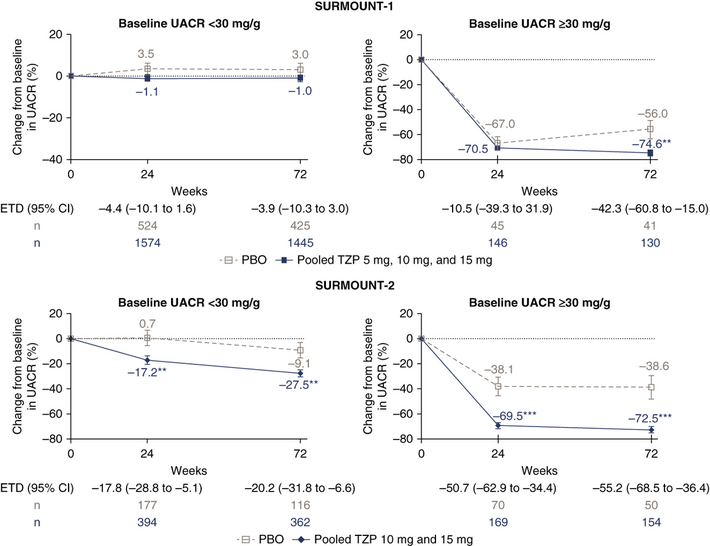
SURMOUNT-1 enrolled 2,539 people with obesity or overweight who did not have type 2 diabetes, randomized to tirzepatide at 5, 10, or 15 mg weekly or placebo [1]. SURMOUNT-2 enrolled 938 people with obesity and type 2 diabetes, randomized to tirzepatide at 10 or 15 mg or placebo [1]. In SURMOUNT-1, urine albumin-to-creatinine ratio (UACR) fell by an estimated 8.4% more with tirzepatide than placebo at week 72; in SURMOUNT-2, the gap was larger, at 31.1% [1]. Among participants who started with elevated UACR of 30 mg/g or higher, the placebo-adjusted drop was even bigger, 42.3% in SURMOUNT-1 and 55.2% in SURMOUNT-2 [1].
On the safety side, acute kidney injury was reported in 0.3% to 0.6% of people taking tirzepatide in SURMOUNT-1, compared with 0.2% on placebo. In SURMOUNT-2, the 10 mg dose group had a 1% rate versus 0.3% on placebo. Estimated glomerular filtration rate (eGFR), the standard measure of overall kidney function, did not show adverse changes with tirzepatide. In SURMOUNT-1, tirzepatide was actually linked to a small increase in eGFR measured using cystatin-C-based methods, about 3.2 mL/min per 1.73 m2 higher than placebo at week 72 [1]. In SURMOUNT-2, both the drug and placebo groups saw eGFR increases, with no meaningful difference between them [1].
The researchers describe this as a post hoc, or after-the-fact, analysis rather than one built into the trials' original primary goals, though it followed a predefined plan for how kidney measures would be assessed [1]. The current FDA label for tirzepatide includes a warning tied to dehydration and acute kidney injury that can result from gastrointestinal side effects like vomiting or diarrhea, rather than a warning that the drug itself is directly toxic to the kidneys.
Why it matters for patients
Kidney disease is common in people with obesity and type 2 diabetes, and many patients and doctors want to know whether weight-loss drugs help or hurt kidney health over time [1]. This analysis suggests tirzepatide does not appear to harm kidney function and may modestly reduce a marker linked to kidney damage, especially in people who already had elevated albumin levels in their urine [1].
That said, the acute kidney injury numbers, while low in absolute terms, were higher in tirzepatide groups than placebo in both trials. Because dehydration from gastrointestinal side effects is a known contributor to kidney injury in people taking GLP-1 and GIP/GLP-1 drugs, the label's existing warning focuses on that mechanism rather than direct kidney toxicity. Patients experiencing severe vomiting or diarrhea while on these medications may want to discuss hydration and kidney monitoring with a health care provider, since this analysis does not change existing prescribing information.
What happens next
The analysis was published in the November 2025 issue of the Journal of the American Society of Nephrology, though it appeared online on June 13, 2025 [1]. It remains a post hoc analysis of existing trial data rather than a new dedicated kidney-outcomes trial, and the authors do not indicate whether a prospective kidney-focused study of tirzepatide is planned [1]. Whether the FDA will update tirzepatide's labeling based on these findings is not addressed in the source and is not yet known.
Images from the sources
Sources
Semaglutides.org is for information only and is not medical advice. Always talk to a licensed healthcare provider about your own care. Some links to telehealth services are affiliate links, labeled where they appear.