Endocrine Society review finds real-world databases do not show more aspiration
A new review of large real-world health databases found no consistent evidence that GLP-1 drugs raise the risk of aspiration or pneumonia around elective surgery or endoscopy, a question that has caused confusion for patients scheduling procedures.
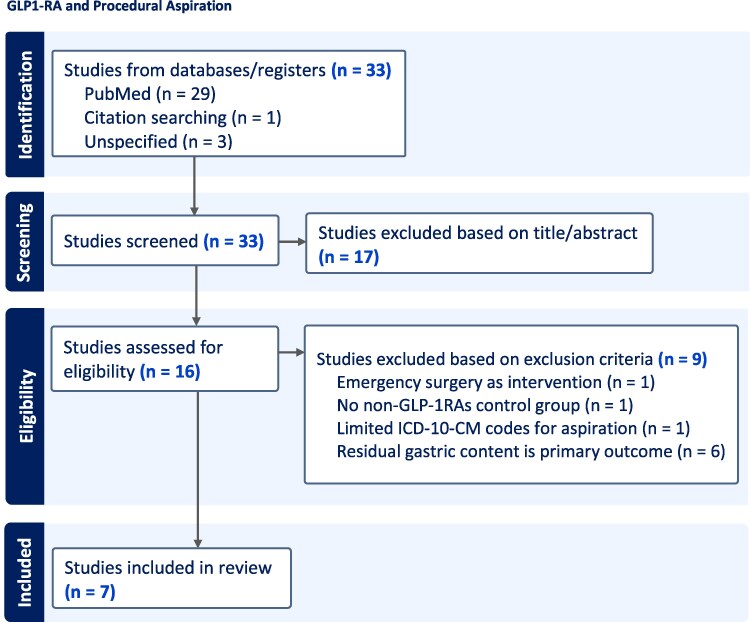
A review published in the Journal of the Endocrine Society on July 8, 2025, looked at retrospective studies using large real-world databases and found that GLP-1 receptor agonists like semaglutide (Ozempic, Wegovy, Rybelsus) and tirzepatide (Mounjaro, Zepbound) have not been consistently linked to a higher risk of aspiration or pneumonia around elective surgery or endoscopy [1].
The review was prompted by a policy reversal. In June 2023, the American Society of Anesthesiologists (ASA) recommended stopping GLP-1 drugs before elective surgery or upper endoscopy — one day ahead for daily formulations, one week ahead for weekly ones — because these drugs slow stomach emptying, which raised concern that food or liquid could remain in the stomach and be inhaled during sedation [1]. In October 2024, the ASA reversed course, joining with three other medical societies to say most patients should keep taking their GLP-1 drug before elective surgery, with the decision left to shared discussion between patient and care team [1].
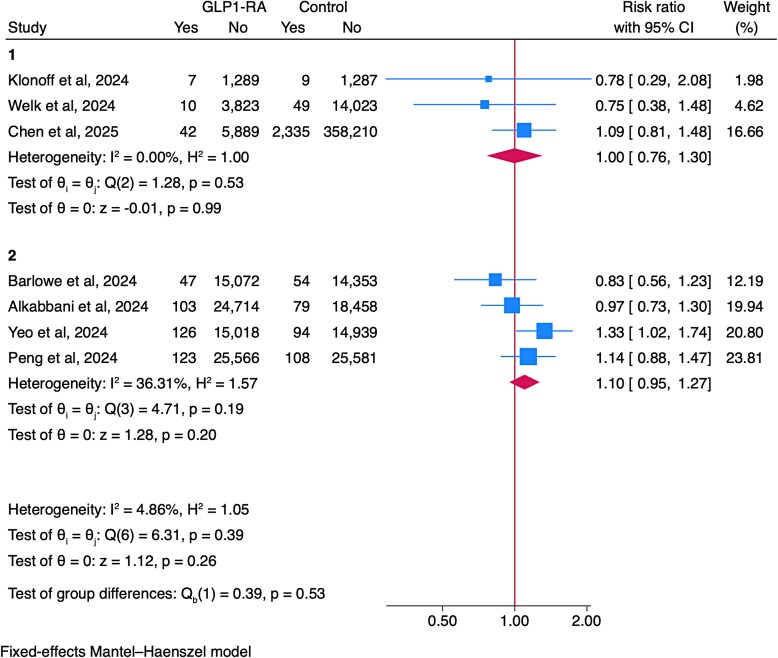
The researchers searched for retrospective cohort studies published between June 2023 and March 2025 that compared aspiration or pneumonia rates in GLP-1 users versus nonusers around elective surgery or esophagogastroduodenoscopy (EGD, a scope test that looks at the esophagus, stomach and upper small intestine) [1]. They found three studies on elective surgery and four on EGD that used large databases [1]. Combining the three surgery studies produced a risk ratio of 1.00, with a range of 0.76 to 1.30, meaning no increased risk was detected [1]. Combining the four EGD studies produced a risk ratio of 1.10, with a range of 0.95 to 1.27, also showing no clear increase [1]. A risk ratio of 1.00 means no difference between groups; ratios above 1 suggest more risk, but only if the range does not include 1.00.
To check whether their method could catch a real risk if one existed, the authors pointed to one study that also looked at opioid medications, which are known to slow digestion and raise aspiration risk. That analysis found a risk ratio of 2.68, with a range of 1.89 to 3.81, for opioids — a clear, detectable increase [1]. The authors said this shows their approach could have identified a GLP-1 risk if the data actually showed one [1].
The review also noted how common these drugs have become: 43% of adults who have been told by a doctor they have diabetes, and 22% of those told they are overweight or obese, have used a GLP-1 drug, based on data cited in the paper [1]. The initial 2023 ASA guidance did not cite specific studies showing increased aspiration risk, and doctors pushed back during the 16 months it was in effect, partly because stopping the drugs could worsen blood sugar control in people with diabetes and partly because patients unaware of the rule were showing up for procedures and having them canceled [1].
Why it matters for patients
Patients on semaglutide or tirzepatide who are scheduled for surgery or an endoscopy have faced shifting guidance over the past two years about whether to pause their medication beforehand. This review adds to the evidence behind the ASA's 2024 reversal, showing that large database studies have not found a consistent link between these drugs and aspiration or pneumonia around such procedures [1]. That does not mean the concern is fully settled — the studies are retrospective and observational, meaning they look back at existing records rather than randomly assigning treatment, which can leave room for unmeasured differences between groups [1]. Decisions about whether to continue or pause a GLP-1 drug before a procedure are now framed as a discussion between the patient and their surgical, anesthesia and prescribing teams, based on individual risk [1].
What happens next
The review does not specify a set date for further studies, but the authors note it covers cohort research through March 2025, and the field has already shifted twice on this question — from the June 2023 ASA guidance to the October 2024 reversal — suggesting more data could continue to refine this guidance over time [1].
Images from the sources
Sources
Semaglutides.org is for information only and is not medical advice. Always talk to a licensed healthcare provider about your own care. Some links to telehealth services are affiliate links, labeled where they appear.