Profit warning wipes about $70 billion off Novo Nordisk's value; Doustdar named CEO
Novo Nordisk cut its 2025 sales and profit forecasts on July 29, blaming continued use of compounded GLP-1s and competition, and named a new CEO as its stock lost about $70 billion in value.
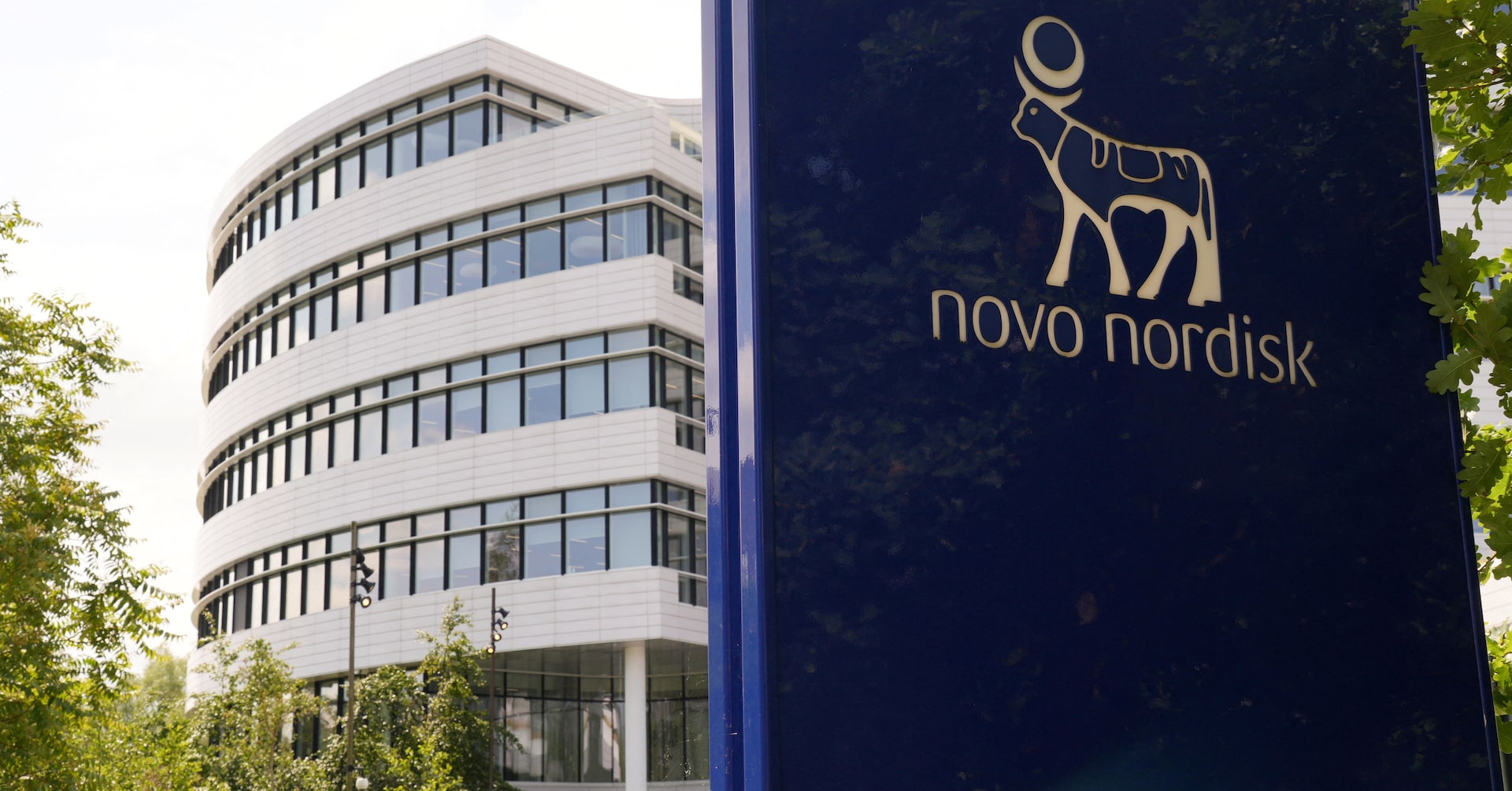
Novo Nordisk, the maker of Wegovy and Ozempic, cut its full-year 2025 financial forecasts on July 29 and named a new chief executive on the same day. Investors wiped roughly $70 billion off the Danish drugmaker's market value, with shares falling as much as 29.8% before paring losses [1].
The company now expects full-year sales growth of 8% to 14% at constant exchange rates, down from a prior target of 13% to 21% [2]. It also lowered expected operating profit growth to 10% to 16%, from 16% to 24% [2]. Novo said the weaker outlook was driven by lower second-half U.S. sales growth expectations for Wegovy, its weight-loss drug, and Ozempic, its diabetes drug [2]. Both are semaglutide.
"For Wegovy in the US, the sales outlook reflects the persistent use of compounded GLP-1s, slower-than-expected market expansion and competition," the company said in a statement [2].
Compounded copies did not go away
Compounded drugs are custom-made medicines based on the same ingredients as branded products. U.S. law bars pharmacies from simply replicating approved drugs, but compounding has been allowed for patients who need custom doses or formulations [1].
In May, Novo said it expected many of the roughly one million U.S. patients using compounded GLP-1 drugs to move to branded treatments after an FDA ban on compounded copies of Wegovy took effect on May 22 [1]. That has not played out as the company hoped. "Unfortunately, our latest market research indicates that has not happened," Chief Financial Officer Karsten Munk Knudsen told analysts, adding that one million or more U.S. patients are still using compounded GLP-1s [1].
David Moore, who heads Novo's U.S. operations, said the company has stepped up talks with the FDA to limit unlawful compounding. "Compounding continues to be an issue that we have to address," he said [1].
Competition is the other pressure point. Novo launched Wegovy nearly two and a half years before Eli Lilly's Zepbound (tirzepatide), but Zepbound prescriptions passed Wegovy this year by more than 100,000 a week [1]. Novo has also struggled with investor doubts about its pipeline after disappointing trial results for its next-generation obesity candidate, CagriSema [2].
A new CEO from inside the company
Novo named Maziar Mike Doustdar as president and CEO, effective August 7, following the surprise ousting in May of Lars Fruergaard Jørgensen [1][2]. Doustdar joined Novo in 1992 and most recently served as executive vice president of international operations, after leading the company's businesses in the Middle East and then Southeast Asia [1][2]. He is Iranian-born, an Austrian national, and grew up in the United States [1].
"We need to increase the sense of urgency and execute differently," Doustdar told investors and analysts on a call [1]. Chairman Helge Lund called him "the best person to lead Novo Nordisk through its next growth phase" [2].
Some analysts and investors had argued Novo should pick an American, or someone with deep U.S. experience, since the United States is by far the largest and most profitable market for weight-loss drugs [1].
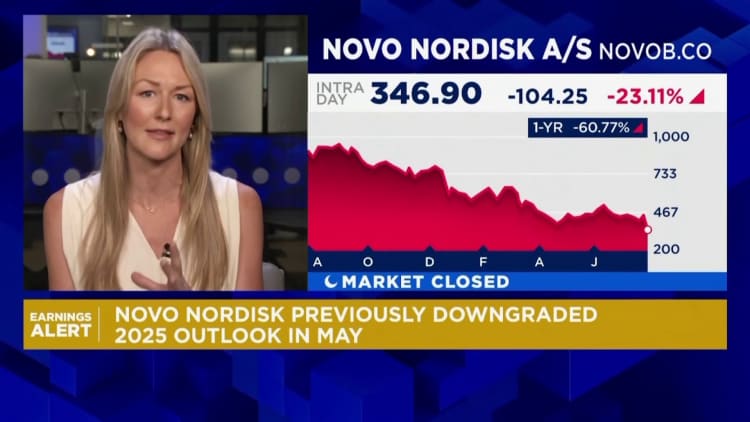
Reports differ slightly on the size of the stock damage. Reuters said shares were down more than 20% by mid-afternoon and down 44% for the year [1]; CNBC reported shares closed down 23% in London and had shed over 42% this year [2]. At its peak in June 2024, Novo was worth as much as $615 billion [1].
Why it matters for patients
Nothing in this announcement changes the approval status, labeling or availability of Wegovy, Ozempic or Rybelsus. The news is about company finances and leadership.
Still, the details say something about the market patients are navigating. Novo's own research indicates a million or more Americans were still using compounded GLP-1 drugs more than two months after the FDA ban on compounded Wegovy copies took effect [1]. That suggests the unapproved supply chain has not disappeared, even though it is now outside what the FDA permits.
The company also blamed "slower-than-expected market expansion," meaning fewer new patients are starting branded treatment than it projected [2]. Cost and insurance coverage are widely cited reasons in the broader market, but the sources here do not break down why.
For people weighing semaglutide against tirzepatide, the prescription gap is notable: Zepbound is now ahead of Wegovy by more than 100,000 prescriptions a week in the U.S. [1]. What that means for pricing, rebates or coverage decisions is not addressed in these sources.
What happens next
Novo was scheduled to report full second-quarter results on August 6 [2]. Doustdar took over as CEO on August 7 [1][2]. Whether the company's talks with the FDA lead to further enforcement against compounders is not yet known.
Images from the sources
Sources
- https://www.reuters.com/business/healthcare-pharmaceuticals/wegovy-maker-novos-profit-warning-triggers-70-billion-share-rout-2025-07-29
- https://www.cnbc.com/2025/07/29/novo-nordisk-shares-plunge-after-wegovy-maker-cuts-full-year-guidance-.html
- https://www.nytimes.com/2025/07/29/business/ozempic-novo-nordisk-stock-plunge.html
Semaglutides.org is for information only and is not medical advice. Always talk to a licensed healthcare provider about your own care. Some links to telehealth services are affiliate links, labeled where they appear.