Eli Lilly becomes the first drugmaker worth $1 trillion
Eli Lilly briefly crossed $1 trillion in market value on Nov. 21, driven by tirzepatide sales that now top Keytruda — a sign of how central GLP-1 drugs have become, and how much pricing pressure follows.
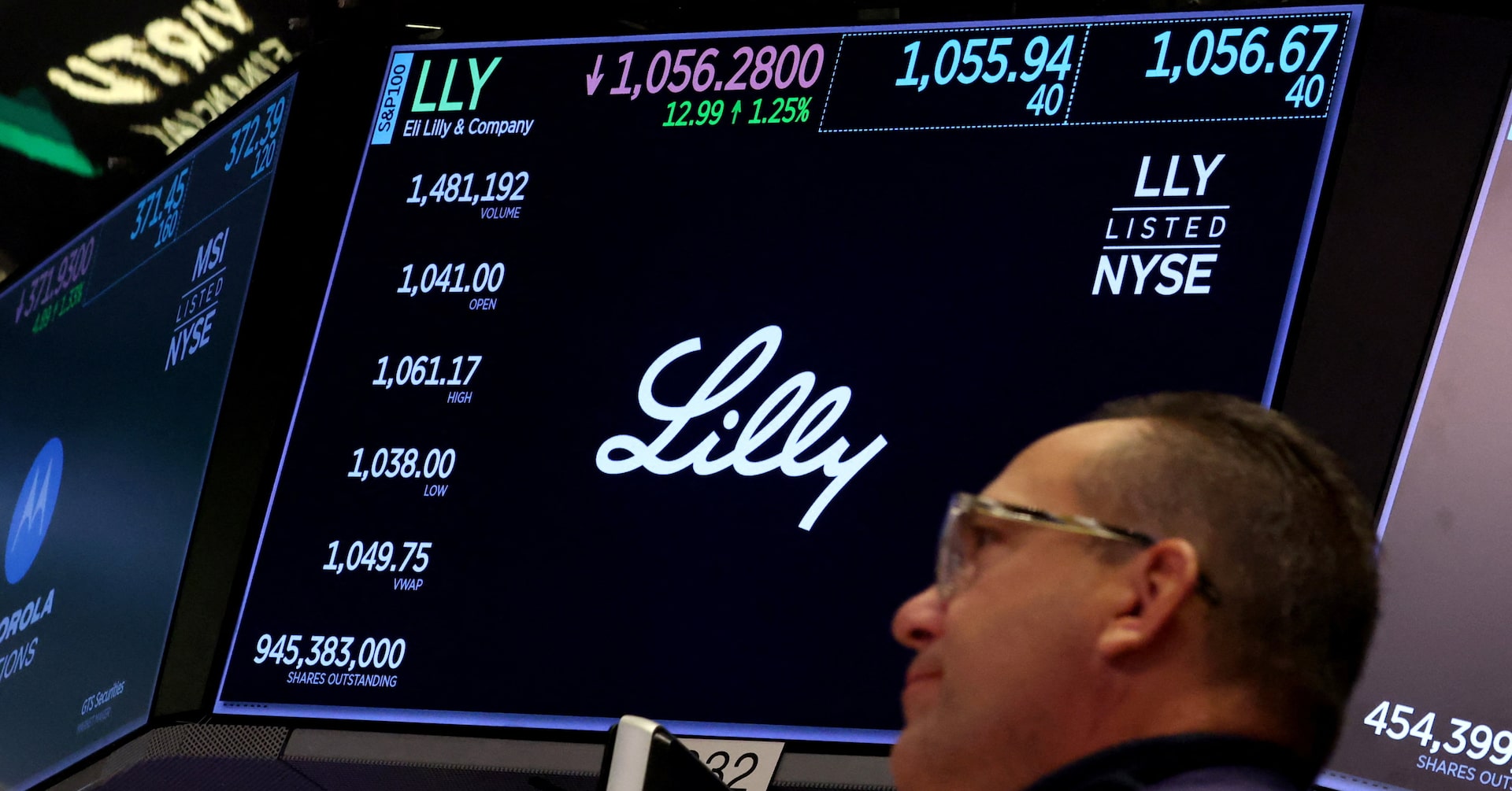
Eli Lilly briefly became the first drugmaker ever worth $1 trillion on Friday, Nov. 21, 2025, joining a club previously limited to tech giants [1][2]. The driver was not a cancer drug or a vaccine but tirzepatide, sold as Mounjaro for type 2 diabetes and Zepbound for obesity.
Over the first nine months of 2025, combined Zepbound and Mounjaro sales reached nearly $19 billion, passing Merck's cancer immunotherapy Keytruda to make tirzepatide the world's best-selling medicine [2]. In Lilly's most recent reported quarter, its obesity and diabetes portfolio brought in more than $10.09 billion, more than half of the company's $17.6 billion in total revenue [1].
How Lilly got here
Lilly's stock has climbed more than 35% this year and was trading near $1,051 on Friday, up about 1% [1]. Shares were worth under $100 as recently as 2018 [2]. At $1 trillion, Lilly is worth more than twice its closest pharma peer, Johnson & Johnson, and more than Walmart [2]. BioPharma Dive notes the $1 trillion figure counts all 945,383,757 shares outstanding; if the 50 million shares Lilly holds in an employee benefit trust were excluded, as they are in its earnings-per-share math, the company would be worth roughly $53 billion less [2].
Reuters reports that Novo Nordisk had the early lead in this market, but that Novo's 2021 Wegovy launch was slowed by supply shortages, giving Lilly room to catch up [1]. Lilly's drugs have also shown stronger results in a head-to-head weight-loss trial, and the company scaled up manufacturing faster [1]. Zepbound can help people lose about one-fifth of their body weight, and Mounjaro helps roughly four in five people with uncontrolled blood sugar bring it into a healthy range [2].
Forecasts for where this market lands differ. Reuters cites Wall Street estimates of a $150 billion weight-loss drug market by 2030 [1], while BioPharma Dive cites analyst expectations of $100 billion in annual sales by 2030 [2]. Both agree Lilly and Novo are expected to control most of it [1][2].
Why it matters for patients
A trillion-dollar valuation is a bet by investors that demand for these drugs stays high for years — Lilly trades at about 50 times expected earnings over the next 12 months, one of the richest valuations in big pharma [1]. For people filling prescriptions, the more relevant piece is what that money is being spent on. Lilly has committed to what it calls the largest investment in synthetic drug production in U.S. history, after demand strained supply at both Lilly and Novo and created shortages that compounding pharmacies moved to fill [2].
Price is the other half of the story. The drugs' cost has drawn scrutiny from lawmakers [2], and in November both Lilly and Novo agreed to deals with the Trump administration to lower prices, though BioPharma Dive notes questions remain about the actual impact of those agreements [2]. Analysts told Reuters the pricing deal may hold back Lilly's revenue in the near term but significantly expands access, potentially adding as many as 40 million U.S. candidates for obesity treatment [1]. Reuters also reports analysts are watching whether Lilly can keep growing as prices for Mounjaro and Zepbound come under pressure [1].
One more detail: the Lilly Endowment, a private foundation that operates independently from the company, is the drugmaker's largest shareholder with 92.5 million shares, and the stock run-up has pushed its assets to $102 billion — making it the largest U.S. foundation, ahead of the Gates Foundation's $77.2 billion [3]. Its giving goes to religion, education and community development, largely in Indiana, not to drug costs [3].
What happens next
Investors are now watching orforglipron, Lilly's pill form GLP-1, which Reuters reports is expected to be approved in early 2026 [1]. Citi analysts wrote that the drug is positioned to benefit from "inroads made by its injectable predecessors" [1]. An exact FDA decision date is not given in these sources, and neither is how orforglipron would be priced or covered. Lilly raised its annual revenue forecast by more than $2 billion at the midpoint in October on global demand for its obesity and diabetes drugs [1].
Images from the sources
Sources
- https://www.reuters.com/business/healthcare-pharmaceuticals/lilly-becomes-first-drugmaker-join-trillion-dollar-club-weight-loss-demand-boom-2025-11-21/
- https://www.biopharmadive.com/news/eli-lilly-1-trillion-pharmaceutical-market-value-obesity/721819/
- https://www.tipranks.com/news/eli-lillys-lly-endowment-becomes-the-largest-in-the-u-s-with-100-billion-of-assets
Semaglutides.org is for information only and is not medical advice. Always talk to a licensed healthcare provider about your own care. Some links to telehealth services are affiliate links, labeled where they appear.