CagriSema submitted to the FDA for weight management
Novo Nordisk filed for FDA approval of CagriSema on Dec. 18, 2025, a weekly shot pairing semaglutide with cagrilintide that cut weight by about 20% in its main trial; FDA review is expected in 2026.
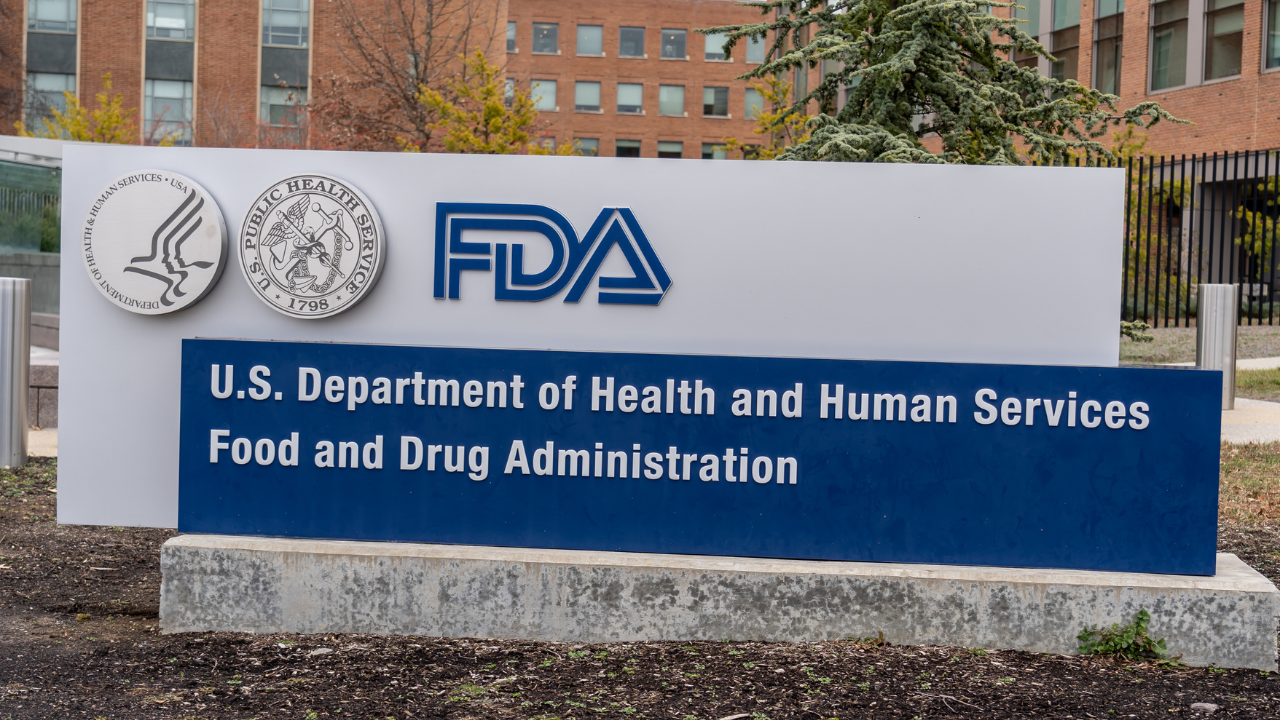
Novo Nordisk said on Dec. 18, 2025, that it submitted a New Drug Application to the U.S. Food and Drug Administration for CagriSema, a once-weekly injection combining cagrilintide 2.4 mg with semaglutide 2.4 mg, for long-term weight management in adults with obesity, or with overweight plus at least one weight-related condition [3]. If the FDA clears it, CagriSema would be the first injectable combination of a GLP-1 receptor agonist and an amylin analogue on the market [3].
Semaglutide is already sold as Wegovy for obesity and Ozempic for type 2 diabetes [4]. Cagrilintide is the new piece: a long-acting version of amylin, a hormone that works through a different pathway than GLP-1 [3]. The two are packaged in one fixed-dose shot, so the doses cannot be adjusted separately [3].
What the trials showed
The application rests on two 68-week Phase 3 trials [3]. REDEFINE 1 enrolled 3,417 adults with obesity (BMI of 30 or higher) or overweight (BMI of 27 or higher) plus at least one obesity-related complication, and without diabetes. It compared CagriSema against semaglutide 2.4 mg alone, cagrilintide 2.4 mg alone, and placebo, all with lifestyle changes [3]. REDEFINE 2 tested CagriSema against placebo in 1,206 adults with type 2 diabetes and obesity or overweight [3].
In REDEFINE 1, people on CagriSema lost 20.4% of their body weight at 68 weeks versus 3.0% on placebo when results were counted regardless of whether participants stayed on the drug. Average starting weight was about 236 pounds in the CagriSema group and 235 pounds on placebo [3]. In the analysis that assumes everyone stayed on treatment and used no other weight-loss drugs, the figures were 22.7% versus 2.3% [3]. Novo's release also rounds that second number to "23%" in its summary bullets [3].
About 91.9% of CagriSema patients lost at least 5% of body weight, compared with 31.5% on placebo [3]. In a secondary analysis, 54% of participants who had obesity at the start fell below a BMI of 30 by week 68, versus 11.1% on placebo [3]. An earlier readout from the same trial put CagriSema's 20.4% loss against 11.5% for cagrilintide alone and 14.9% for semaglutide alone [4].
On safety, Novo said results were comparable with the GLP-1 class [3]. Side effects were mostly gastrointestinal: 79.6% of the CagriSema group reported them versus 39.9% on placebo, including nausea (55% vs. 12.6%), constipation (30.7% vs. 11.6%) and vomiting (26.1% vs. 4.1%) [3]. Dropouts due to side effects were 5.9% with CagriSema versus 3.5% with placebo in REDEFINE 1, and 8.4% versus 3% in REDEFINE 2 [3]. A separate 2025 readout found injection-site reactions in 12% of CagriSema patients, compared with 17% on cagrilintide alone and 2.6% on semaglutide alone; analysts flagged those reactions while noting CagriSema's weight loss looked comparable to tirzepatide (Zepbound), which did not cause them [4].
Why it matters for patients
A filing is not an approval. The FDA is expected to review the application during 2026, and Novo repeated that timeline in its annual report published in early February 2026 [1][3][2]. CagriSema is not approved in the U.S. or the EU [3].
If approved, CagriSema would add another injectable option alongside existing GLP-1 drugs, with trial weight loss higher than semaglutide alone in a head-to-head arm [4]. The trade-off visible in the data is tolerability: high rates of nausea, constipation and vomiting, plus injection-site reactions tied to the cagrilintide part [3][4].
Several things patients care about are not in these sources: the brand name, the U.S. price, insurance coverage, launch timing, and whether the label will carry any cardiovascular or other outcome claims. Those are not yet known.
What happens next
- Dec. 18, 2025: NDA submitted [3].
- During 2026: FDA review expected; Novo also lists a decision on CagriSema among its 2026 milestones [1][2].
- Ongoing: REDEFINE 3, an event-driven cardiovascular outcomes trial, and REDEFINE 11, a longer trial in people with a BMI of 30 or higher [3].
- Competing filings: Novo has also submitted semaglutide 7.2 mg in the U.S., and Eli Lilly awaits an FDA decision on its oral orforglipron in early 2026 [2][4].
Images from the sources
Sources
- https://www.pharmexec.com/view/novo-nordisk-submits-nda-fda-cagrisema
- https://www.sec.gov/Archives/edgar/data/353278/000035327826000006/caq42025.htm
- https://www.prnewswire.com/news-releases/novo-nordisk-files-for-fda-approval-of-cagrisema-the-first-once-weekly-combination-of-glp1-and-amylin-analogues-for-weight-management-302645862.html
- https://www.biospace.com/fda/novo-nordisk-files-combo-obesity-drug-cagrisema-for-fda-approval
Semaglutides.org is for information only and is not medical advice. Always talk to a licensed healthcare provider about your own care. Some links to telehealth services are affiliate links, labeled where they appear.