Largest NAION study to date: VA cohort finds double the risk with semaglutide
A VA study of 102,361 veterans with type 2 diabetes found NAION, a form of sudden vision loss, in 0.29% of semaglutide starters versus 0.13% of those starting SGLT2 inhibitors over about two years.
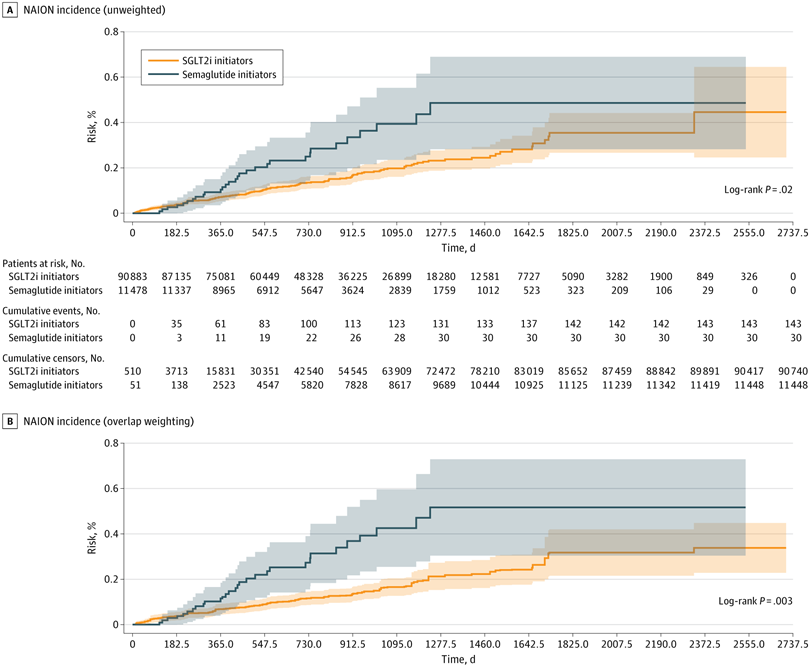
Researchers using Veterans Health Administration records found that veterans with type 2 diabetes who started semaglutide had roughly twice the risk of a rare form of sudden vision loss compared with veterans who started an SGLT2 inhibitor. The study was published online in JAMA Ophthalmology on February 12, 2026 [2].
The condition is nonarteritic anterior ischemic optic neuropathy, or NAION, sometimes called an "eye stroke." It is caused by interrupted blood flow to the optic nerve and usually causes sudden, painless vision loss in one eye, often noticed on waking. Adults 50 and older are most at risk [2].
What the study did
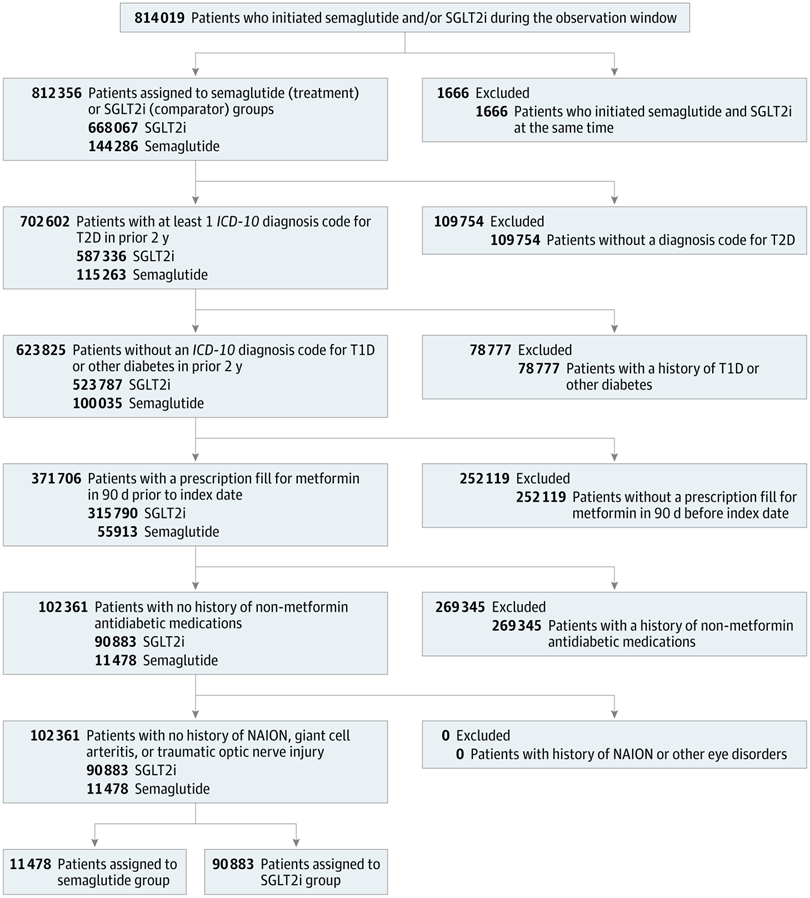
The analysis was a "target trial emulation" — an observational study designed to mimic a randomized trial. Researchers from VA Palo Alto Health Care System, VA Salt Lake City Health Care System, the University of Utah and Stanford University used nationwide VHA data from March 1, 2018, through March 1, 2025. Everyone included had type 2 diabetes, was already taking metformin, and had never used a GLP-1 receptor agonist or an SGLT2 inhibitor before [2]. Starting from 814,019 people who began one of the two treatments during the enrollment window, the final analytic cohort was 102,361 patients [1].
That cohort included 11,478 people who started semaglutide and 90,883 who started an SGLT2 inhibitor as second-line diabetes therapy. The average age was 60, average body mass index was 37.8 and average hemoglobin A1c was 7.0%. The group was 85.5% male, 61.9% non-Hispanic White, 20.7% Black and 8.1% Hispanic [2].
The numbers
Over a maximum follow-up of 7.5 years, there were 173 new NAION cases. The incidence rate was 123 per 100,000 person-years among semaglutide starters and 67 per 100,000 person-years among SGLT2 inhibitor starters. Over a median 2.1 years of follow-up, semaglutide initiators had a 2.33-fold higher risk (hazard ratio 2.33; 95% CI, 1.54-3.54; P < .001) [2].
After statistical adjustment using overlap weighting, the cumulative risk of NAION was 0.29% for semaglutide initiators and 0.13% for SGLT2 inhibitor initiators — a difference of 0.16 percentage points [2]. The authors described the absolute effect as roughly one additional case per several thousand treated patients [2].
"While absolute incidence of NAION is low in patients initiating semaglutide, medical counseling about this potential complication, which can result in substantial loss of vision, may be warranted," the study team wrote [2].
Semaglutide is the active ingredient in Ozempic, Wegovy and Rybelsus. The study team cited an estimate of 15 million US adults using semaglutide [2].
Why it matters for patients
This is an observational study, not a randomized trial, so it cannot prove that semaglutide causes NAION. The authors note that the wider evidence is mixed: some large observational analyses have reported similar 2- to 3-fold increases in risk, while others found weaker or no association [2].
The practical framing is about absolute versus relative numbers. A doubling sounds alarming, but the underlying risk in this cohort was small — under three cases per 1,000 semaglutide starters over a median of about two years [2]. The researchers said clinicians should discuss semaglutide's cardiometabolic benefits alongside NAION as a rare but serious event, encourage prompt evaluation of visual symptoms, and consider existing eye risk factors such as optic-nerve disease or a prior NAION episode. They also suggested eye doctors ask NAION patients about semaglutide use and that those patients tell their prescribers [2].
Several things remain unknown. The biological mechanism is unclear; proposed explanations include low blood pressure, fluid loss from gastrointestinal side effects, rapid improvement in blood sugar causing temporary small-vessel problems, and impaired blood flow regulation at the optic nerve head [2]. Whether risk varies by dose or duration was not answered here; the authors called for future per-protocol studies to look at that [2].
The cohort was also 85.5% male veterans with an average BMI of 37.8 and relatively well-controlled A1c [2], so the findings may not translate directly to other populations, including people taking semaglutide only for weight management.
What happens next
JAMA Ophthalmology has posted a correction to the paper, described as an error in Figure 2, along with a published Comment & Response exchange about the data and the timing of risk, with a reply from the study authors [1]. The journal network has also listed additional research on GLP-1 receptor agonists, SGLT2 inhibitors and NAION [1]. Whether regulators will act on labeling is not addressed in these sources.
Images from the sources
Sources
Semaglutides.org is for information only and is not medical advice. Always talk to a licensed healthcare provider about your own care. Some links to telehealth services are affiliate links, labeled where they appear.