Novo Nordisk forecasts its first annual sales decline in nine years
Novo Nordisk says 2026 sales and operating profit could fall as much as 13%, driven by lower US prices — a sign of how fast the economics of GLP-1 drugs are shifting for cash-paying patients.
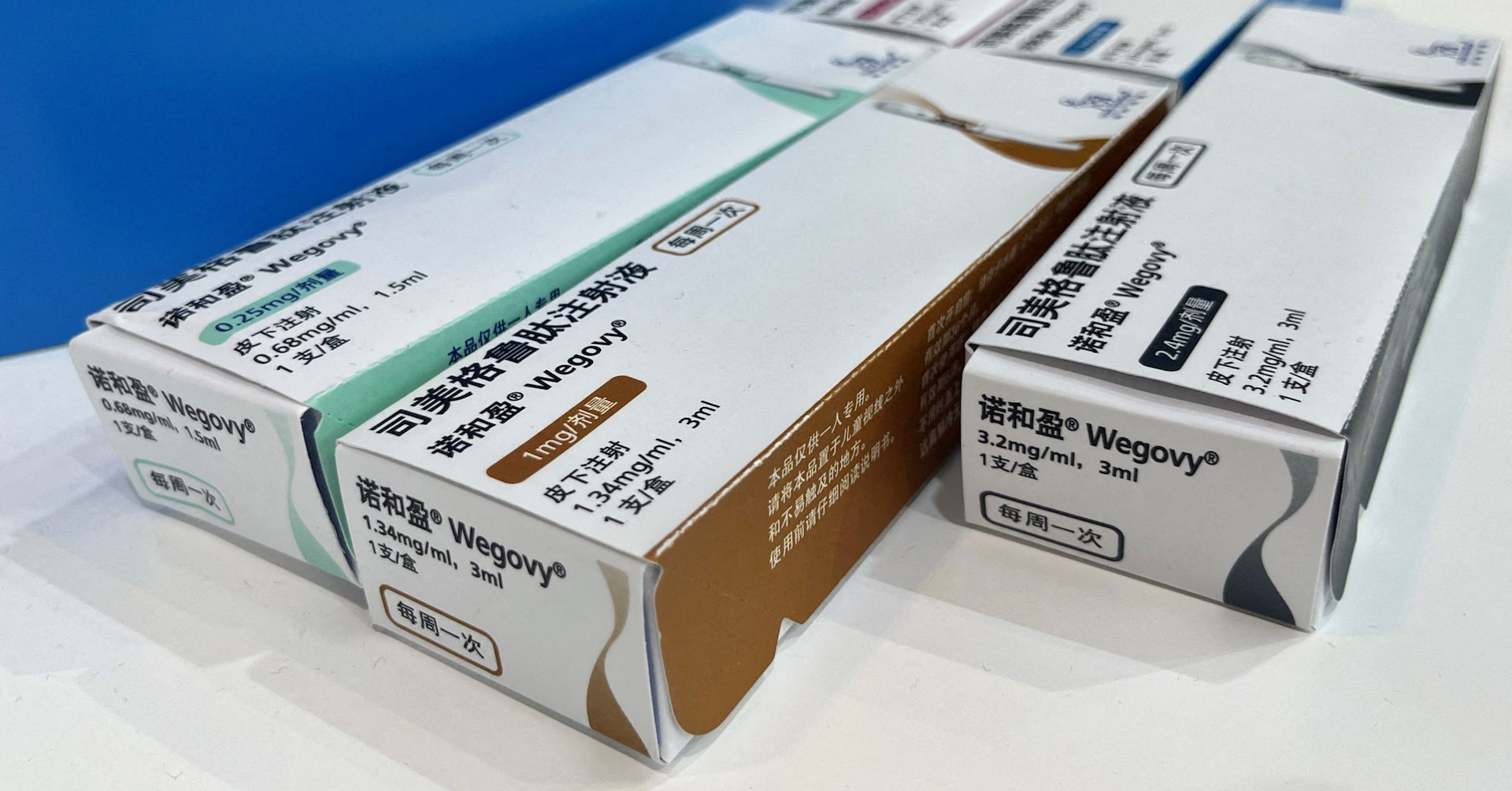
Novo Nordisk, the maker of Ozempic and Wegovy, told investors late on February 3 that it expects both sales and operating profit to fall between 5% and 13% in 2026 at constant exchange rates [1][2]. The forecast would break a long run of double-digit growth and stunned Wall Street, where analysts had on average penciled in a roughly 2% decline, according to a company-compiled poll [2].
The market reaction was severe. Novo's US-listed shares fell as much as 14% after a trading halt [1], and its Copenhagen-listed stock dropped 16% the next day, erasing close to $50 billion in market value [2]. The company was worth more than $600 billion in 2024; at Tuesday's close it was worth $259 billion [2].
What's driving the drop
Chief Executive Mike Doustdar said the guidance "reflects a year of unprecedented pricing pressure," calling the impact "painful" but an "investment for our future" [2]. Chief Financial Officer Karsten Munk Knudsen told Reuters that US pressure is coming more from a larger-than-expected shift toward self-paying patients and rising rebate demands from insurers than from the Trump administration's "most favored nation" pricing policy [2]. He said US sales are expected to fall in the "teens" — steeper than the 5% to 13% company-wide range [2].
Novo and Eli Lilly agreed in November to cut prices for Medicare and Medicaid in 2026 and to sell their GLP-1 drugs directly to consumers at a discount through the TrumpRx.gov website [1]. Novo also blamed the expiration of semaglutide patents in markets including Canada, Brazil and China [1][2], and competition from compounded copies — as many as 1.5 million Americans use compounded versions of GLP-1 drugs rather than branded products [2]. Knudsen said Novo remains "still frustrated" that "mass marketing of a product unapproved by the FDA" continues, and that it is up to the FDA and US politicians to act [2].
The numbers behind 2025
Full-year 2025 sales rose 10% and operating profit rose 6%, in line with guidance the company had cut repeatedly during the year [1]. Fourth-quarter net sales were 79.1 billion Danish kroner (about $12.5 billion), slightly ahead of the 77.8 billion analysts expected, while quarterly operating profit of 31.7 billion kroner was down 14% year over year [1]. Ozempic brought in 31.8 billion kroner in the quarter, up 1% at constant exchange rates; Wegovy brought in 21.9 billion kroner, up 17% [1]. Novo's stock fell 46.5% in 2025 [1].
One bright spot: Novo said weekly prescriptions for the oral Wegovy pill reached about 50,000 by January 23, well above the roughly 20,000 a week captured by standard market tracking, which misses cash-pay channels like NovoCare and telehealth [2]. Knudsen said about 90% of US Wegovy pill sales so far are cash-pay [2].
Why it matters for patients
The forecast is mostly a story about prices patients and insurers pay. Novo is selling lower doses of its daily semaglutide pill to US self-pay patients for $149 a month, rising to $199 in April [2]. It began selling the Wegovy injection at $349 a month to cash payers in November [2]. Eli Lilly plans to cap higher doses of its obesity pill, if approved, at $399 a month for repeat cash buyers [2]. Falling company revenue alongside rising prescription volumes suggests more people are getting these drugs at lower per-patient prices — often outside insurance.
It also shows how much of the US market has moved to cash-pay. Insurer rebate demands are rising [2], which can affect what is covered and at what tier, though the sources do not spell out what individual plans will do in 2026.
What happens next
Novo says it will roll out Wegovy in more markets in 2026 and expects to introduce the higher 7.2 mg dose in a number of countries [1]. Eli Lilly is expected to launch its own weight-loss pill in the first half of 2026 [1]. TrumpRx.gov was expected to launch in January [1]; the sources do not confirm whether it did.
Images from the sources
Sources
Semaglutides.org is for information only and is not medical advice. Always talk to a licensed healthcare provider about your own care. Some links to telehealth services are affiliate links, labeled where they appear.