TriNetX cohort links GLP-1 use to higher hair loss risk
A large US health-records study found people taking GLP-1 drugs like Ozempic, Wegovy, and Mounjaro had notably higher odds of hair loss at one year, though the same data show no extra risk for autoimmune alopecia.[1]
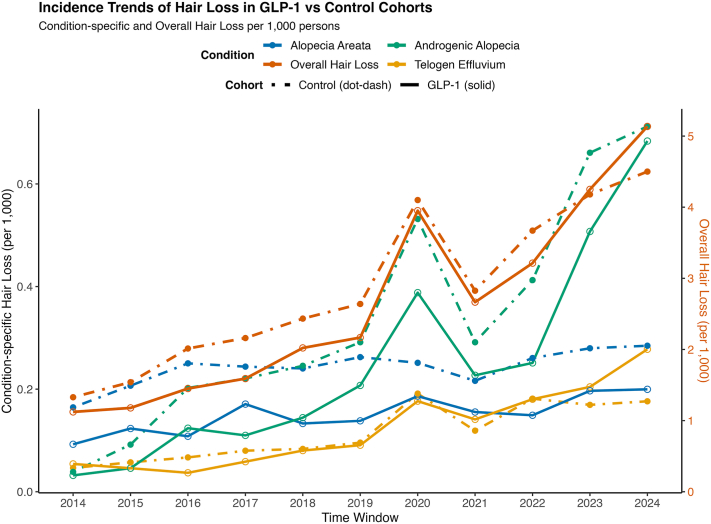
A new study using real-world medical records from 67 US health systems found that adults taking GLP-1 receptor agonists had higher odds of developing hair loss compared with matched patients who were not on the drugs.[1] The research, published February 9, 2026 in JAAD International, looked at 547,993 matched adult patients using the TriNetX US Collaborative Network, which pools de-identified electronic health record data.[1]
GLP-1 receptor agonists are the drug class that includes semaglutide (sold as Ozempic, Wegovy, and Rybelsus) and tirzepatide (sold as Mounjaro and Zepbound).[1] Researchers tracked patients from 2014 through 2024, matching GLP-1 users to controls by age, sex, race, body mass index, and type 2 diabetes status, and excluding people with other conditions that could confound the results.[1]
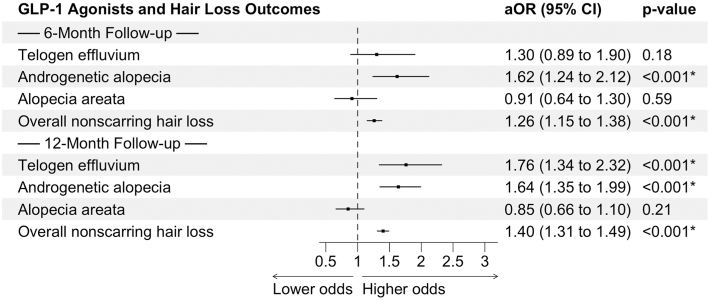
At 12 months, GLP-1 users had 76% higher odds of telogen effluvium, a temporary shedding condition, compared with controls (adjusted odds ratio 1.76).[1] They also had 64% higher odds of androgenetic alopecia, the common pattern hair thinning tied to genetics and hormones (aOR 1.64), and 40% higher odds of non-scarring hair loss overall (aOR 1.40).[1] All three findings were statistically significant.[1] At the earlier 6-month mark, androgenetic alopecia risk was already elevated (aOR 1.62) and overall hair loss risk was up (aOR 1.26), but the telogen effluvium signal at 6 months was not statistically significant.[1]
One notable exception: alopecia areata, an autoimmune form of hair loss, was consistently more common in the control group than in GLP-1 users.[1] The study authors say this suggests GLP-1 drugs do not meaningfully affect autoimmune hair loss, even as they appear linked to other types.[1] The researchers also noted that annual incidence curves for hair loss in GLP-1 users and controls looked similar in earlier years but started to diverge around 2019 for overall hair loss, and around 2021-2022 for telogen effluvium and androgenetic alopecia specifically, with GLP-1 users showing steeper increases after that.[1]
The study's authors point to several possible explanations, including rapid weight loss, changes in insulin and insulin-like growth factor signaling, shifts in androgen levels, and direct effects on hair follicles, though they note these are proposed mechanisms rather than proven causes.[1] They also flagged that the study included too few adolescent patients, ten or fewer for each hair loss outcome, to draw any conclusions about pediatric GLP-1 users.[1]
Why it matters for patients
Hair loss has been reported anecdotally by people on GLP-1 drugs for years, but this study adds large-scale, real-world numbers to that pattern.[1] The elevated odds ratios, particularly the 76% higher risk of telogen effluvium and 64% higher risk of androgenetic alopecia at one year, suggest the association is not rare or coincidental in this dataset.[1] At the same time, the study is retrospective and observational, meaning it shows an association, not proof that the drugs directly cause hair loss in every case.[1]
The finding that alopecia areata was not elevated, and was actually higher in controls, may offer some reassurance to patients specifically worried about autoimmune hair loss triggers.[1] The authors describe hair loss awareness as important for early detection and coordinated care between prescribers and dermatologists, without recommending any specific response to the risk.[1]
What happens next
The study's authors call for future research into the underlying biological mechanisms, prospective monitoring of patients over time, and dedicated study of pediatric GLP-1 users, since current pediatric data were too limited to analyze.[1] No specific dates or planned follow-up studies were given in the published findings.[1]
Images from the sources
Sources
Semaglutides.org is for information only and is not medical advice. Always talk to a licensed healthcare provider about your own care. Some links to telehealth services are affiliate links, labeled where they appear.