Lilly discloses David Ricks's 2025 pay package of $36.7 million
Eli Lilly's board raised CEO David Ricks's 2025 pay to $36.7 million, citing GLP-1 sales growth, and shareholders approved it by a wide margin even as the CEO-to-worker pay gap widened.
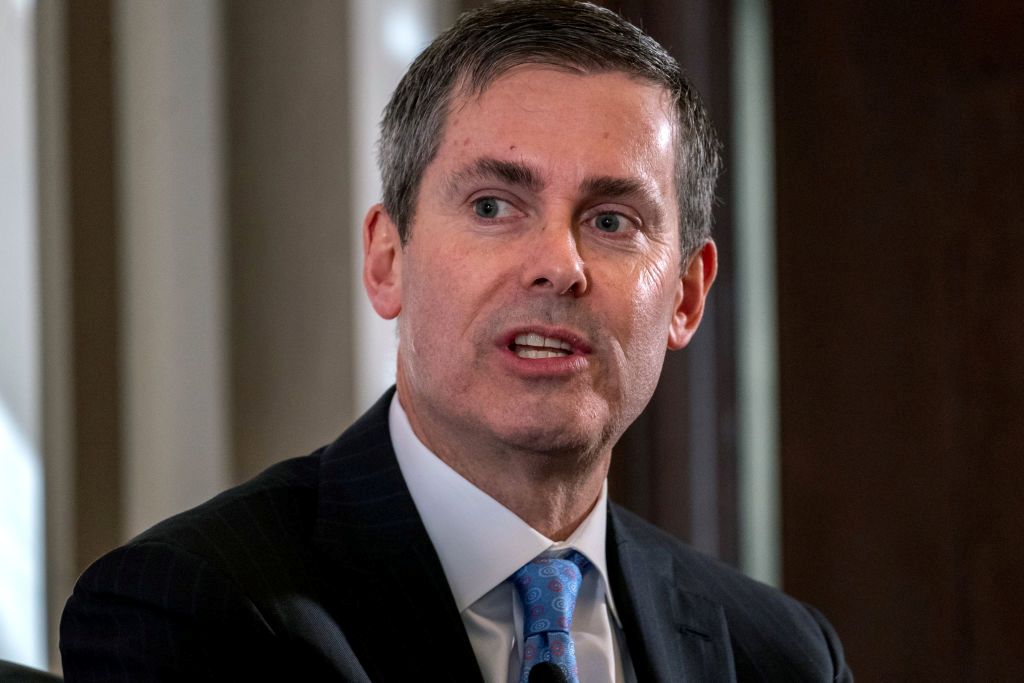
Eli Lilly disclosed in its 2026 proxy statement that CEO David Ricks received total compensation of $36.7 million for 2025, up 26% from $29.2 million in 2024 [1]. The company said the increase reflects the performance of its GLP-1 medicines, Mounjaro and Zepbound, whose combined sales rose to $36.5 billion in 2025 from $16.5 billion in 2024, a roughly $20 billion jump that accounted for nearly all of Lilly's revenue growth from $45 billion to $65.2 billion over that period [1].
The pay package broke down as $23.3 million in stock awards, up from $19.8 million the prior year, a $6.8 million bonus, up from $5.7 million, and a $1.7 million base salary that matched 2024 [1]. The value of Ricks's pension also rose sharply, to $4.5 million from $1.7 million [1]. In the proxy, Lilly justified the pay by pointing to "revenue growth of approximately 207%" and a "five-year total shareholder return of 571%" since Ricks became CEO in 2017, when his pay was $15.8 million [1].
Lilly also disclosed a CEO-to-median-worker pay ratio of 367 to 1, a figure companies are required to report under SEC rules [3]. Other top Lilly executives were paid far less than Ricks: chief scientific officer Daniel Skovronsky received $17.8 million, up from $12.6 million, while chief financial officer Lucas Montarce, in his first full year in the role, collected $8.5 million [1]. The proxy noted Lilly also raised Ricks's annual cash bonus target from 150% to 175% of salary to "maintain market competitiveness," while keeping other executives' targets at 100% [1]. If Ricks were terminated, Lilly said he would be entitled to a severance package of $93.9 million [1].
At Lilly's annual shareholder meeting on May 4, 2026, investors voted on an advisory, non-binding basis to approve the executive pay package. The vote was 731,998,717 shares in favor and 30,467,278 against, with 2,302,686 abstentions, meaning roughly 96% of votes cast backed the compensation plan [4]. That vote was part of a broader meeting where shareholders also re-elected Ricks to the board, with 734,760,028 votes for and 29,119,356 against, and rejected separate proposals to eliminate the company's classified board structure and supermajority voting rules, each falling short of the 80% threshold required for passage [4].
Why it matters for patients
Executive pay itself does not set the price a patient pays at the pharmacy counter, and the sources here do not link Ricks's compensation directly to list prices or insurance coverage for Mounjaro or Zepbound. But the scale of the pay increase underscores how central GLP-1 drugs have become to Lilly's business: the $20 billion jump in tirzepatide sales was the main driver of both the company's overall revenue growth and the justification the board gave for raising Ricks's pay [1]. For patients weighing the cost of these medications, the disclosure is a reminder of how profitable the category has become for the company that makes them, even as many patients continue to face high out-of-pocket costs or insurance hurdles. The pay ratio of 367 to 1 also gives a concrete measure of how the rewards from this growth are being distributed within the company, though the sources do not say how that compares with other pharmaceutical companies [3].
What happens next
The say-on-pay vote was advisory only, meaning it does not require Lilly's board to change Ricks's compensation, and no changes were announced in the filings reviewed here [4]. The company's next disclosures on executive pay would typically come in its 2027 proxy statement, covering compensation for 2026; that filing was not available in the sources reviewed for this story.
Sources
Semaglutides.org is for information only and is not medical advice. Always talk to a licensed healthcare provider about your own care. Some links to telehealth services are affiliate links, labeled where they appear.