Lilly marks 150 years with a ceremony in Indianapolis
Eli Lilly's 150th-anniversary event in Indianapolis came with new numbers on the company's obesity-drug boom, including a plan to reach 22 million square feet of production space [1].
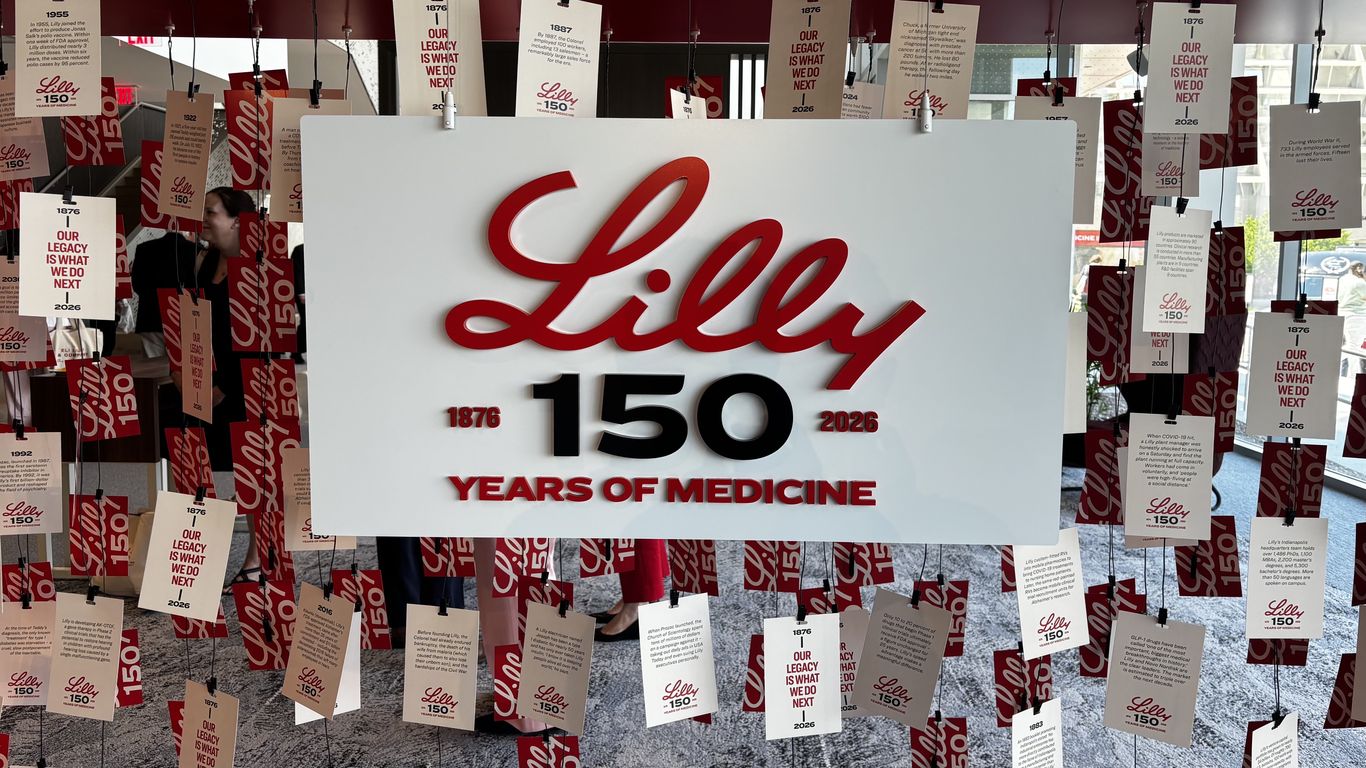
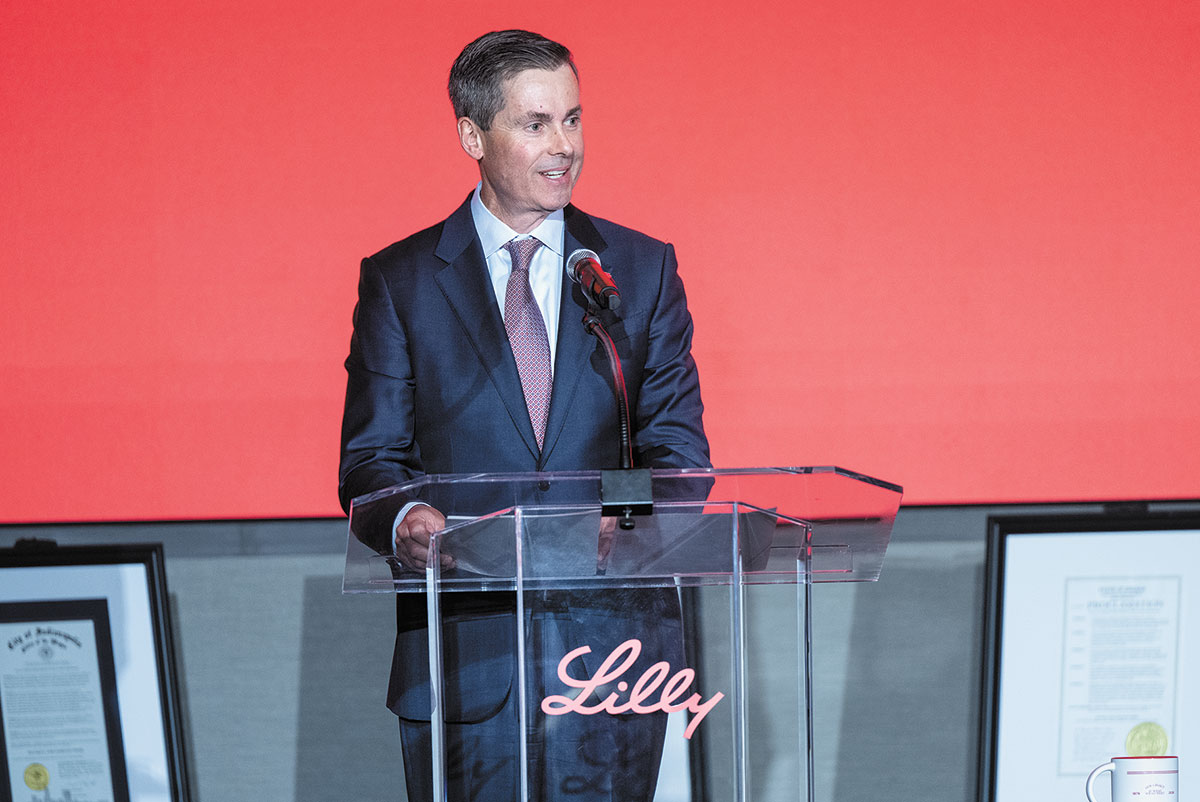
Eli Lilly and Co. marked 150 years since its founding with a "150 Years of Medicine" ceremony in downtown Indianapolis on Tuesday, May 12, 2026, emceed by former Indianapolis Colts quarterback Peyton Manning [1][2]. The same week, Indiana University's Indiana Business Research Center released a study, commissioned by Lilly, putting the company's direct operations at nearly $15.6 billion of Indiana's gross domestic product, or 2.7% of the state's total economic output [2][3].
Col. Eli Lilly, a chemist and Civil War veteran, founded the company on May 10, 1876, in a two-story building near the corner of Meridian and Pearl streets [2]. A new historical marker unveiled Tuesday notes that the original production space was a single room with 160 square feet dedicated to making medicine [1]. CEO David Ricks said that once Lilly's current rollout of new facilities is complete, the company will manage 22 million square feet of production space [1].
The numbers behind the boom
The anniversary lands during what Axios called a boom time for Lilly, which has "emerged as the king of the obesity drug market" [1]. Since the launch of Zepbound (tirzepatide), its flagship obesity drug, two years ago, Lilly's shares have risen more than 75% [1]. Ricks told the audience the pipeline "is the strongest in our history" and said, "This may be the beginning of the biggest sustained upswing in our history. It may also be just another peak in a series of peaks and valleys along the way" [2]. He added that the company is "choosing to reinvest in science like we never have before" [1][2].
Much of that reinvestment has gone into deals. Lilly has already made six acquisitions this year after roughly 40 in 2025, directing obesity-drug cash toward companies with programs in Phase 1 and Phase 2 trials [1]. Lilly has announced more than $50 billion in U.S.-based capital investments since 2020, including $18 billion for three new facilities in Boone County, Indiana [1][3].
The IU study reports 14,700 Lilly employees in Indiana, with supply-chain purchases and worker spending supporting another 31,900 jobs, for a total of 46,600 [3]. That works out to an employment multiplier of 3.17, meaning every direct Lilly job supports 2.17 jobs at other Indiana employers [2][3]. Those jobs generate more than $6.6 billion in compensation, averaging $142,130 per job, which the study says is more than 70% above the state average [3]. Counting ripple effects, Lilly's total GDP impact reaches nearly $20.7 billion, or 3.6% of Indiana's GDP [3]. Indiana is home to 28% of Lilly's global workforce, and the study estimates Lilly accounts for about 72% of the state's pharmaceutical manufacturing employment [3].
Some head counts differ across sources. Axios says Lilly employs "nearly 15,000 Hoosiers" [1], while the Indianapolis Business Journal's largest-employer list cited in the study shows 13,206 full-time-equivalent jobs; the study uses 14,700 because it includes part-time positions [3]. The two outlets also differ on the employee celebration, with Axios saying more than 20,000 were expected and IBJ reporting 22,000 [1][2].
Why it matters for patients
An anniversary ceremony does not change any prescription, price or insurance decision. What may matter over time is the manufacturing buildout behind it. Supply of GLP-1 medicines has depended on how much plant capacity drugmakers can bring online, and Lilly's stated path from a 160-square-foot room to 22 million square feet of production space is a concrete marker of that expansion [1]. The $18 billion Boone County project is a large part of it [3].
The deal-making is a signal about the future rather than today's options: six acquisitions this year and about 40 last year are concentrated in early-stage programs still in Phase 1 and Phase 2 [1], meaning any resulting medicines are years from patients. None of these sources address drug prices, insurance coverage, or out-of-pocket costs, so those questions are not answered here.
What happens next
Lilly's new LEAP Research and Innovation District facilities in Lebanon, Indiana, are expected to be completed next year, with the study describing a five-year construction phase ending by the close of 2027 [1][3]. The campus is expected to be fully operational by 2030, employing 1,600 workers directly and lifting Lilly's estimated total Indiana employment footprint to 52,400 jobs and its state GDP impact to nearly $22.5 billion in 2026 dollars [1][2][3].
Images from the sources
Sources
Semaglutides.org is for information only and is not medical advice. Always talk to a licensed healthcare provider about your own care. Some links to telehealth services are affiliate links, labeled where they appear.