Retatrutide sets a new weight-loss benchmark at 28.3%
Eli Lilly's investigational triple-hormone shot retatrutide produced an average 28.3% weight loss at 80 weeks in a phase 3 trial, but it is not approved and available only in studies [1][2].
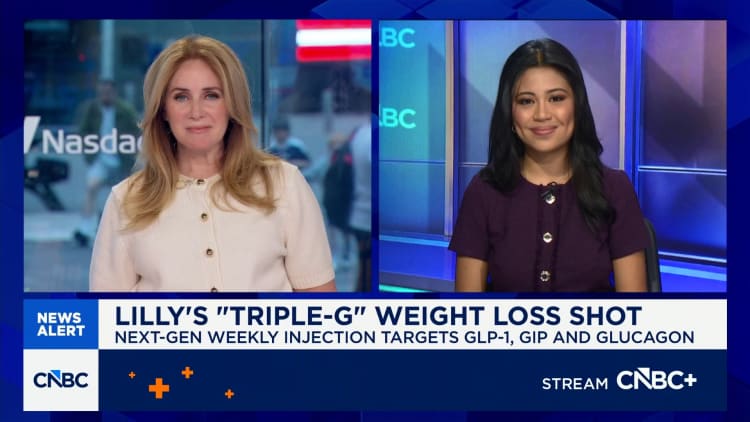
Eli Lilly said on May 21, 2026 that its investigational weekly injection retatrutide helped adults with obesity lose an average of 28.3% of their body weight — about 70.3 pounds — over 80 weeks at the highest 12 mg dose in the phase 3 TRIUMPH-1 trial [1]. All three doses met the trial's primary and key secondary goals [1].
TRIUMPH-1 randomized 2,339 adults with obesity, or overweight plus at least one weight-related health problem and no diabetes, to retatrutide 4 mg, 9 mg, 12 mg or placebo in equal groups [1]. Participants started at 2 mg weekly and stepped up every four weeks to their assigned target dose [1]. Average starting weight was 248.5 pounds, with an average BMI of 40.0 [1].
Under the "efficacy estimand" — which models what would have happened if everyone stayed on treatment — average weight loss at 80 weeks was 19.0% (47.2 lbs) at 4 mg, 25.9% (64.4 lbs) at 9 mg and 28.3% (70.3 lbs) at 12 mg, versus 2.2% (5.5 lbs) on placebo [1]. Under the more conservative treatment-regimen estimand, which counts everyone regardless of whether they kept taking the drug, the figures were 17.6%, 23.7% and 25.0%, versus 3.9% for placebo [1]. At 12 mg, 62.5% of participants lost at least 25% of their weight and 45.3% lost at least 30% [1]. Lilly also reported that 65.3% of people on 12 mg reached a BMI below 30 at 80 weeks, though that analysis was not controlled for multiplicity [1].
A pre-specified extension enrolled 532 participants who had a starting BMI of 35 or higher, finished the 80 weeks and tolerated their dose; they continued for 24 more weeks with a blinded escalation to a maximum tolerated dose of 9 mg or 12 mg [1]. In that group, the 12 mg arm reached an average 30.3% weight loss (85.0 lbs) at 104 weeks [1]. Lilly reported improvements in waist circumference, non-HDL cholesterol, triglycerides, systolic blood pressure and hsCRP [1].
Side effects and dropouts
The most common side effects at 12 mg versus placebo were nausea (42.4% vs 14.8%), diarrhea (32.0% vs 13.5%), constipation (26.1% vs 10.9%) and vomiting (25.3% vs 4.8%) [1]. Dysesthesia — an unpleasant nerve sensation — occurred in 12.5% at 12 mg versus 0.9% on placebo, and urinary tract infections in 8.4% versus 5.3% [1]. Lilly said these were generally mild to moderate and most resolved during treatment [1]. Discontinuation because of side effects was 4.1% at 4 mg, 6.9% at 9 mg and 11.3% at 12 mg, versus 4.9% on placebo [1]. Lilly's Dan Skovronsky told CNBC the company did not observe cardiac or liver issues, a question analysts had raised because retatrutide targets glucagon [2].
One note on the numbers: Lilly's release says 2,339 people were randomized [1], while CNBC described "2,500 patients" in the trial [2].
Why it matters for patients
Retatrutide targets three hormone receptors — GLP-1, GIP and glucagon — while tirzepatide (Zepbound, Mounjaro) targets two and semaglutide (Wegovy, Ozempic, Rybelsus) targets one [2]. CNBC reported analysts had expected retatrutide to beat Zepbound's roughly 20% to 22% weight loss [2].
Nothing changes at the pharmacy counter today. Retatrutide is investigational and "legally available only to participants in Lilly's clinical trials" [1]. Lilly has not announced a filing or approval date, and none is stated in these sources.
The dose-by-dose data may matter more than the headline. The 4 mg dose, reached with a single escalation step, produced 19.0% average weight loss with a lower dropout rate from side effects than placebo [1]. Skovronsky said that result is similar to Zepbound at high doses but with "a really excellent tolerability profile," adding that "for some patients, 30% weight loss may be more than what they're seeking" [2]. Higher doses brought more weight loss and more nausea, vomiting and discontinuation [1].
Also unknown from these sources: long-term safety beyond 104 weeks, what happens after stopping, cost, and insurance coverage.
What happens next
More TRIUMPH-1 data will be presented at the 86th annual American Diabetes Association Scientific Sessions, with further detail at future medical meetings and in peer-reviewed journals [1]. Results from the knee osteoarthritis pain and obstructive sleep apnea sub-studies will come later [1]. Lilly said TRIUMPH-2 (obesity plus type 2 diabetes) and TRIUMPH-3 (obesity plus established cardiovascular disease) data are expected later in 2026 [1].
Sources
Semaglutides.org is for information only and is not medical advice. Always talk to a licensed healthcare provider about your own care. Some links to telehealth services are affiliate links, labeled where they appear.