Axios analysis attributes the drug price decline partly to GLP-1 competition rather than policy alone
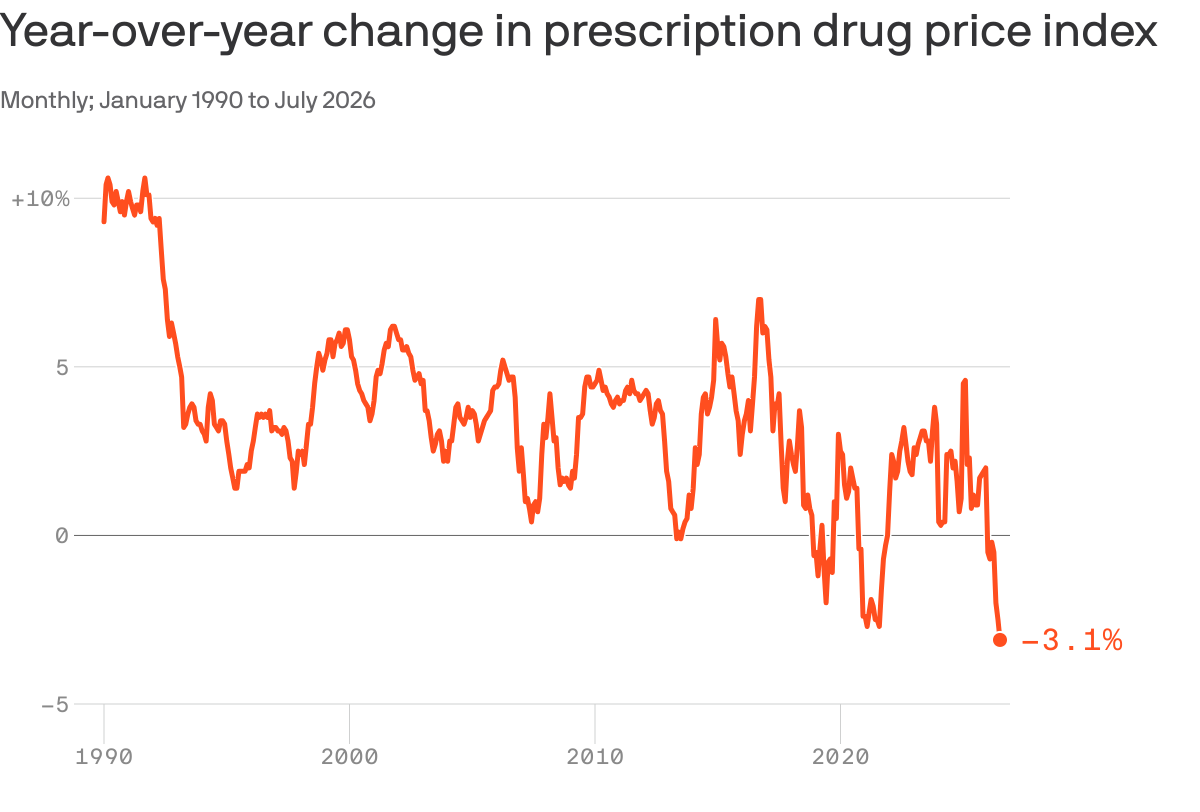
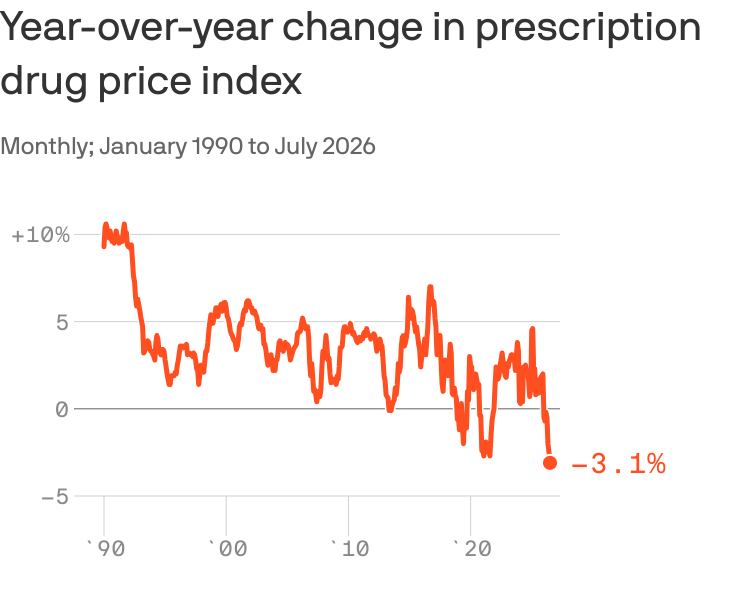
Prescription drug prices fell 3.1% over the past year, the steepest drop in decades, and analysts say GLP-1 price competition is one of several reasons, not just Trump administration policy.
Prescription drug prices dropped 0.8% in July and are down 3.1% from a year earlier, the steepest annual decline in more than six decades, according to the Bureau of Labor Statistics' Consumer Price Index [1][2]. Prices have not risen in any month this year [1].
An Axios analysis published August 17 found that the Trump administration's TrumpRx website, which connects patients to discounted cash prices for certain drugs, likely accounts for only part of the drop [1]. The analysis pointed instead to several overlapping forces: Medicare price negotiations under the Inflation Reduction Act that took effect in January for 10 costly Part D drugs, with negotiated prices as much as 79% below list prices; continued patent expirations that let cheaper generics enter the market; and competitive price cutting among GLP-1 drugmakers [1].
Geoffrey Joyce, a USC health economist quoted in the piece, said TrumpRx mostly makes existing discounts easier to find rather than creating new savings. "If you were going to give policy credit, you'd have to say the IRA," he said, adding that much of the decline reflects market forces rather than any single policy [1]. The White House disputed that framing. Spokesperson Kush Desai called crediting the IRA "idiotic and unfounded," arguing its negotiated prices did not deliver meaningful savings beyond discounts insurers already had, and pointed instead to the administration's most-favored-nation deals and TrumpRx [1].
A separate analysis from HMP Global's First Report Managed Care outlet reached a similar conclusion: available evidence does not establish how much each factor — IRA negotiations, generic competition, patent cliffs, most-favored-nation agreements, or existing manufacturer discounts — contributed to the overall decline [2]. That piece also cited a KFF review finding that TrumpRx may offer real savings for some cash-paying consumers, but that insured patients sometimes get lower prices through their health plan or manufacturer assistance programs, and that generic alternatives for some TrumpRx-listed drugs were sometimes cheaper elsewhere [2].
Eli Lilly and Novo Nordisk, the makers of tirzepatide (Mounjaro, Zepbound) and semaglutide (Ozempic, Wegovy, Rybelsus), struck deals with the administration that cut cash prices for their GLP-1 drugs and expanded Medicare access, which Axios said may have added to broader downward pressure on drug prices, on top of other forces already at work [1].
Why it matters for patients
A falling national price index does not necessarily mean lower costs at the pharmacy counter for any one patient. The CPI tracks what pharmacies receive from patients and insurers, including Medicare, but it does not capture manufacturer rebates paid after the sale, according to the Bureau of Labor Statistics [1]. Joyce noted that most consumers focus on their copay or cost-sharing amount rather than the underlying list price [1].
That gap matters because affordability worries remain widespread. KFF found this spring that six in 10 Americans said they were worried about affording their medications, the highest share since KFF began asking the question in 2018, and four in 10 said they had skipped taking medication as prescribed in the past year because of cost [1]. For people on GLP-1 drugs specifically, whether they see savings likely depends on their insurance coverage, which medication they take, their pharmacy, and whether they have access to manufacturer discounts or generic-equivalent options [2].
What happens next
The HMP Global analysis said determining how much MFN agreements, TrumpRx, and IRA negotiations each contribute to sustained price reductions, and how broadly any savings reach insured and uninsured patients, will require additional data as these policies continue to be implemented [2]. The full terms of the administration's most-favored-nation agreements with manufacturers have not been fully disclosed, which a STAT analysis cited in the same piece said makes it difficult to independently evaluate their effect on U.S. drug spending [2].
Images from the sources
Sources
Semaglutides.org is for information only and is not medical advice. Always talk to a licensed healthcare provider about your own care. Some links to telehealth services are affiliate links, labeled where they appear.