AbbVie starts Phase 2 of its amylin analog ABBV-295
AbbVie has started a Phase 2 trial of ABBV-295, an experimental amylin drug for obesity, after Phase 1 data showed volunteers lost close to 10% of body weight in about three months.
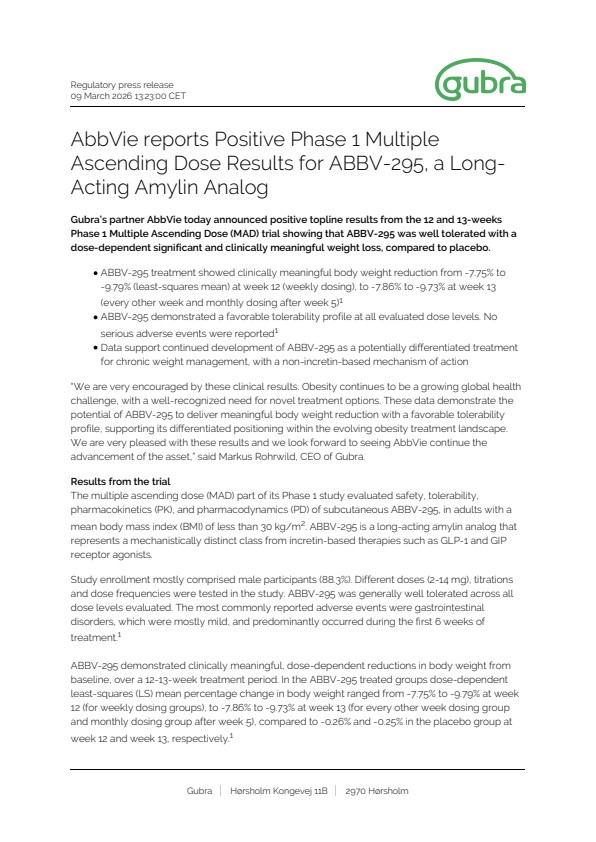
AbbVie has begun a Phase 2 clinical trial of ABBV-295, an experimental weight-loss drug that works differently from GLP-1 medicines like Ozempic, Wegovy, and Zepbound. The drug's developer, Danish biotech Gubra, said it received a milestone payment from AbbVie tied to the trial's start, confirming a faster-than-expected timeline that AbbVie had flagged earlier in the year [1].
ABBV-295 is a long-acting amylin analog. Instead of mimicking the GLP-1 hormone, it activates amylin and calcitonin receptors, hormones involved in signaling fullness to the brain and slowing how fast the stomach empties [1]. AbbVie has described this as a "non-incretin-based mechanism," positioning the drug as mechanistically distinct from semaglutide and tirzepatide [1].
In the Phase 1 multiple ascending dose study, which enrolled 76 people with a mean BMI under 30 and dosed them for 12 to 13 weeks, participants lost between 7.75% and 9.79% of body weight on a weekly dosing schedule, compared with a 0.26% loss in the placebo group at week 12 [1]. In groups dosed every other week or once monthly after an initial ramp-up period, weight loss ranged from 7.86% to 9.73% by week 13, versus 0.25% for placebo [1]. The trial tested doses from 2 mg to 14 mg using different escalation schedules [1].
AbbVie said the drug was "generally well tolerated" at all dose levels tested, with no serious adverse events reported [1]. The most common side effects were gastrointestinal, mostly mild, and concentrated in the first six weeks of treatment [1]. Most study participants, 88.3%, were male [1].
Gubra and AbbVie signed a licensing deal for ABBV-295 in March 2025, under which AbbVie leads global development and commercialization while Gubra is eligible for up to $1.875 billion in development, commercial, and sales milestone payments plus tiered royalties on sales [1]. The company did not disclose the size of the newly triggered milestone payment [1].
Why it matters for patients
ABBV-295 is still years from any possible approval, and its safety and effectiveness have not been established by regulators [1]. But its mechanism matters because amylin analogs are being explored, including in combination with GLP-1 drugs, as a way to preserve weight loss while potentially reducing muscle loss or improving tolerability compared with incretin-only therapies. If Phase 2 results hold up, ABBV-295 could eventually give patients and doctors another option beyond the GLP-1 and GIP drugs currently on the market.
The Phase 1 results describe short-term weight loss, generally under 10% over roughly three months, in a small group of mostly male volunteers with BMI under 30, a population that is not the same as the higher-BMI patients typically prescribed obesity drugs today [1]. How the drug performs in more representative patients, over longer treatment periods, and at Phase 2 scale is not yet known.
What happens next
AbbVie has begun the Phase 2 trial, but the sources do not specify its size, dosing plan, duration, or expected completion date [1]. Full data from the completed Phase 1 study, including single ascending dose results and additional cohorts announced separately, are expected to be presented at a future scientific conference, though no date has been set [1]. Any potential approval would depend on results from Phase 2 and subsequent Phase 3 trials, none of which are complete.
Sources
Semaglutides.org is for information only and is not medical advice. Always talk to a licensed healthcare provider about your own care. Some links to telehealth services are affiliate links, labeled where they appear.