Gubra says Boehringer has started Phase 2 testing of triple agonist BI 3034701
A third obesity mechanism is now in mid-stage testing, but no Phase 2 results or approval timelines were disclosed.
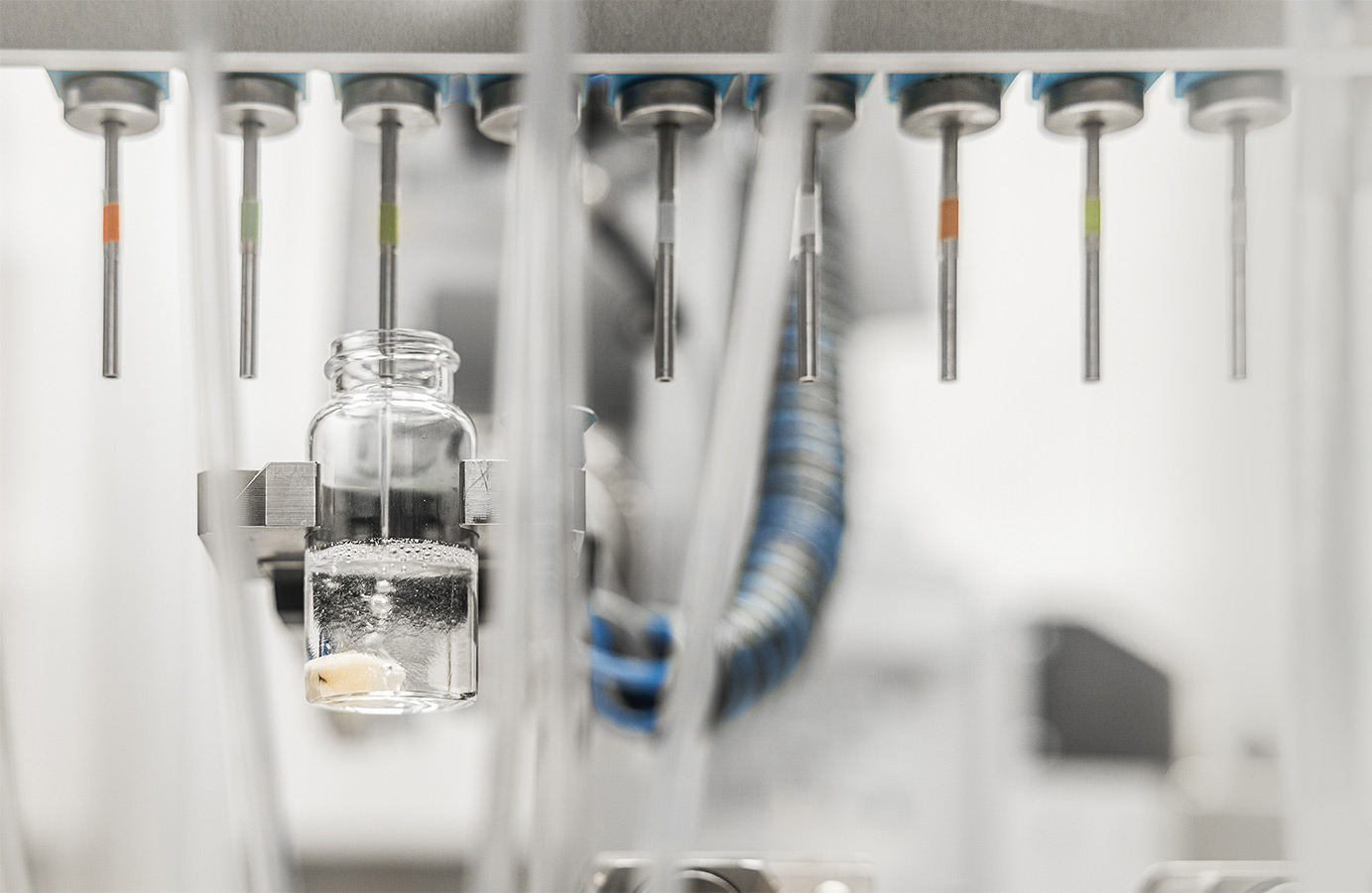
Gubra's half-year report, released on August 20, 2026, says Boehringer Ingelheim has started Phase 2 development of BI 3034701, an experimental obesity drug, and that the start of that study triggered a EUR 10 million milestone payment to Gubra [1].
BI 3034701 is designed to activate three receptors at once: GLP-1, GIP and NPY2 [1][2]. Gubra calls it a potential first-in-class GLP-1/GIP/NPY2 receptor agonist [1], and Boehringer uses the same description in its own announcement [2]. Boehringer's Phase 2 trial is testing the drug in people with obesity and overweight, and is designed to find a dose and to evaluate efficacy and safety [2]. In Phase 1 studies, the drug showed a "generally favorable safety and tolerability profile," the company said [2]. NPY2 receptor activation is thought to modulate central hunger signaling, but Boehringer says its effect on broader eating behavior "remains to be fully elucidated" [2].
Shashank Deshpande, chairman of the board of managing directors and head of human pharma at Boehringer Ingelheim, said: "We expect obesity care to become much more differentiated, and with BI 3034701, we aim to go beyond short-term weight loss and address both the biological and behavioral drivers of obesity" [2].
Trial registry entries linked to BI 3034701 list several Phase 1 studies, including one scheduled to start September 1, 2026, that will test alternative dose titration strategies, and another scheduled to start August 24, 2026, that looks at how the drug is metabolized. A study in Japanese participants with obesity or overweight began July 21, 2026 [2]. The new Phase 2 study's size, locations and expected readout have not been disclosed [1][2].
Gubra's report also covers partner AbbVie's long-acting amylin analog ABBV-295, saying AbbVie reported 12- and 13-week Phase 1 results ahead of a planned Phase 2 start in the third quarter of 2026 [1]. Gubra describes those results as "highly encouraging" [1]. The report does not give the weight-loss, safety or tolerability numbers behind that description.
Gubra's own candidate, GUB-UCN2, entered a Phase 1/2a trial [1]. The compound is designed to optimize body composition by reducing fat mass while preserving or increasing skeletal muscle, and the trial has a particular focus on muscle volume and muscle function. It will test GUB-UCN2 both alone and in combination with an incretin-based therapy. First data from the single ascending dose portion are expected in the first half of 2027 [1].
Financially, Gubra reported group revenue of DKK 126 million and an operating loss of DKK 123 million for the first half of 2026, with full-year guidance unchanged [1]. The company said its contract research business grew revenue 11% versus the second half of 2025 and kept full-year growth guidance of 0% to 10% [1]. Gubra, based in Denmark, says it has around 330 employees and had revenue of DKK 2.6 billion in 2025 [1].
Why it matters for patients
None of these three candidates is approved for any use, and the report gives no dates for Phase 2 results, regulatory submissions or launches [1]. That means nothing changes for people currently taking an approved GLP-1 or GIP-based medicine.
What the update shows is that drugmakers are testing obesity treatments that work through pathways other than GLP-1 and GIP alone. BI 3034701 adds NPY2, a mechanism Boehringer itself says is still being investigated [2]. Whether that translates into better results in people has not been reported. ABBV-295 belongs to the amylin class, and AbbVie has not publicly released the Phase 1 figures the report refers to [1].
GUB-UCN2 is aimed at a different question: whether weight loss can come with preservation or gain of skeletal muscle. The trial is built to measure muscle volume and muscle function, but it has not reported whether it achieves that in people [1].
What happens next
- August 24, 2026: listed start date for a Phase 1 study of how BI 3034701 is metabolized [2].
- September 1, 2026: listed start date for a Phase 1 study of alternative dose titration strategies for BI 3034701 [2].
- Third quarter of 2026: AbbVie's planned Phase 2 start for ABBV-295 [1].
- October 27, 2026: Gubra holds an investor research and development event in London [1].
- First half of 2027: first GUB-UCN2 single ascending dose data expected [1].
Images from the sources
Sources
Semaglutides.org provides information only, not medical advice. Talk to a licensed provider about your own care before making changes. Some telehealth links are affiliate links and are labeled where they appear.