Most-favored-nation agreements reach 26 manufacturers covering 89 percent of the branded drug market
Nine more drugmakers signed most-favored-nation pricing deals on August 31, bringing the total to 26, but the new agreements mostly touch Medicaid and not GLP-1 drugs [1][2].
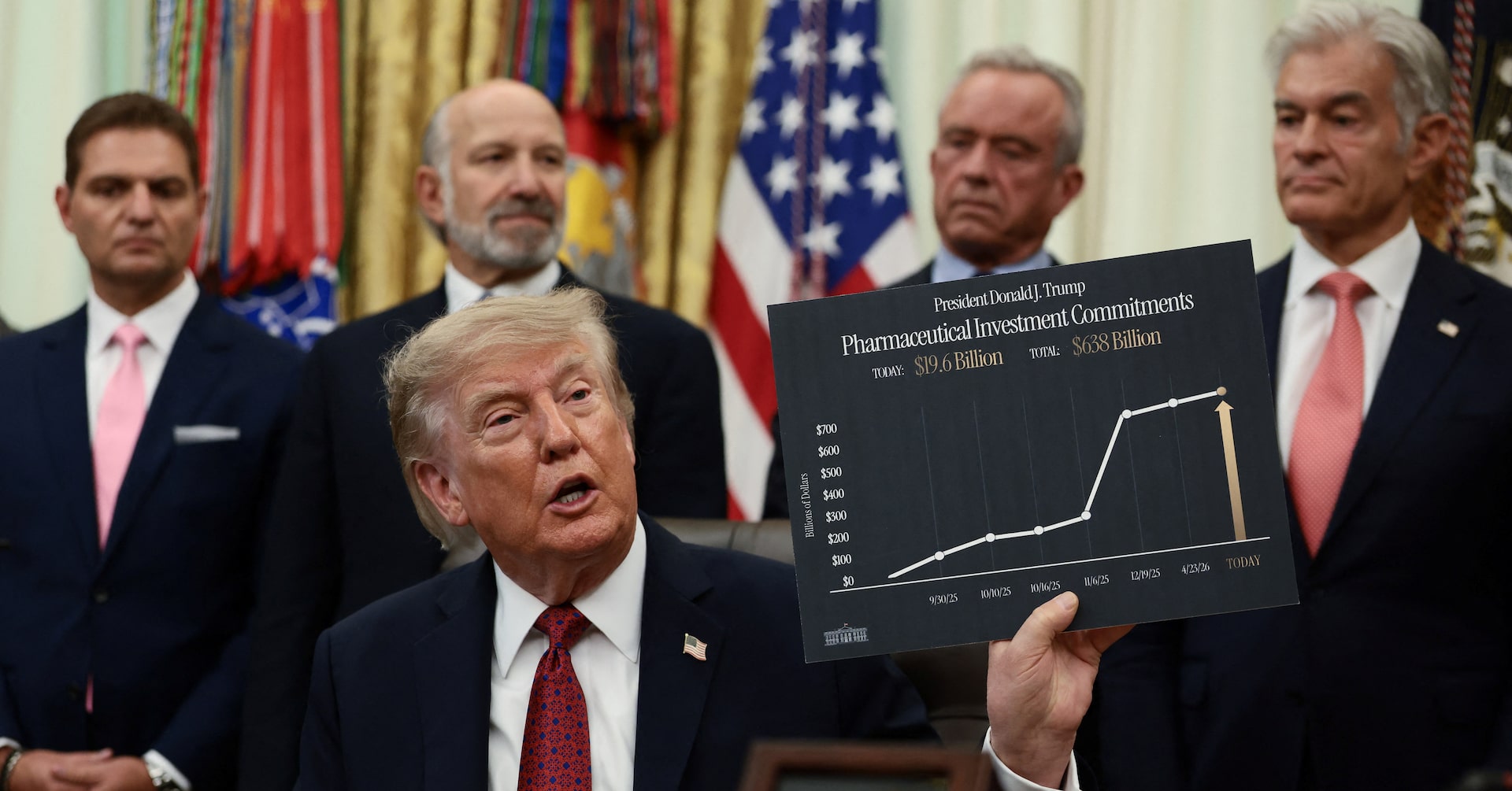
President Donald Trump announced nine new drug-pricing agreements at an Oval Office event on August 31, bringing the total number of manufacturers with most-favored-nation (MFN) deals to 26 — a group the administration says covers 89% of the branded drug market [1][2].
The nine companies are Alcon, Astellas Pharma, BeOne Medicines, BridgeBio, CSL, Kyowa Kirin, Sun Pharma, Teva Pharmaceuticals and UCB [2]. Teva attended the event but said in a press release it was still in discussions with the administration about a potential agreement [1]. Under the deals, the companies have offered drugs to state Medicaid programs at most-favored-nation prices — pegged to the lowest prices paid in other developed countries — which Trump described as "a tremendous discount, which should bring down the cost of your medical care by tremendous amounts" [1].
What the deals actually cover
The drugs involved treat conditions including hemophilia, Parkinson's disease, macular degeneration, glaucoma, liver disease, skin conditions and several cancers [2]. The White House says the agreements will give every state Medicaid program access to MFN prices on these companies' products, and that the companies guaranteed MFN pricing on new innovative medicines they bring to market [2].
The nine manufacturers also committed to invest at least $19.6 billion collectively in U.S. manufacturing in the near term [2]. Several are donating active pharmaceutical ingredients to a Strategic Active Pharmaceutical Ingredients Reserve: UCB is contributing 163 tons of levetiracetam, Sun Pharma 71.4 tons of clindamycin and 6.75 tons of doxycycline, Teva 45 metric tons of metronidazole and 4.8 tons of amlodipine, and Astellas 25 kilograms of tacrolimus [2].
Important details are missing. Reuters reported it is not clear how many drugs the deals cover or at what discounts, "leaving the savings for the government or patients unknown" [1]. The White House did not release the agreements, and some companies described terms as private [1].
Why it matters for patients
For people taking or considering GLP-1 medications, this round of deals is largely background noise. None of the nine new signers make semaglutide (Ozempic, Wegovy, Rybelsus) or tirzepatide (Mounjaro, Zepbound). Eli Lilly and Novo Nordisk signed earlier, as part of the group of 17 large drugmakers that reached agreements starting last year [1][2].
Reuters reported that the biggest savings from those earlier deals have come from weight-loss drugs, with Novo and Lilly agreeing to price cuts in return for their medicines being made more available through Medicare [1]. CMS Administrator Mehmet Oz said on August 31 that 600,000 seniors had sought prescriptions through a new temporary pilot that began July 1 [1].
The new agreements route savings through Medicaid, where the direct effect on what patients pay at the counter is limited. Medicaid already receives steep discounts from drugmakers under existing law, and most people covered by the program pay little out of pocket [1]. "Patient out-of-pocket costs in Medicaid are not much of an issue. Typically, patients are paying anywhere between $4 and $8 at the pharmacy counter," said Lindsay Bealor Greenleaf, head of market access policy strategy at ADVI. "There's not an impact on patient out-of-pocket costs or patient access, necessarily. In the Medicaid program with these voluntary deals, the impact is felt squarely on the manufacturers" [2].
Critics remain skeptical. Peter Maybarduk, Access to Medicines director at Public Citizen, said in a statement that "the new deals are a distraction from the administration's failed plan to lower U.S. drug prices to the levels paid in other wealthy countries" [1]. U.S. consumers still pay by far the most for prescription medicines, often nearly three times more than in other developed nations [1].
What happens next
Trump signed the MFN executive order in May 2025 and sent letters to 17 leading manufacturers on July 31, 2025; the White House says all 17 have now signed [2]. Smaller and mid-sized drugmakers were slower to join — a Reuters report in June 2026 found only Astellas had confirmed applying to the Medicaid pricing program, with executives at companies such as Ionis saying they saw little financial benefit [1].
The administration has said its broader drug-pricing push could save $64.3 billion in federal and state spending over the next decade, though Reuters called that figure speculative [1]. Updated savings estimates circulating from the Council of Economic Advisers are not documented in these sources. Trump is also calling on Congress to enact the Great Healthcare Plan, a broader package on drug prices, premiums and price transparency whose fate rests with lawmakers [2].
Images from the sources
Sources
Semaglutides.org is for information only and is not medical advice. Always talk to a licensed healthcare provider about your own care. Some links to telehealth services are affiliate links, labeled where they appear.