The compounding fight has moved from courtrooms to dockets and ad panels
The FDA still has not decided whether to bar bulk compounding of Ozempic- and Mounjaro-type drugs, while Lilly and Novo Nordisk have shifted much of their fight against copycat sellers to a private ad watchdog, filing ten cases so far.
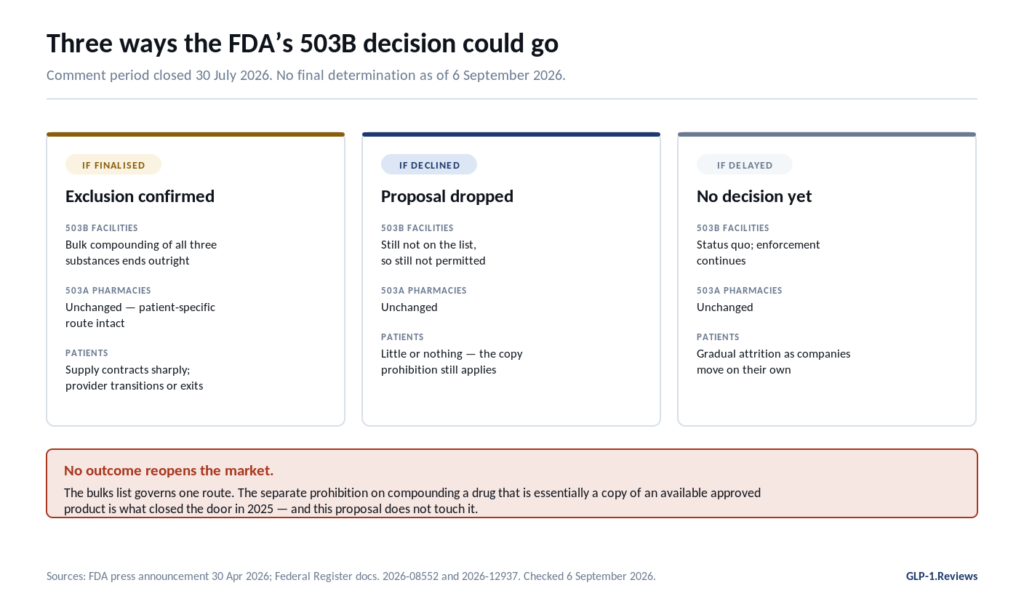
As of September 14, 2026, the fight over compounded GLP-1 drugs has moved out of the courtroom headlines and into slower-moving regulatory and industry channels. The Food and Drug Administration still has not finalized a proposal to exclude semaglutide, tirzepatide and liraglutide from the 503B bulks list, and Eli Lilly and Novo Nordisk have filed ten cases against compounders and telehealth companies with the National Advertising Division (NAD), a private self-regulatory body that reviews advertising claims [1][2].
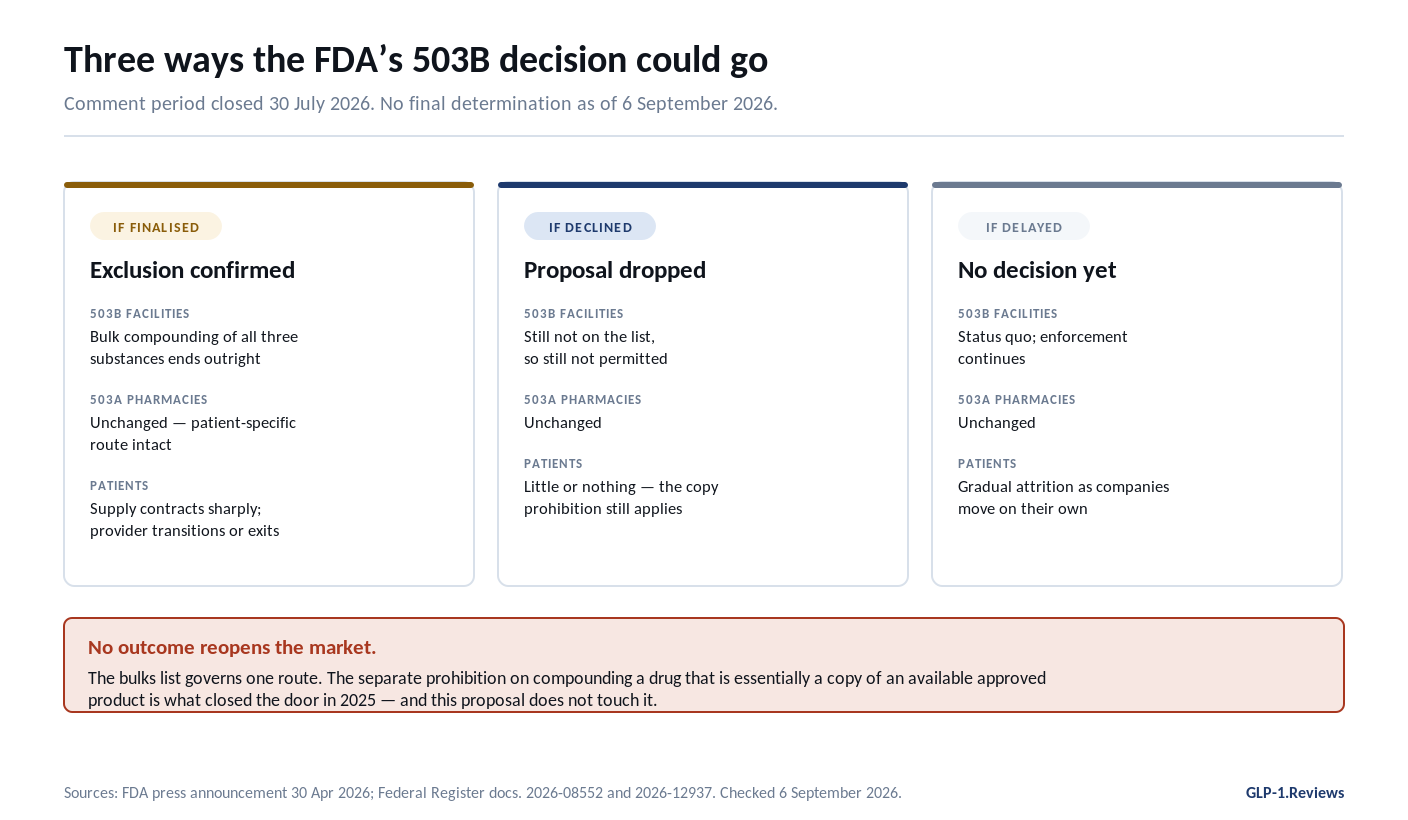
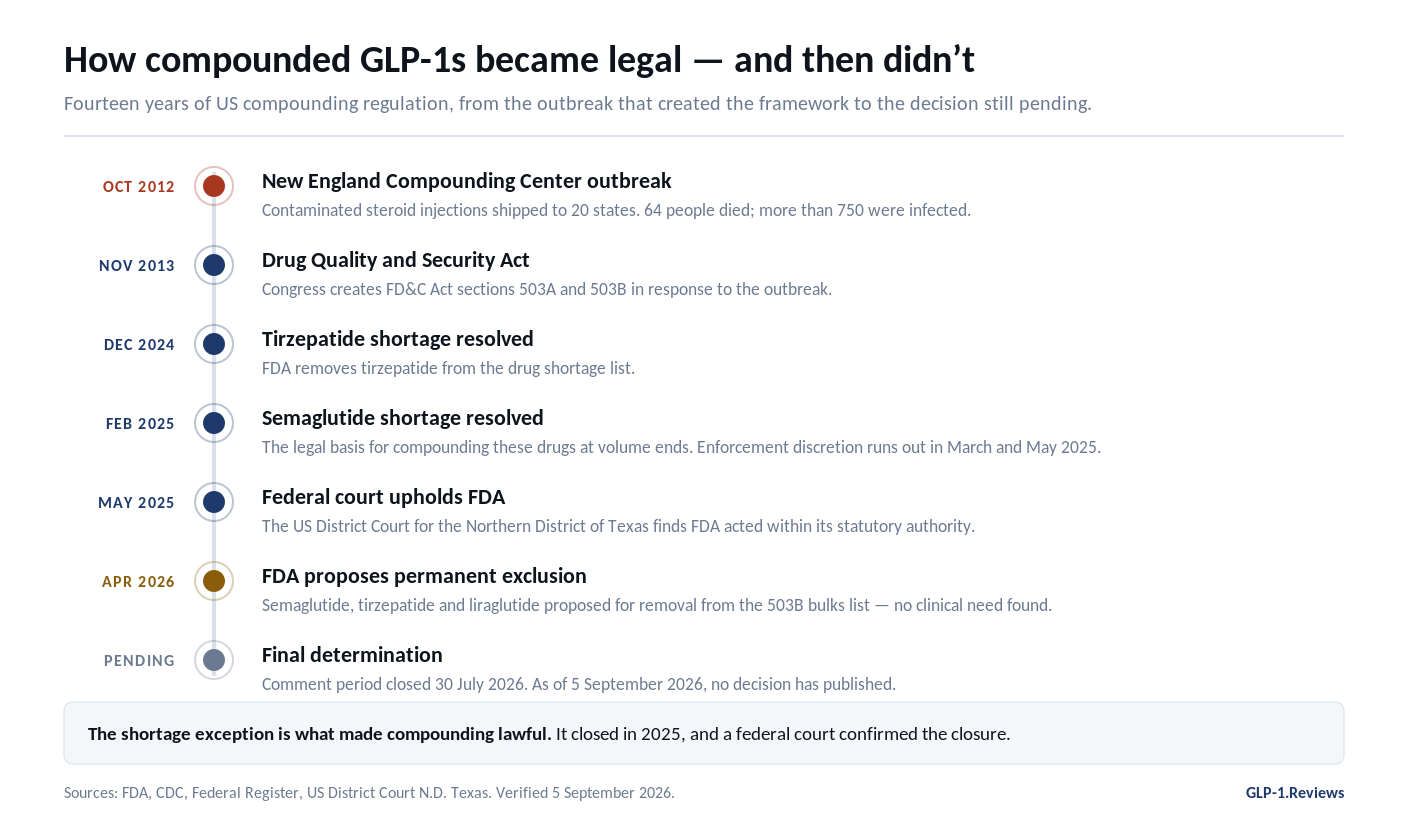
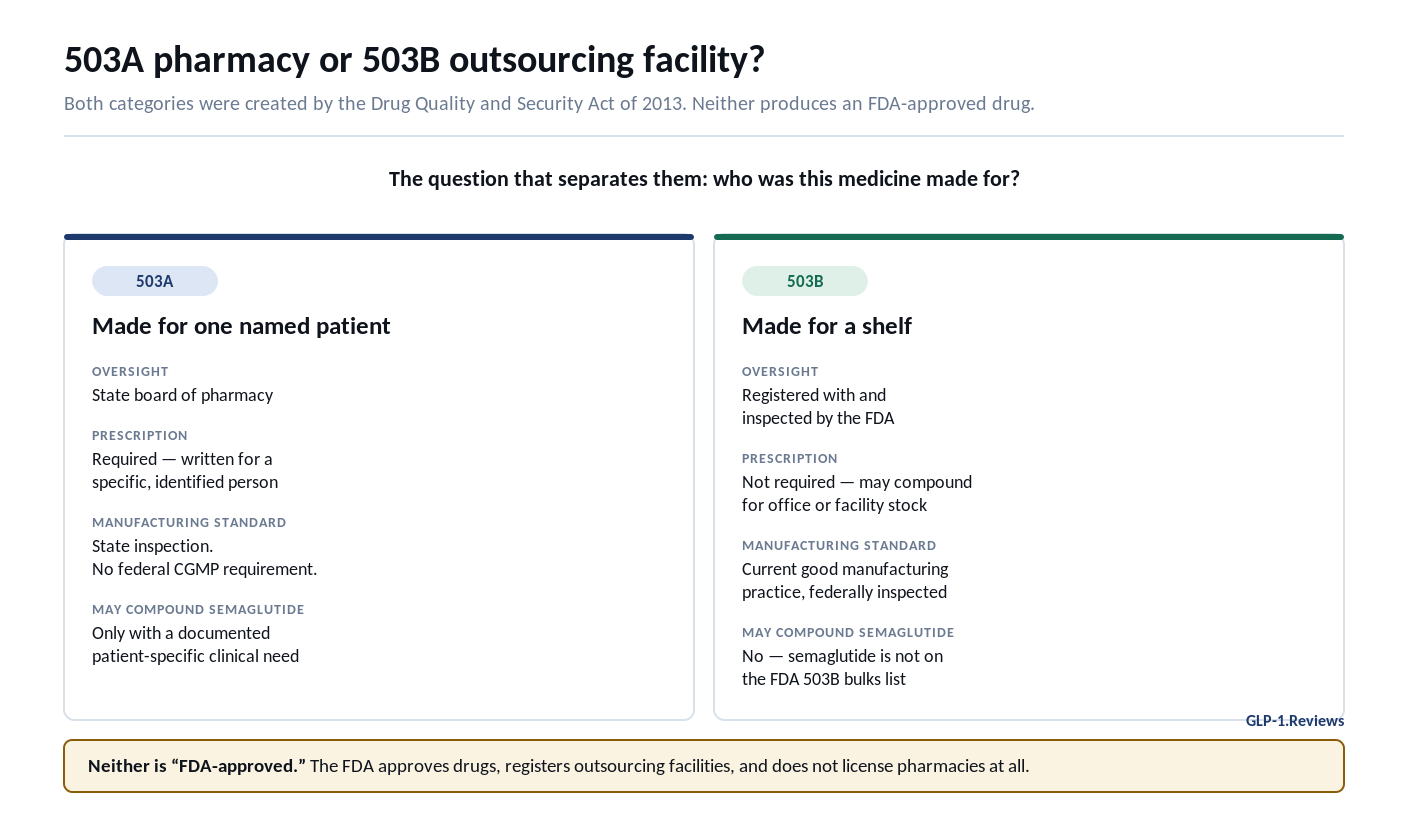
The FDA proposed the bulks list exclusion on April 30, 2026, published it in the Federal Register on May 1, and extended the public comment period once before it closed on July 30, 2026 [1]. No final decision has been issued. If finalized, registered 503B outsourcing facilities would no longer be allowed to compound those three substances from bulk supply at all, which is the route behind most remaining large-scale compounded GLP-1 supply [1]. But even that outcome would not reopen the broader compounded market, because a separate rule — the prohibition on compounding a drug that is essentially a copy of an available approved product — already closed mass-market compounding once branded shortages ended, and this proposal does not touch that rule [1].
Separately, Lilly and Novo have turned to the NAD as a faster, cheaper alternative to litigation. Novo has filed 130 federal lawsuits and five NAD challenges; Lilly has filed dozens of federal lawsuits and at least five NAD cases [2]. In NAD proceedings, the burden falls on the advertiser to justify its claims, and while the process is voluntary and carries no legal authority, it can refer noncompliant companies to the FDA, the Federal Trade Commission or state attorneys general [2]. That happened to Willow Health Services Inc., which agreed to permanently drop certain safety and efficacy claims for compounded semaglutide after Novo's NAD case was referred to the FTC and state AGs when the company did not respond [2]. Noom Inc. also dropped an ad tagline for its compounded GLP-1s after Lilly's challenge found the company lacked adequate support for the claim, even though Noom disagreed with the finding [2].
The FDA's own enforcement has continued alongside these private and administrative tracks, though sources differ on the count: one tally cites 55 warning letters sent to telehealth companies across two waves in 2026, while another describes more than 100 warning letters sent to companies over misbranded claims in the past year [1][2]. Both describe that enforcement as narrowly focused on specific claims about active ingredients, branding and product performance rather than broader guidance on what compounders' ads should say [2].
Why it matters for patients
For people currently taking a compounded GLP-1, the practical question is not which docket or ad panel is active but which supply route their medication comes through. A finalized 503B bulks exclusion would directly affect patients whose product comes from a registered outsourcing facility compounding from bulk substance, but it would not affect patient-specific 503A compounding done under an individual prescriber's documented determination [1]. The NAD cases, meanwhile, are about what companies can claim in advertising, not about whether a product itself is legal to sell — a Willow or Noom losing an ad case does not by itself change whether that company can still provide compounded medication [2].
The broader court outcomes described for this period — including appellate rulings and an antitrust case dismissal — are not detailed in the sources reviewed here, so their specific terms and effects on patients are not yet confirmed in this reporting.
What happens next
The FDA has not announced a timeline for a final 503B bulks list determination, and agency decisions on such nominations have historically taken months or longer [1]. NAD cases typically reach a final decision within a matter of months, according to one advertising attorney, though outcomes remain non-binding unless escalated to federal or state regulators [2].
Images from the sources
Sources
Semaglutides.org is for information only and is not medical advice. Always talk to a licensed healthcare provider about your own care. Some links to telehealth services are affiliate links, labeled where they appear.