Eight more generic semaglutide files sit under Health Canada review
Health Canada is reviewing eight more generic semaglutide filings beyond the two already approved, a step that could cut Canadian Ozempic prices sharply but does not affect U.S. drug supply.
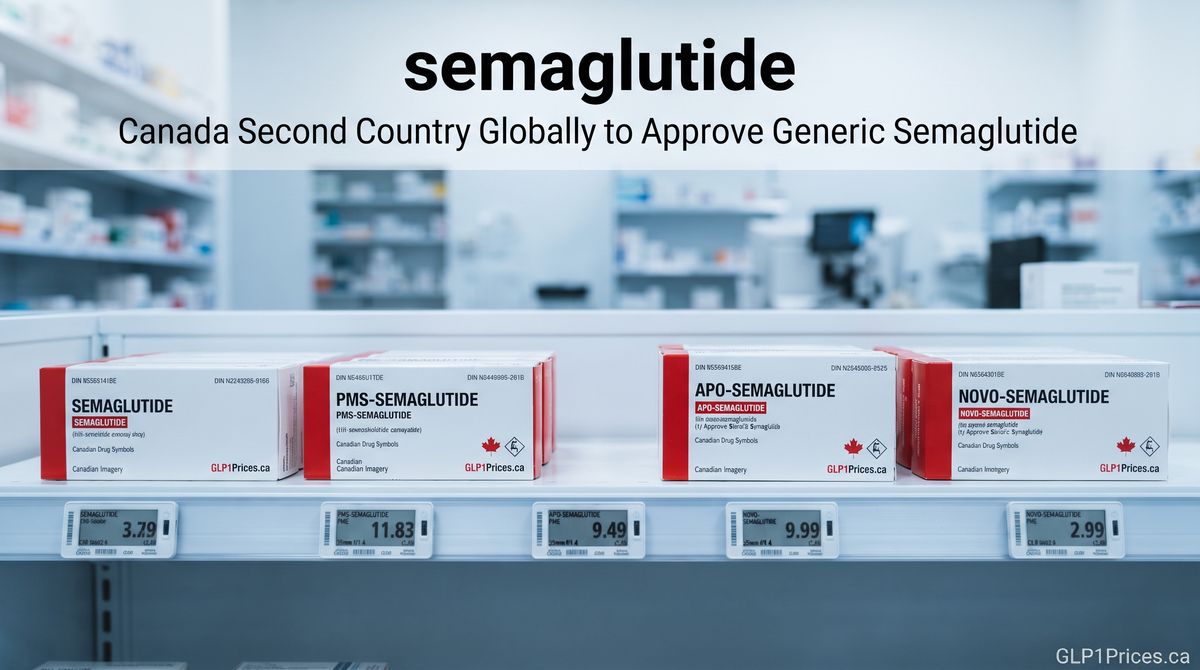
Health Canada is reviewing eight additional generic semaglutide submissions, on top of the authorizations already granted to Dr. Reddy's Laboratories and Apotex, according to a September 8, 2026 report tracking the country's generic pipeline [1]. Dr. Reddy's won approval on April 28, 2026, and Apotex has said it will offer full SKU parity with brand-name Ozempic, meaning matching dose strengths and pen formats [1].
Canada's drug-pricing system ties generic prices to how many competitors are on the market. A first generic prices at 75% to 85% of the brand list price. Once a second generic launches, that falls to 50%. Once three or more generics are selling, the price drops to 35% of brand [1][2]. That third approval is the one that actually moves prices for patients, since the first two entrants only bring modest discounts.
Mina Tadrous, a pharmacist and drug policy researcher at the University of Toronto, has estimated that once three generics reach the market, out-of-pocket costs for semaglutide could fall to around C$100 a month [2]. Current tracked pharmacy prices for brand-name Ozempic in Canada range from C$86.40 to C$663, and Wegovy from C$270 to C$550, so the gap between brand and a fully competitive generic market is large [2].
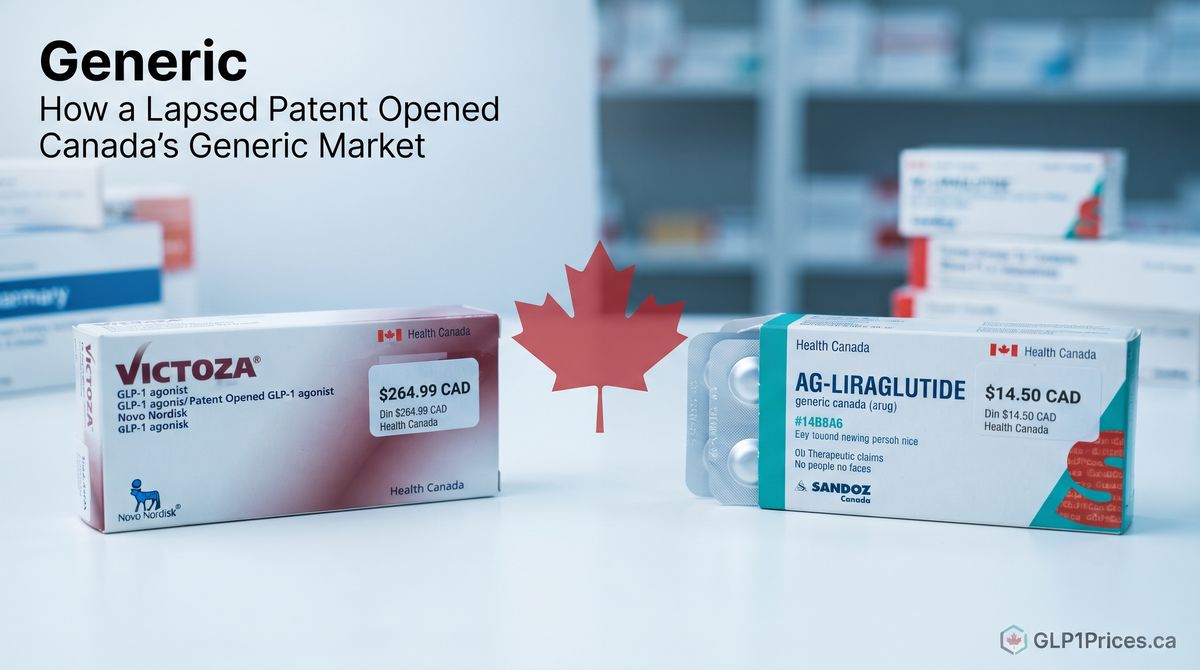
The generic opening traces back to a lapsed patent. Novo Nordisk stopped paying a C$250 annual patent maintenance fee in Canada starting in 2018, and a separate regulatory exclusivity period expired on January 5, 2026, clearing the way for generic filings [2]. Novo Nordisk has not explained why the fee went unpaid, telling The BMJ only that intellectual property decisions are made carefully at the global level [2]. Tahir Amin of the Initiative for Medicines, Access & Knowledge told the BBC the Canadian patent could have been extended to 2028 but was not, saying "somebody dropped the ball" [2].
Why it matters for patients
This development is about Canada's market, not the United States. Novo Nordisk's semaglutide patents remain intact in the U.S. until 2032, and in Europe and Japan until 2033, so this generic wave does not create a legal path to lower-cost generic Ozempic, Wegovy, or Rybelsus in American pharmacies any time soon [2].
Still, the Canadian pricing squeeze is shaping Novo Nordisk's global strategy in ways that can reach U.S. patients indirectly. The company has forecast a 5% to 13% drop in 2026 sales, its shares fell 17% on the day that guidance came out, and its CEO has described 2026 as "a year of unprecedented pricing pressure" [2]. Novo Nordisk has already responded in Canada with brand-name discount cards and an advertising push encouraging patients to ask for Ozempic by name rather than switch to a generic [2].
For U.S. readers who look to Canadian pharmacies or online sellers as a workaround, it is worth noting that Health Canada has separately warned about counterfeit and unauthorized Ozempic and Mounjaro products being sold by unlicensed retailers, a caution that applies to anyone considering cross-border purchases [1].
What happens next
Health Canada has not given a public timeline for deciding on the eight pending generic semaglutide files [1]. Because Canada's pricing tiers are triggered by the count of approved generics rather than a calendar date, the next major price shift for Canadian patients will depend on when, not if, a third product clears review [1][2]. No comparable regulatory action is pending in the United States as of this report.
Images from the sources
Sources
Semaglutides.org is for information only and is not medical advice. Always talk to a licensed healthcare provider about your own care. Some links to telehealth services are affiliate links, labeled where they appear.