No final FDA determination on the 503B bulks exclusion as of early September
The FDA still has not finalized its plan to permanently bar bulk compounding of semaglutide, tirzepatide and liraglutide, though the practical door was already closed by other rules.
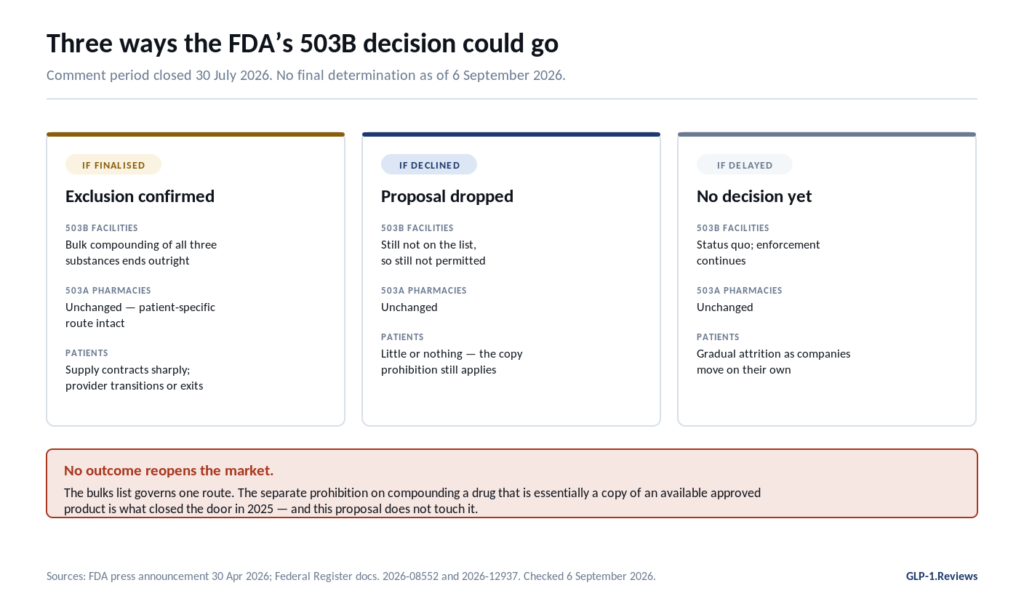
As of early September 2026, the FDA has not issued a final decision on its proposal to remove semaglutide, tirzepatide and liraglutide from the list of substances that outsourcing pharmacies, known as 503B facilities, may compound in bulk [1][2]. The proposal was announced April 30, 2026, published in the Federal Register on May 1 at 91 Fed. Reg. 23431, and its public comment period closed July 30 after one extension [1][2]. No final rule has followed.
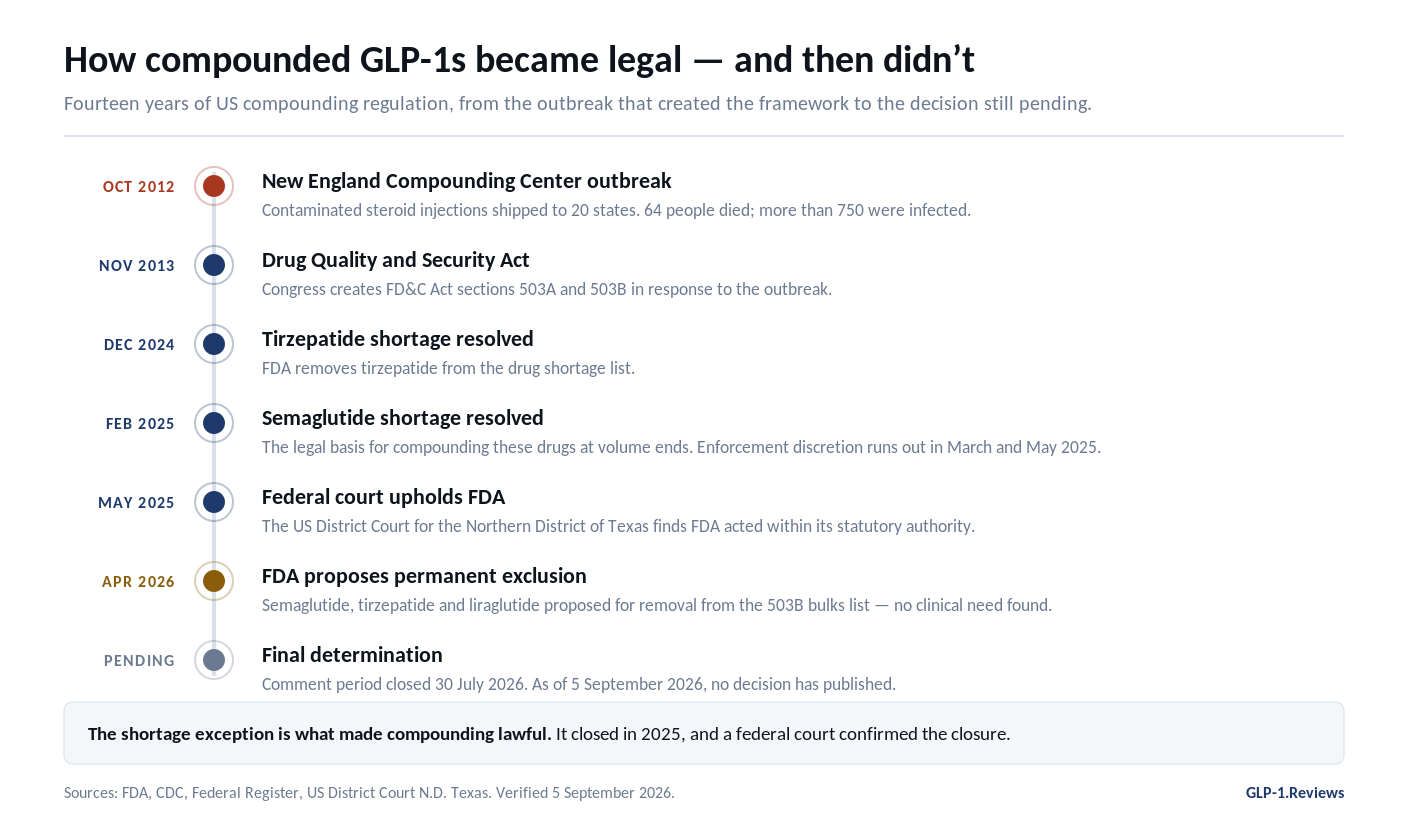
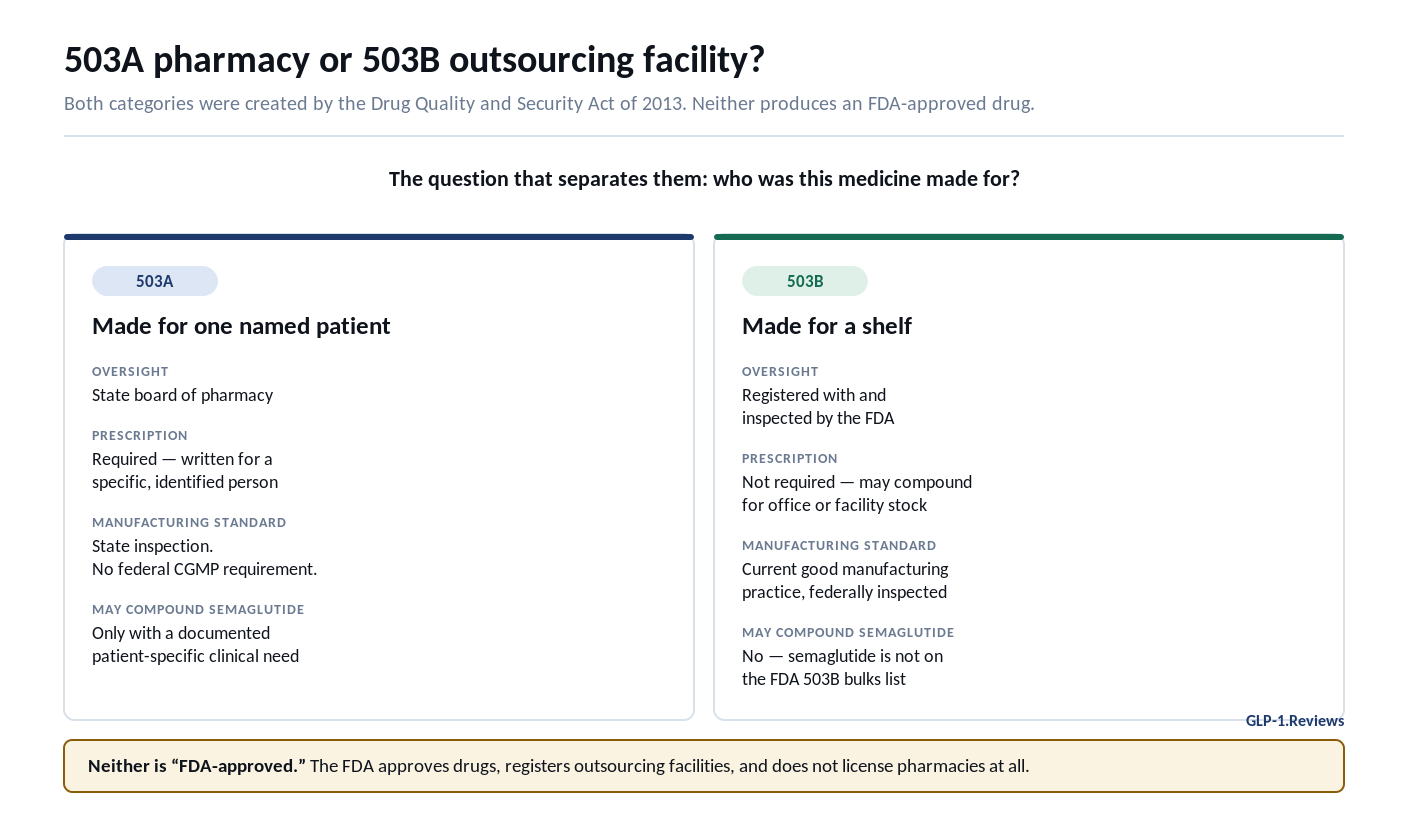
The proposal targets a specific legal channel called the 503B Bulks List. A substance can be added to this list if the FDA finds a documented clinical need for compounding it from bulk ingredients. The FDA reviewed nominations for all three GLP-1 drugs and said it found no such need, proposing to place them instead on a list of substances it has considered and rejected [1]. None of the three drugs is currently on the bulks list, and the shortage-based exception that allowed bulk compounding during 2023 and 2024 ended when the tirzepatide shortage resolved in October 2024 and the semaglutide shortage resolved on February 21, 2025 [2].
Liraglutide injection is the one partial exception. It remains on the FDA's drug shortage list, which means 503B facilities can still compound it for now even though it is not on the bulks list — a conditional allowance that would end if the shortage designation is lifted, but could reopen again if any of the three drugs returns to shortage status [2].
Analysts note that finalizing the exclusion would not by itself reopen or close much that isn't already settled. A separate and unrelated FDA rule bars compounding a drug that is essentially a copy of an approved product unless a prescriber documents that a change is medically necessary for a specific patient. That rule, not the bulks list, is what ended most large-scale compounded GLP-1 supply once the shortages resolved [1][2]. Finalizing the current proposal would make the bulk-compounding door permanently shut rather than temporarily closed, but it would not touch patient-specific compounding done by 503A pharmacies, which remains a separate and unaffected pathway [1][2].
Why it matters for patients
For most patients currently using compounded semaglutide or tirzepatide obtained through a 503B outsourcing facility, the underlying supply situation has not changed since the shortages ended — those drugs already cannot be compounded from bulk under current rules [2]. A final FDA determination would formalize that closure rather than create a new one.
Patients getting a compounded GLP-1 through a 503A pharmacy, where a prescriber has documented an individualized medical reason for a compounded formulation, are not affected by this specific bulks-list proposal either way [1][2].
Liraglutide is the drug where the pending decision could matter more directly, because its shortage-list status is currently the only reason 503B compounding of it remains lawful. If that shortage designation lifts before or regardless of a final bulks-list decision, that pathway would close too [2].
Industry moves suggest some companies are not waiting for a final rule. Some providers shifted toward branded drug distribution earlier in 2026, ahead of the FDA's April proposal, according to one source tracking the sector [1].
What happens next
The FDA has not announced a date for a final determination. Sources note that final decisions on bulks-list nominations have historically taken months or longer after a comment period closes [1]. Until a final rule publishes, the proposed exclusion has no legal effect, and the FDA continues to enforce existing rules against unauthorized bulk compounding in the meantime [1].
Images from the sources
Sources
Semaglutides.org is for information only and is not medical advice. Always talk to a licensed healthcare provider about your own care. Some links to telehealth services are affiliate links, labeled where they appear.