Medicare Modernization Act excludes weight-loss drugs from Part D
A provision signed into law on Dec. 8, 2003 bars Medicare Part D from paying for drugs used for weight loss, and only Congress can remove it [2].

When the Medicare Modernization Act created the Part D prescription drug benefit in 2003, it also wrote in a list of drugs Medicare would not pay for. One line on that list — covering "agents when used for anorexia, weight loss, or weight gain" — is the reason Medicare still cannot cover obesity medications more than two decades later [2].
That language sits in Section 1860D-2(e)(2)(A) of the Social Security Act and was added during budget negotiations to hold down the projected cost of the new drug benefit [2]. At the time, prescription weight-loss drugs were widely viewed as cosmetic. Federal law still reflects that view: a 2003 provision treats weight-loss medications as cosmetic and bars Medicare from covering them [1].
The indication, not the molecule, decides coverage
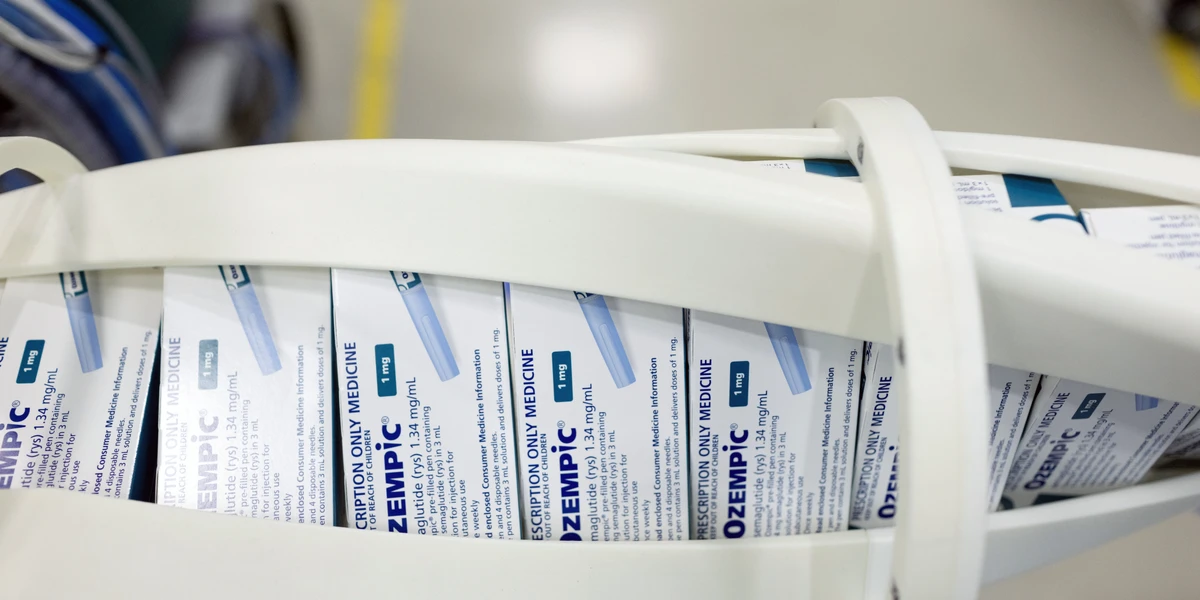
The exclusion turns on what a drug is prescribed for, not what is in the vial. Semaglutide sold as Ozempic for type 2 diabetes can be covered by Part D; the same molecule sold as Wegovy for obesity cannot [2]. The prohibition applies no matter how effective the drug is, whether the FDA approved it for obesity, how high a patient's BMI is, or whether a doctor considers it medically necessary [2]. It also reaches older weight-loss drugs such as phentermine and orlistat [2].
One consequence, according to one consumer-health analysis, is that prescribing patterns bend toward diabetes coding. That analysis cites a 2024 Medicare Payment Advisory Commission review finding that among Medicare beneficiaries filling GLP-1 prescriptions, 73% had a diabetes diagnosis code but only 58% had lab values consistent with type 2 diabetes [2]. Semaglutides.org could not independently verify that figure from the sources provided.
Importantly, no agency can undo the exclusion on its own. No CMS guidance update or executive order can override the statutory text; only Congress can strike it [2].
The bill that keeps coming back
The main vehicle for repeal is the Treat and Reduce Obesity Act, which would let Medicare cover anti-obesity medications, including GLP-1s, for people who are overweight and have at least one other medical condition [1]. Rep. Raul Ruiz (D-Calif.), a cosponsor, framed the goal bluntly: "Ultimately, what we need to do is we need to change the Medicare policy that views anti-obesity medications as just cosmetic weight loss" [1].
The bill would make anti-obesity drugs eligible for Part D formularies but would not require plans to cover them, would not cap copays, would not override prior authorization, and would not cover compounded versions [2]. It was first introduced in 2012 and reintroduced repeatedly since, without ever receiving a floor vote in either chamber [2].
Cost is the recurring obstacle. The Congressional Budget Office estimated it would cost $35 billion over a nine-year period for Medicare to cover anti-obesity medications [1]; a separate summary puts the figure at $34.6 billion over 10 years [2]. Senate HELP Chair Bill Cassidy (R-La.), a cosponsor, said he would like to act on GLP-1s but was noncommittal on timing, citing other committee priorities [1].
Why it matters for patients
For people on Medicare, the 2003 provision is the practical reason an obesity prescription can be denied even when a doctor writes it. Coverage depends on the diagnosis attached to the prescription, which creates what one analysis calls a two-tier system based on diagnosis codes [2].
Medicaid is a separate story, because states set their own formularies. One tally counts 14 states with full coverage of anti-obesity medications, 15 with partial coverage tied to BMI thresholds and prior authorization, and 21 with no coverage [2]. Those state counts come from a single consumer source and are not confirmed elsewhere here.
Outside insurance, cash prices have moved. Through agreements with manufacturers, the administration says it has negotiated prices on most popular GLP-1s, and TrumpRx lists costs ranging from $149 to $299 per month, though some reduced prices last only a limited time [1].
What happens next
CMS is starting a voluntary demonstration project that will let some Medicare and Medicaid beneficiaries access GLP-1s for obesity treatment [1]. Advocates say cost-effectiveness data from that model could give Congress a reason to act [1].
Separate legislation, the Safeguarding Americans from Fraudulent and Experimental Drugs Act, would expand FDA authority over compounders, require reporting and inspections, and limit how many "copies" of a drug can be produced monthly [1]. Whether either bill advances, and on what timeline, is not yet known.
Images from the sources

Sources
Semaglutides.org is for information only and is not medical advice. Always talk to a licensed healthcare provider about your own care. Some links to telehealth services are affiliate links, labeled where they appear.