Lilly publishes its open letter on counterfeit and compounded tirzepatide
Eli Lilly published an open letter on June 20, 2024 warning that compounded and counterfeit "tirzepatide" it tested contained bacteria, impurities, or no drug at all, and filed new lawsuits against sellers.
Eli Lilly published an open letter on June 20, 2024 telling patients, families and prescribers that counterfeit and compounded products sold as tirzepatide can put people at risk, and stating flatly that the company does not supply the active ingredient to anyone outside its own approved medicines [1]. The same day, Lilly announced it was filing several legal actions against med-spas, wellness centers and other entities selling unapproved compounded products they claim contain tirzepatide [2].
Tirzepatide is the active ingredient in Lilly's Mounjaro, approved for type 2 diabetes, and Zepbound, approved for weight management in adults with obesity or excess weight plus a weight-related condition [1]. The letter says those two products are the only FDA-approved tirzepatide medicines, and that Lilly "does not provide tirzepatide... to compounding pharmacies, med-spas, wellness centers, online retailers, or other manufacturers" [1]. It adds a pointed line: "Lilly does not know where compounding pharmacies or other sellers are obtaining the tirzepatide active ingredient they are selling" [1].
What Lilly says it found in tested products
The most concrete claims in the letter concern laboratory findings. Lilly says it has discovered compounded drugs advertised as tirzepatide with safety, sterility and efficacy problems. Some contained bacteria. Some had high impurity levels. Some were pink instead of colorless. Some had a completely different chemical structure than Lilly's approved medicines. In at least one instance, the letter says, the product "was nothing more than sugar alcohol" [1][2].
The letter does not say how many samples were tested, where they came from, when the testing happened, or which sellers supplied them. Those details are not in the sources.
Lilly also flags formats that no regulator has evaluated. Certain online pharmacies are advertising compounded pill, under-the-tongue, nasal spray and other oral versions of "tirzepatide," the letter says, while FDA has only approved tirzepatide given by under-the-skin injection [1]. It calls out sellers who claim their product is made in an "FDA-approved" facility, noting there is no such thing as an FDA-approved manufacturing facility and that FDA regulations prohibit the claim as misleading [1].
On social media, the letter is blunt: "Lilly never sells genuine Mounjaro or Zepbound on social media," and any offered for sale there is either fake or being resold by someone who obtained it another way [1]. It cites the National Association of Boards of Pharmacy, which has "identified thousands of websites that promote the illegal sale of GLP-1 agonists" and said illegal actors are exploiting high demand and short supply to sell "substandard and falsified versions" [1][2]. The letter also warns against using anything labeled "research purposes only" or "not for human consumption," saying those markings mean the product was not purified to pharmaceutical-grade levels [1].
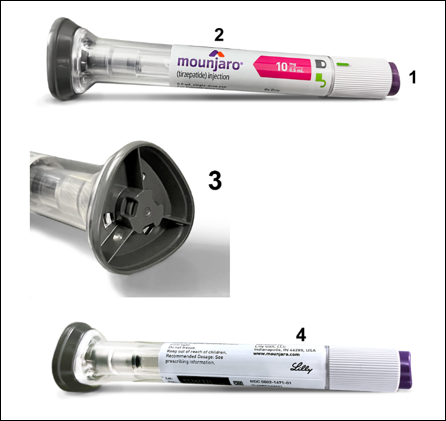
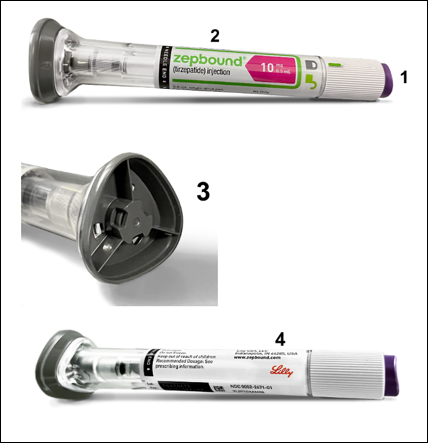
A section titled "Identifying Genuine Lilly Products" lists the physical markers of an authentic pen: a purple injection button, a tri-lobular gray base cap, and the script Lilly logo printed in black ink on Mounjaro and red ink on Zepbound [1].
Why it matters for patients
During the tirzepatide shortage, many people turned to compounded versions and telehealth sellers. Lilly's letter makes clear that whatever is in those vials did not come from Lilly, and that at least some samples it tested were contaminated, chemically different, or inert [1][2]. A product that is "nothing more than sugar alcohol" would not work; a contaminated injectable carries infection risk, since these drugs go under the skin [1].
It is worth reading the source critically. Lilly is the patent holder and has a commercial interest in steering people to its own products. But the letter also relies on FDA's own statements that "compounded drugs pose a higher risk to patients than FDA-approved drugs" and that poor compounding practices can cause contamination leading to serious patient injury [1][2]. Compounded drugs are legal in limited circumstances, but they are never FDA-approved [1][2].
The letter also says Mounjaro and Zepbound are approved only for adults 18 and older, carry a Boxed Warning about thyroid C-cell tumors, and are not approved for cosmetic weight loss [1][2]. Anyone worried they received a fake or unsafe product is directed to contact a healthcare provider or seek immediate medical attention, and to report it to local law enforcement or their state Board of Pharmacy [1].
What happens next
Lilly said the June 20, 2024 lawsuits follow cases it filed in September and October 2023 [2]. In May 2024 it settled with Totality Medispa, which paid money and agreed to stop conduct that misled consumers into believing it sold Mounjaro, Zepbound or an FDA-approved alternative; Lilly says it has reached similar settlements with other med-spas and wellness centers [2]. The letter also notes Australia announced a complete ban on compounded tirzepatide and similar medicines on May 21, 2024, citing patient harm including one hospitalization [1].
Images from the sources
Sources
Semaglutides.org is for information only and is not medical advice. Always talk to a licensed healthcare provider about your own care. Some links to telehealth services are affiliate links, labeled where they appear.