Novo Nordisk's CEO is grilled by Bernie Sanders over US GLP-1 prices
At a Sept. 24, 2024 Senate hearing, Novo Nordisk's CEO defended US list prices of $969 for Ozempic and $1,349 for Wegovy — numbers that drive what uninsured and high-deductible patients actually pay.
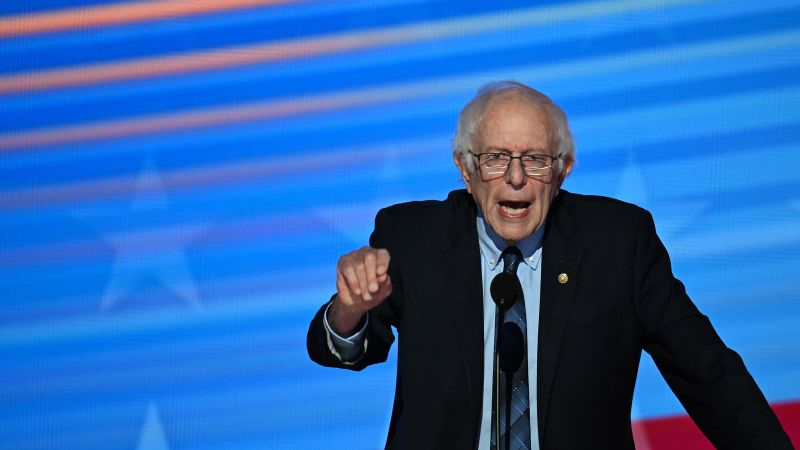
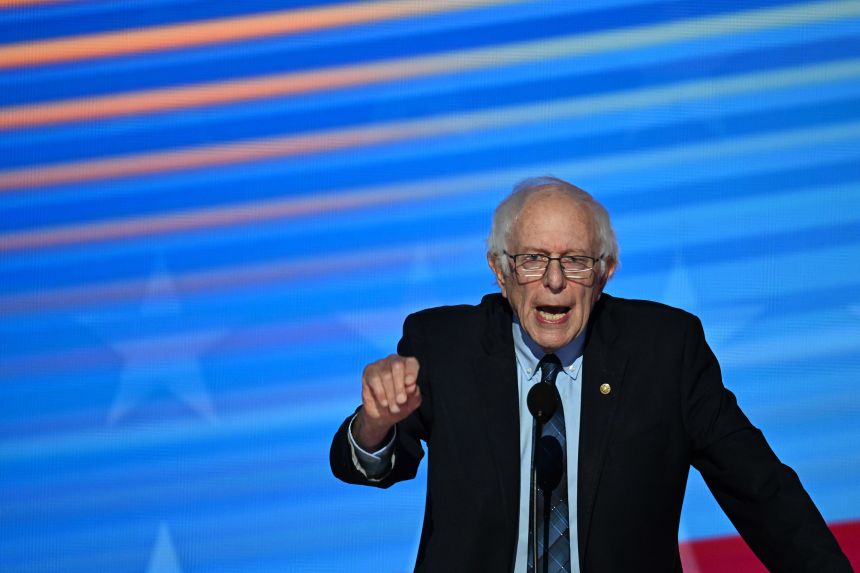
Sen. Bernie Sanders (I-Vt.), then chairman of the Senate Health, Education, Labor and Pensions Committee, questioned Novo Nordisk CEO Lars Fruergaard Jørgensen for hours on Sept. 24, 2024, over why Americans pay far more for the company's semaglutide drugs than patients in other wealthy countries [1][2]. Jørgensen appeared alone at the witness table and pointed to middlemen in the US drug supply chain as a major reason prices stay high [2].
Sanders built his case on a side-by-side price chart. A four-week supply of Ozempic, approved for type 2 diabetes, carries a US list price of $969, compared with $155 in Canada, $122 in Denmark, $71 in France and $59 in Germany [1][2]. Wegovy, the same molecule approved for weight loss and cardiovascular risk reduction, lists at $1,349 a month in the US versus $265 in Canada, $186 in Denmark and $92 in the United Kingdom [1][2]. Sanders' prepared remarks put the German Wegovy price at $137; CNN's account of the hearing reported $140 [1][2].
Jørgensen made the argument Sanders anticipated: list prices are not what the company collects. He testified that Novo Nordisk pays back roughly 75% of its US medicine sales in rebates, discounts and fees [2]. Sanders countered that even after rebates, the net price of Ozempic is still nearly $600 — more than nine times the German price — and the estimated net price of Wegovy is over $800, about four and a half times the Danish price [1].
The PBM standoff
The central fight was over whether Novo Nordisk could cut list prices without losing insurance coverage. Jørgensen said that when the company cut prices on some insulins, pharmacy benefit managers dropped those products from formularies. "The broad totality is that less patients have access to our medicines when we lowered the price," he told Sen. Maggie Hassan (D-N.H.) [2]. He raised the same point about Levemir, a long-acting insulin Novo Nordisk is discontinuing: "We, last year, reduced the price for Levemir; we dropped the price, yet to find that PBMs dropped access to Levemir" [2].
Sanders said he had obtained written commitments from all the major PBMs that they would not limit coverage — and could expand it — if Novo Nordisk substantially cut list prices [1][2]. "That's new information for me," Jørgensen replied [2]. The PBM trade group, the Pharmaceutical Care Management Association, pushed back, saying PBMs are "the only entities in the health care system working to mitigate the impact" of high GLP-1 prices [2].
The committee released a majority staff report on Novo Nordisk's pricing titled in part "Greed, greed, greed" [2]. Sanders cited findings that the two drugs generated nearly $50 billion in sales since 2018, 72% of it from the US; that Novo Nordisk spent $21 billion on research and development and $44 billion on stock buybacks and dividends over the same period; and that a Yale researcher estimated Ozempic could be profitably manufactured for less than $5 a month [1]. He also said generic manufacturers told him they could sell a generic Ozempic for under $100 a month [1].
Not every senator agreed with the framing. Sen. Roger Marshall (R-Kan.), a physician, called Ozempic a "miracle drug" and said "Novo Nordisk is not the villain in this story; they're a hero" [2]. Sen. Tim Kaine (D-Va.) said, "We let PBMs get away scot-free" [2].
Why it matters for patients
The list-versus-net argument is not academic for people at the pharmacy counter. Sanders noted that uninsured patients pay full list price, people with large deductibles pay list price until the deductible is met, and anyone with coinsurance pays a percentage calculated off the list price [1]. He also said 75% of insured Americans — more than 190 million people — cannot access Wegovy through their policies [1].
Coverage decisions by employers and insurers were already shifting. North Carolina's treasurer told the committee he dropped Wegovy coverage for about 20,000 state workers to avoid doubling premiums, and Blue Cross Blue Shield of Michigan said it would stop covering the drug on cost grounds [1]. Sanders cited an estimate that covering half of US adults with obesity at current prices would cost $411 billion a year [1].
What happens next
Jørgensen noted in written testimony that Ozempic will probably be eligible for the next round of Medicare drug price negotiations, while Eli Lilly's competing products will not be for another decade [2]. The Centers for Medicare & Medicaid Services was scheduled to name the next 15 drugs by February; the first round produced a 22% reduction in total net spending on 10 drugs [2]. Whether Novo Nordisk would actually cut list prices was not resolved at the hearing.
Images from the sources
Sources
Semaglutides.org is for information only and is not medical advice. Always talk to a licensed healthcare provider about your own care. Some links to telehealth services are affiliate links, labeled where they appear.