Employer coverage of Wegovy and Zepbound for weight loss falls to 53%, survey finds
A WTW survey released October 27, 2026 found 53% of employers with more than 100 workers cover GLP-1 drugs for weight loss, down from 57% in 2025.
A survey of large employers released October 27, 2026 found that 53% of employers with more than 100 employees cover GLP-1 drugs for weight loss, down from 57% in 2025 — the first decline in three years [1]. Sixteen percent of employers said they cover the drugs now but are considering removing them, up from 9% last year [1].
The findings come from WTW's annual health benefits survey, fielded over the summer and released in full on Wednesday [1]. Coverage of the drugs for weight loss typically costs employers in the mid-$500s to mid-$600s per user per month [1].
A separate survey of more than 1,800 U.S. employers projected that health insurance cost per employee will rise 8.2% on average in 2027, the biggest increase since 2003, with GLP-1 use accounting for a full percentage point of that overall cost growth [1]. "Employers are really balancing empathy with economics," said Caroline Susie, a principal in the total health management practice at the firm that conducted that survey [1].
Some large employers say the spending still pays off. Bank of America CEO Brian Moynihan told CNBC in August that the bank spends "about $250 million or more on GLPs, and that's up from zero" four or five years ago [1]. "We see a great impact on the employees," he said. "Believe me, we're pounding everybody on price and trying to get as cheap as possible. But our view is that because of the long-term health benefits, plus there may be more short-term health benefits ... it's a good investment" [1].
Employers that step back are turning to other arrangements. Eight percent of employers said they have directed workers to buy the drugs through direct-to-consumer programs from the manufacturers, and 28% were planning or considering it [1]. Seth Friedman of the benefits consulting firm Gallagher estimated that 20% to 30% of its clients have dropped coverage for 2027 and are sending employees that route [1]. Others are moving to direct-to-employer models, in which the drug is not on the pharmacy benefit formulary but the employer reimburses some portion of out-of-pocket costs, or are contracting with weight-management vendors, which can cost about $65 to $100 per employee per month, or $150 or more if prescription services are included [1].
Asked about the shift to weight-management programs, Friedman said employee use can be a challenge: "It's absolutely a commitment, and that's probably why you don't see a whole lot do it. Especially when they know they can just have their doctor write a script and go directly to Novo or Lilly" [1].
Use of the drugs is still rising. Eleven percent of U.S. adults said they take GLP-1 medications for weight loss in 2026, up from 3% in 2024, and 15% reported having used the medicine for weight loss at some point, according to Gallup [1]. Jeff Levin-Scherz, a population health leader at WTW, said: "Many people will choose to pay for this on their own even if it's not covered by the plan" [1].
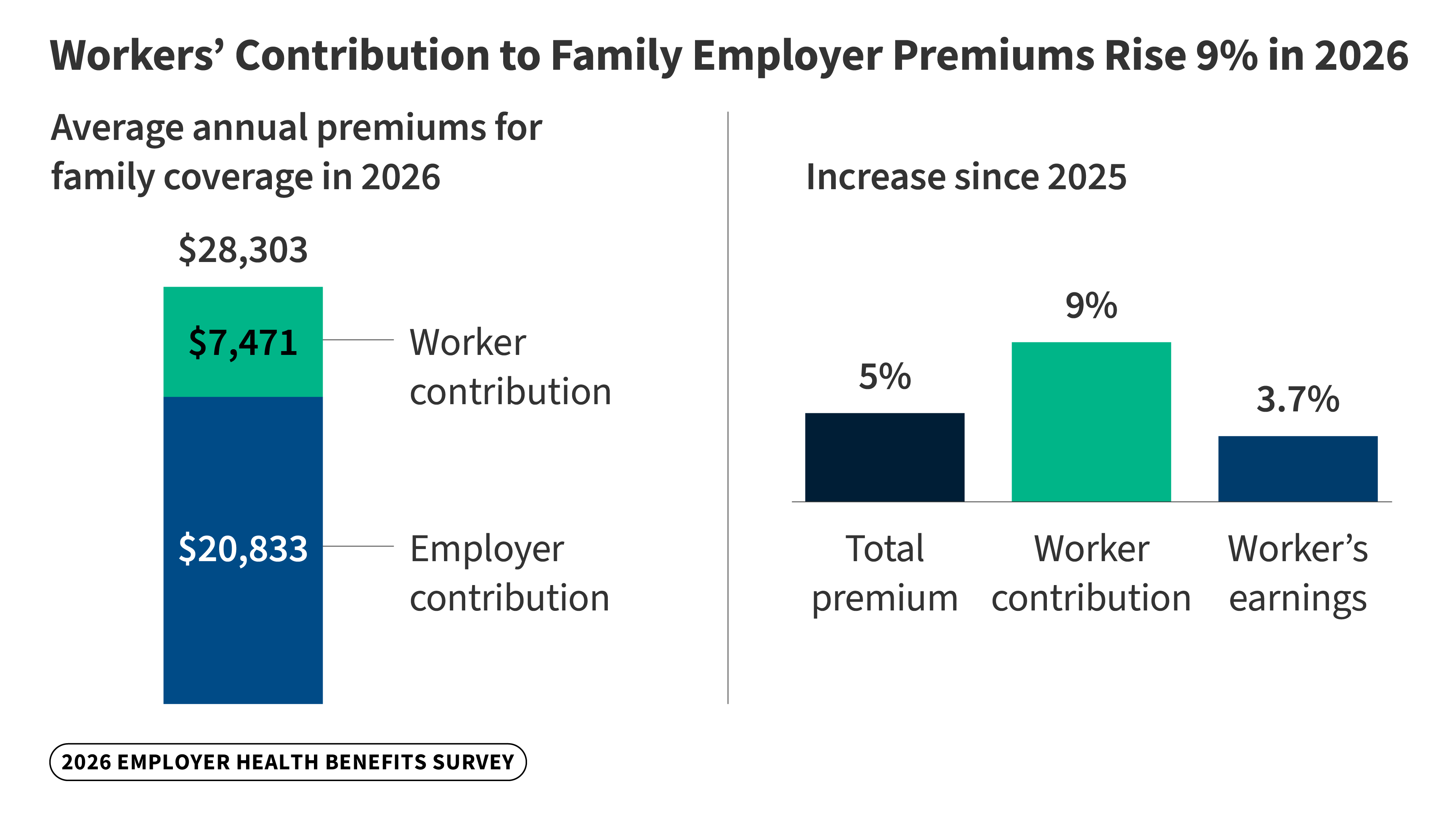
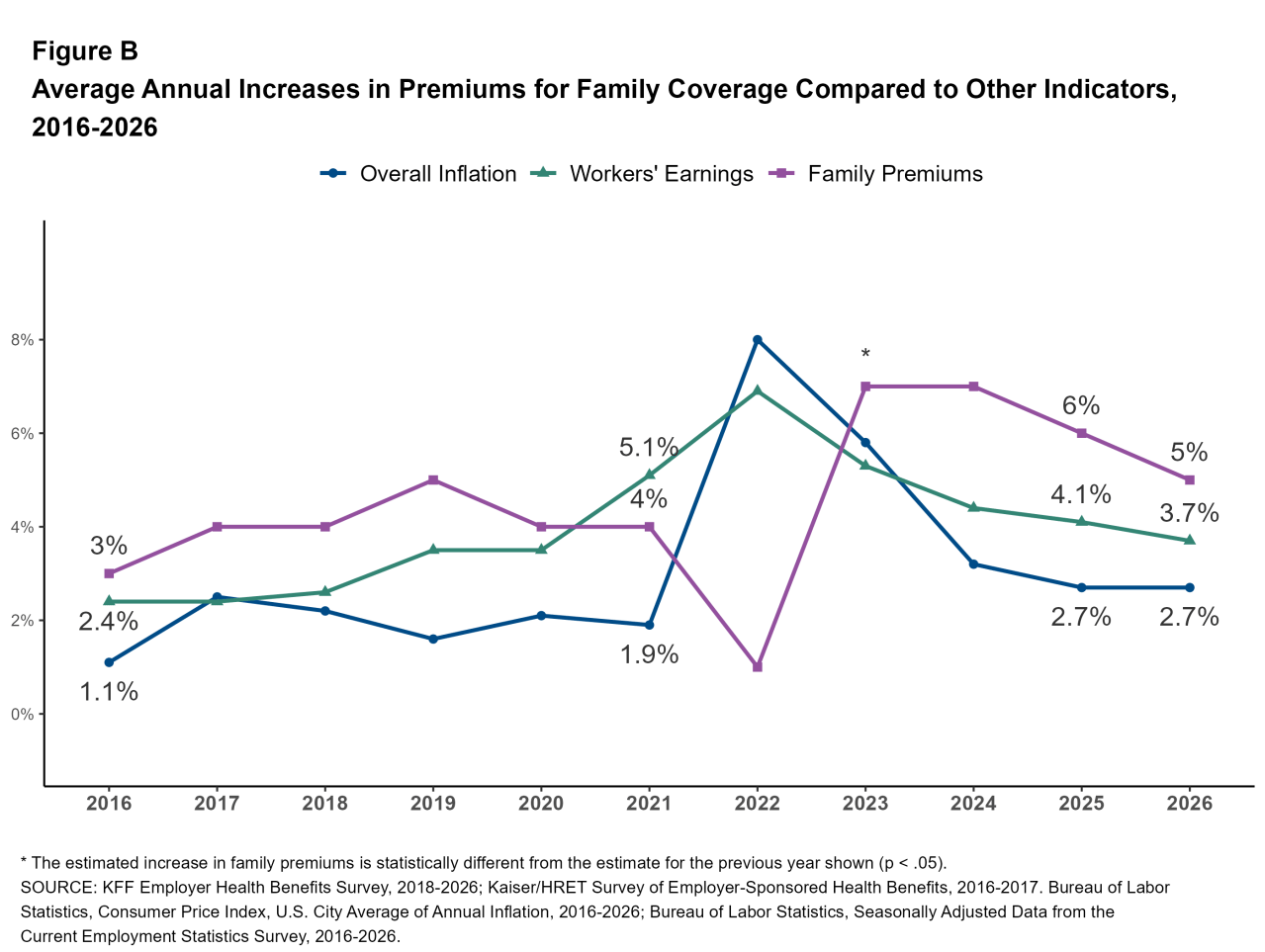
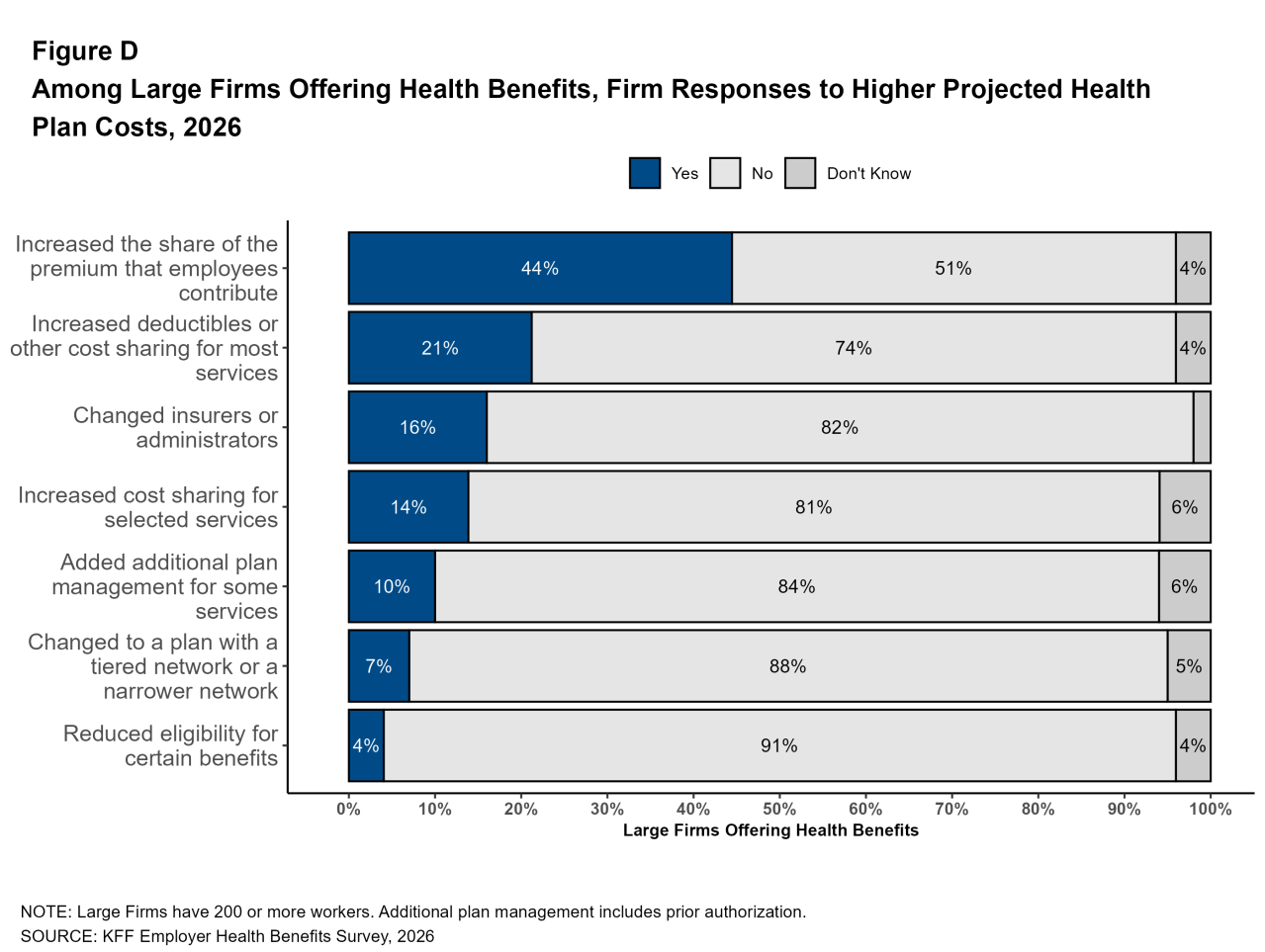
Benefits costs are climbing more broadly. KFF's 2026 Employer Health Benefits Survey, based on 1,937 interviews with non-federal public and private firms, put average annual premiums for family coverage at $28,303 this year, 5% higher than in 2025, with covered workers contributing $7,471 on average toward family coverage [2]. KFF reported that the cost of health benefits was projected to increase substantially in 2026 and that early projections for 2027 point to further growth; 44% of large firms said they raised the share of the premium workers pay in response to projected increases [2].
Why it matters for patients
For people taking semaglutide (sold as Ozempic, Wegovy and Rybelsus) or tirzepatide (Mounjaro and Zepbound), the survey points to a coverage market that is shifting rather than collapsing. Nearly half of large employers in the survey do not cover these drugs for weight loss, and a growing share of those that do are weighing an exit, so what a plan covers for 2027 may differ from what it covered in 2026 [1].
The alternatives employers describe have different costs and rules. Direct-to-consumer prices listed for self-pay patients start at $149 a month for the lowest dose of Wegovy as a pill and $199 a month as a shot, and at $299 a month for Zepbound in a single-dose vial or multi-dose KwikPen, with the manufacturer noting that current promotional pricing may be modified or canceled in 2027 [1]. Flexible spending account and health savings account money can be used for GLP-1 drugs when a licensed provider prescribes them to treat a diagnosed medical condition such as obesity; the 2026 FSA employee contribution limit is $3,400, and 2026 HSA limits are $4,400 for individual coverage and $8,750 for family coverage [1].
Which specific employers will drop coverage, and which drugs or doses would be affected, has not been disclosed.
What happens next
Open enrollment for 2027 is under way now [1]. HSA contribution limits rise in 2027 to $4,500 for individuals and $9,000 for families; official 2027 IRS limits for FSAs have not yet been announced [1].
Images from the sources
Sources
Semaglutides.org provides information only, not medical advice. Talk to a licensed provider about your own care before making changes. Some telehealth links are affiliate links and are labeled where they appear.