Federal court denies injunction sought by compounders over semaglutide
A Texas federal judge refused on April 24, 2025 to block the FDA's end to compounded semaglutide, keeping a May 22, 2025 cutoff for large outsourcing facilities in place [1][2].
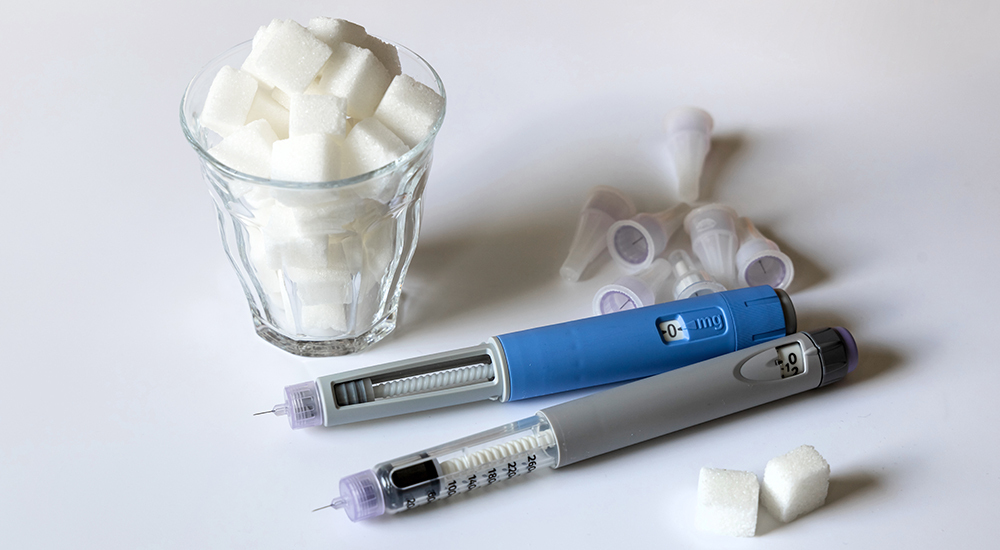
A federal district court in Texas denied a preliminary injunction sought by the Outsourcing Facilities Association on April 24, 2025, clearing the way for the FDA's wind-down of compounded semaglutide to proceed on schedule [1]. The FDA posted the news in an April 28, 2025 update to its compounding policy page, confirming that its previously announced deadlines would stand [1].
The case, Outsourcing Facilities Association v. FDA, 4:25-cv-00174 (N.D. Tex.), challenged the agency's February 21, 2025 determination that the shortage of semaglutide injection products — the active ingredient in Ozempic, Wegovy and Rybelsus — was resolved [1][2]. The FDA said it confirmed with the manufacturer that stated availability and manufacturing capacity could meet present and projected national demand, while warning that patients and prescribers might still see "intermittent and limited localized supply disruptions" as products move through the supply chain [1].
What the ruling changed
The shortage listing is what allowed widespread compounding in the first place. Once it ended, the FDA set two grace periods. State-licensed pharmacies and physicians compounding under section 503A of the Federal Food, Drug, and Cosmetic Act had until April 22, 2025, or the date of the court's decision on the injunction, whichever was later [1]. Outsourcing facilities regulated under section 503B were given until May 22, 2025, on the same "whichever is later" terms [1].
Because the court ruled on April 24, 2025, the 503A period ended at that point, and the 503B window closed on May 22, 2025 [1]. In practice, that meant smaller compounding pharmacies had to stop making copies of semaglutide immediately, while larger outsourcing facilities had until May 22 to stop producing and dispensing it [2]. The FDA added that it may still act on other violations, such as findings that a product is of substandard quality or otherwise unsafe [1].
The semaglutide decision followed the same path as tirzepatide, the active ingredient in Mounjaro and Zepbound. A judge denied an injunction in the parallel tirzepatide case on March 5, 2025, and larger facilities had until March 19, 2025 to stop [1][2]. The sources describe the tirzepatide shortage timeline differently: the FDA's page says it issued a new decision determining the shortage resolved on December 19, 2024, after an earlier October 2, 2024 determination was remanded, while the med spa trade group's account says the shortage was listed as resolved in August 2024 [1][2].
Why it matters for patients
Compounded semaglutide was often the lower-cost route for people paying cash, and these rulings removed the legal basis most sellers relied on. Cost alone does not qualify a patient for continued compounding. Under the limited medical necessity exception, a prescriber must determine and document that a patient needs a personalized formulation for a specific medical reason that an FDA-approved product cannot meet — for example, an allergy to an ingredient in the approved version [2]. The exception must be patient-specific and does not apply broadly to a general population, and drug cost is not a sufficient reason under FDA guidance [2].
Adding another ingredient does not create a workaround either. The FDA has said it may treat a compounded product combining semaglutide with something like vitamin B12 as essentially a copy of a commercially available drug when the route of administration is the same and the amounts of each ingredient fall within 10% of the approved strengths [1]. The agency has also said it does not currently intend to act against a compounder that fills four or fewer prescriptions of such a product in a calendar month [1].
For outsourcing facilities, the rules are stricter still: they generally cannot compound from bulk drug substances unless the substance is on the 503B bulks list or the drug is on the FDA shortage list at the time of compounding, distribution and dispensing [1]. As of the FDA's April 1, 2026 update, neither semaglutide nor tirzepatide appears on either list [1].
What happens next
The sources do not say how the underlying lawsuit was ultimately resolved, whether the trade group appealed, or how much compounded supply remained in circulation after the deadlines. Those details are not yet known from this material. What is documented is the sequence: February 21, 2025 shortage-resolved determination; April 22, 2025 and May 22, 2025 deadlines; the April 24, 2025 injunction denial; and the FDA's April 1, 2026 reminder that semaglutide and tirzepatide remain off both the shortage list and the 503B bulks list [1].
Sources
Semaglutides.org is for information only and is not medical advice. Always talk to a licensed healthcare provider about your own care. Some links to telehealth services are affiliate links, labeled where they appear.