FDA sends Hims & Hers a warning letter over compounded semaglutide claims
FDA told Hims & Hers its marketing of compounded semaglutide was false or misleading because it implied the product is the same as FDA-approved Ozempic and Wegovy [1].
The U.S. Food and Drug Administration sent a warning letter dated September 9, 2025 to Hims & Hers Health, Inc., doing business as Hers, saying the company's website marketing of compounded semaglutide made false or misleading claims that rendered the products misbranded [1]. The letter was addressed to CEO Andrew Dudum and signed by George Tidmarsh, M.D., Ph.D., then director of FDA's Center for Drug Evaluation and Research [1].
What the FDA objected to
FDA said it reviewed the content at forhers.com in August 2025 and found the site offering various compounded drug products, including semaglutide [1]. The agency singled out two specific website claims: "Weekly injectable GLP-1 with the same active ingredient as Ozempic and Wegovy" and "Clinically proven ingredients" [1].
The agency's reasoning was short and blunt: "Compounded drug products are not FDA-approved. Your claims imply that your products are the same as an FDA-approved product when they are not" [1]. Under section 502(a) of the Federal Food, Drug, and Cosmetic Act, a drug is misbranded if its labeling is false or misleading in any particular, and under section 502(bb), a compounded drug is misbranded if its advertising or promotion is false or misleading in any particular [1]. Shipping misbranded drugs across state lines is a prohibited act under section 301(a) [1].
FDA also noted in a footnote that the semaglutide products on the site are "new drugs" under the law because they are not generally recognized as safe and effective for their labeled uses [1]. A second footnote warned that "overstatements of efficacy or minimization of risk are of particular concern and may constitute misbranding" [1].
The letter gave the company 15 working days to respond in writing to FDA's Office of Compounding Quality and Compliance, describing the steps taken to fix the violations and prevent recurrence [1]. FDA said the two claims it listed "do not represent an exhaustive list of misbranding violations" and that failure to adequately address them "may result in legal action without further notice, including, without limitation, seizure and injunction" [1]. The agency specifically suggested "ceasing and desisting from using the language cited above" [1].
Why it matters for patients
Compounded semaglutide is not the same product as Ozempic or Wegovy in the eyes of the regulator, even when the active ingredient carries the same name. FDA-approved drugs go through an approval process that reviews manufacturing, safety and effectiveness data; compounded versions do not [1]. That is the core of FDA's complaint here — marketing language that blurs that line [1].
The phrase "clinically proven ingredients" is a good example. Clinical trials were run on the approved products, not on a compounded copy sold by a telehealth platform, and FDA treated the implied transfer of that evidence as misleading [1].
A warning letter is not a recall, a ban, or a finding that anyone was harmed. Nothing in the letter describes injuries or contaminated product [1]. It is an enforcement notice about marketing claims. Whether the specific website language changed, and what Hims & Hers said in its response, is not stated in the sources available here.
What happens next
The 15-working-day clock from the September 9, 2025 letter applied to the company's written reply to FDA [1].
The September 2025 letters were not the end of it. A law firm analysis notes that FDA issued warning letters to companies compounding semaglutide and tirzepatide in September 2025 for misleading claims, then on March 3, 2026 announced 30 more warning letters to telehealth companies marketing compounded GLP-1 products [2]. In that second wave, FDA objected both to claims presenting compounded GLP-1s as effectively the same as the approved drug and to private-label presentation that could obscure which entity actually compounded the product [2]. FDA Commissioner Marty Makary said the agency is "paying close attention to misleading claims being made by telehealth and pharma companies across all media platforms—and taking swift action" [2].
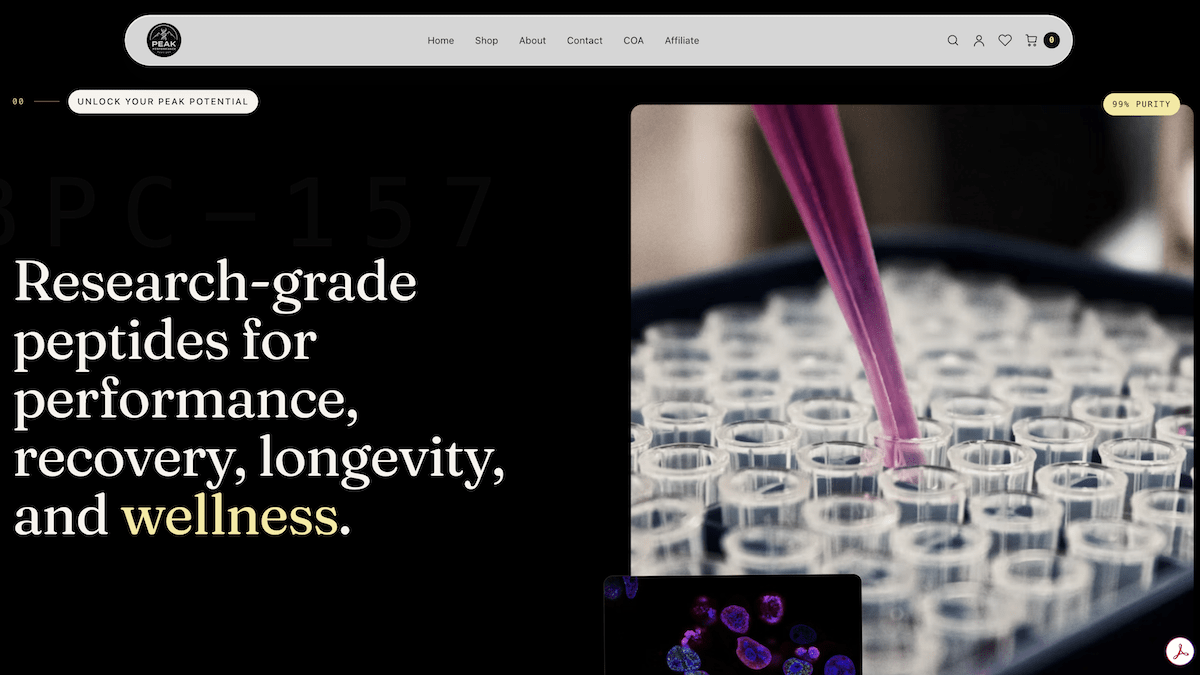
Separately, on August 24, 2026, FDA sent warning letters to five online peptide vendors — Peak Performance Peptides, Royal Peptides LLC, NuScience Peptides LLC, Peptide Partners LLC, and TXP Innovations LLC (Tex Peptides) — over sites offering combinations of semaglutide, tirzepatide and retatrutide labeled "for research purposes only," language the agency rejected [3]. Those companies also got 15 days to respond [3].
Sources
- https://www.fda.gov/inspections-compliance-enforcement-and-criminal-investigations/warning-letters/hims-hers-health-inc-dba-hers-716825-09092025
- https://www.venable.com/insights/publications/2026/03/fdas-latest-glp-1-crackdown-what-compounders
- https://pharmaphorum.com/news/fda-issues-warning-letters-five-unapproved-glp-1-websites
Semaglutides.org is for information only and is not medical advice. Always talk to a licensed healthcare provider about your own care. Some links to telehealth services are affiliate links, labeled where they appear.