Truveta data shows CVS formulary change shifted July GLP-1 prescribing toward Wegovy
The shift means patients whose plans follow CVS Caremark's preferred list may face a choice between switching obesity drugs or paying more, though Truveta says the link is not proven.
Truveta, a health data company, reported on Sept. 5, 2025 that prescribing of obesity medications shifted toward semaglutide (Wegovy) and away from tirzepatide (Zepbound) in July 2025, the month a CVS Caremark formulary change took effect [1].
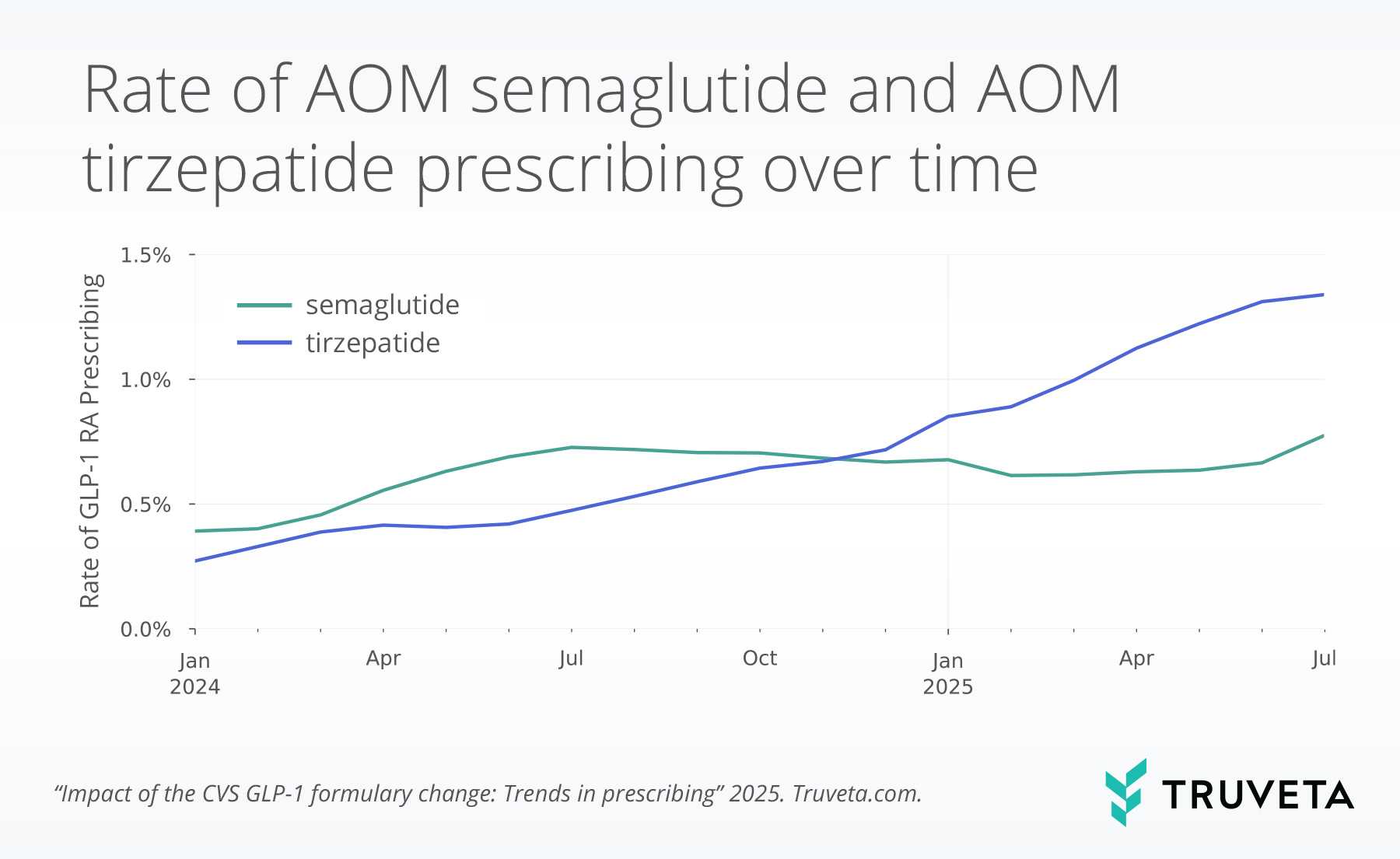
The analysis covered 1,647,238 adults who were prescribed a GLP-1 medication between Jan. 1, 2024 and July 31, 2025, a period with 6,059,445 total prescriptions [1]. Obesity-indication tirzepatide had been adding an average of 0.06 percentage points per month to its share of all prescriptions from January 2024 through June 2025. From June to July 2025 it grew 0.03 points, half its earlier pace [1]. Obesity-indication semaglutide grew 0.1 points over that same month, compared with an average monthly increase of 0.02 points in the prior period, its largest one-month gain in the study window [1].
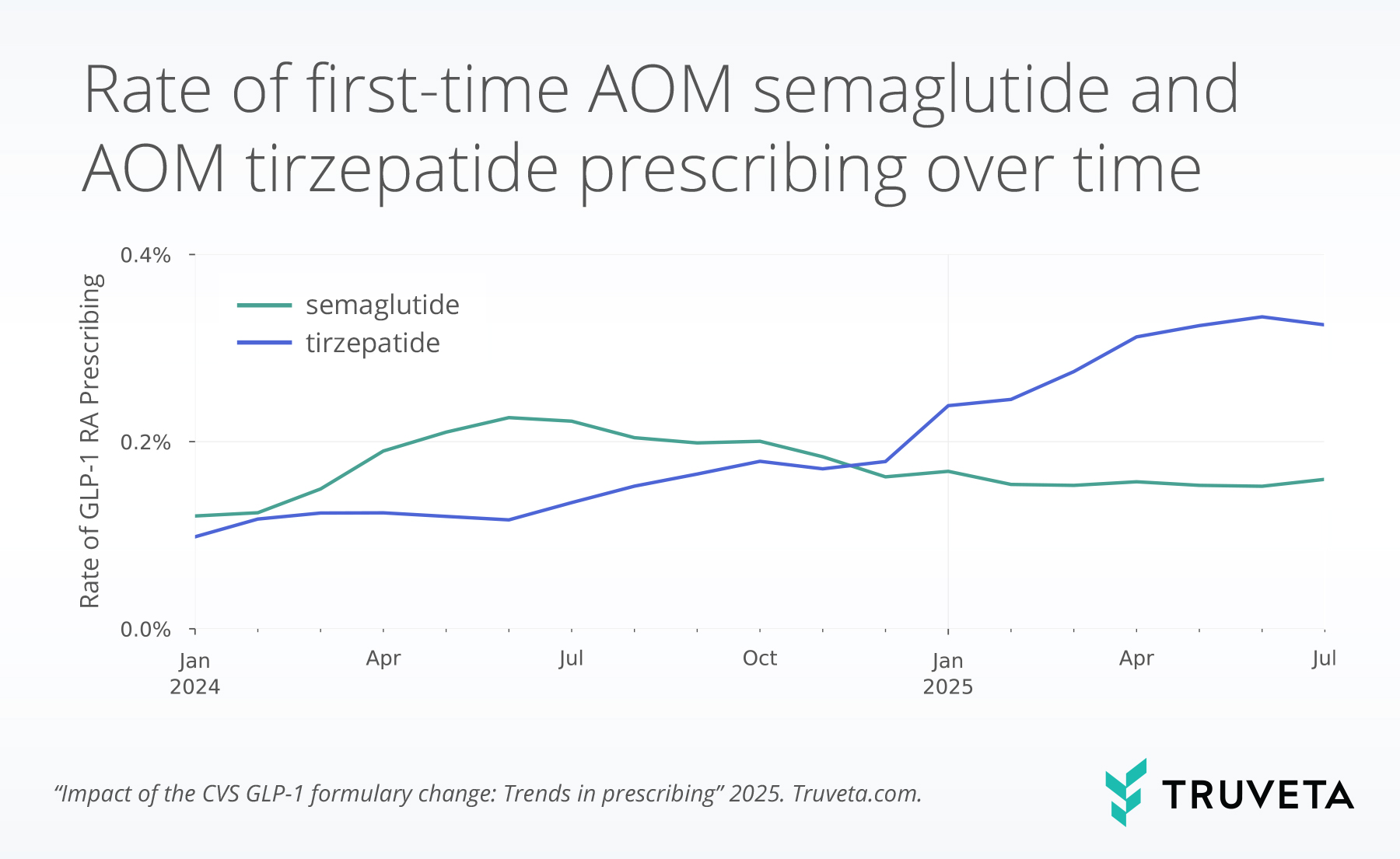
New starts followed a similar pattern. First-time obesity-indication tirzepatide prescribing rose about 239 percent cumulatively from January 2024 to June 2025, then dipped slightly from June to July, the first monthly decline in nearly a year [1]. First-time obesity-indication semaglutide prescribing had been falling and was down about 31 percent by June 2025, then rose 4.9 percent from June to July, the largest one-month increase in more than a year [1]. Truveta said this was the first time in over a year that semaglutide starts rose while tirzepatide starts fell [1].
CVS Caremark announced on May 1, 2025 that Zepbound would be removed from its standard preferred formulary as of July 1, 2025, with Wegovy named the preferred therapy for obesity management [1]. The change applies only to the obesity indication; tirzepatide remains available as Mounjaro for type 2 diabetes [1]. CVS Caremark manages prescription benefits for more than 25 million to 30 million Americans, and patients on obesity-indication tirzepatide may need to switch to semaglutide to keep coverage, while those who stay on tirzepatide may face higher out-of-pocket costs or coverage denials [1].
Overall prescribing rates for both drugs still rose from June to July, but the increase was more pronounced for semaglutide [1]. By May 2025, obesity-indication tirzepatide accounted for 1.2 percent of all prescriptions, nearly double semaglutide's rate, after starting at 0.3 percent in January 2024 and passing semaglutide in late 2024 [1].
Truveta cautioned that the analysis did not evaluate cause and effect and did not include patients' insurance type, so it cannot confirm the formulary change caused the shift. Supply dynamics, regional payer policies and provider preferences may also have contributed [1]. A prescription also does not equal a dispensed drug or a started treatment; some prescriptions may go unfilled because of coverage, cost sharing or pharmacy barriers [1]. The findings are preliminary, have not been peer reviewed, and reflect data accessed Aug. 25, 2025 [1].
Why it matters for patients
Coverage rules can change which drug a prescriber writes first, and this analysis suggests the CVS Caremark change may have done that within a single month [1]. For a patient whose plan follows that preferred list for obesity, the practical options described in the report are switching to semaglutide or staying on tirzepatide with potentially higher out-of-pocket costs or a coverage denial [1]. The type 2 diabetes indication is not part of the change, so tirzepatide coverage as Mounjaro is not affected by this decision [1].
Truveta noted that prescribing patterns can be an early signal of how doctors and patients respond to cost changes, even before those changes show up at the pharmacy counter [1]. What has not been reported is how long the shift lasts, whether the new prescriptions were filled, or how many patients who were already taking tirzepatidide switched. Truveta said it released a companion report using dispensing data to examine switching patterns during the same period, offering a separate view of how patients moved between GLP-1 medications [1].
What happens next
Truveta said it publishes a quarterly report on first-time and overall GLP-1 prescribing [1]. No date for the next report was disclosed. The current analysis stops at July 31, 2025, and the company said the data may not capture whether these trends persist over a longer period after the formulary change [1]. Truveta also said the findings are consistent with data accessed Aug. 25, 2025, and that the data are constantly updating [1].
Images from the sources
Sources
Semaglutides.org provides information only, not medical advice. Talk to a licensed provider about your own care before making changes. Some telehealth links are affiliate links and are labeled where they appear.