Trump floats a $150 price for GLP-1 drugs and both stocks fall
President Trump said he wants brand-name GLP-1 drugs priced near $150 a month, but his own Medicare chief said no deal has been reached with Novo Nordisk or Eli Lilly.
President Donald Trump said his administration aims to bring the price of brand-name GLP-1 weight-loss drugs down to about $150 a month, a fraction of current U.S. list prices [1]. Shares of Eli Lilly and Novo Nordisk fell on Friday, Oct. 17, after the remarks, and the administration's own Medicare chief said no such prices have actually been negotiated [1][2].
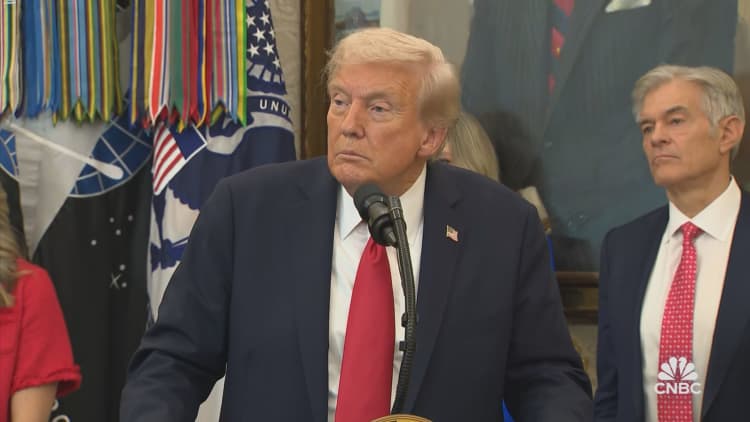
Trump made the comments Thursday afternoon at a White House event about in vitro fertilization. "In London, you'd buy a certain drug for $130 and even less than that ... $88 as of... a month ago. And in New York, you pay $1,300 for the same thing," he said. "Instead of $1,300 you'll be paying about $150 and they'll be paying $150 so we're going to pay the same thing" [1]. Asked by a reporter which drug he meant, Trump replied, "I was referring to Ozempic or ... the fat loss drug" [1]. Ozempic is semaglutide, approved for type 2 diabetes and often used off-label for weight loss; Wegovy is the same molecule approved for obesity [2].
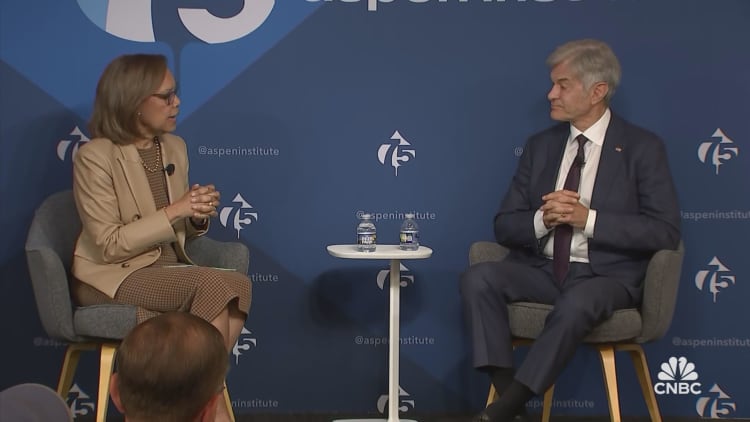
Centers for Medicare and Medicaid Services Administrator Dr. Mehmet Oz, who was at the event, immediately pumped the brakes. "We have not negotiated those yet ... We're going to be rolling these out over time, the GLP category of drugs, which includes Ozempic have not been negotiated yet," Oz said [1]. A week earlier, Oz had said the administration was "in the middle of a lot of action" in price talks with weight-loss drugmakers [1].
What the numbers look like today
Ozempic carries a list price of roughly $1,000 for a month's supply but is sold by Novo directly to cash-paying customers for $499 a month [2]. Both Lilly and Novo sell discounted versions of their diabetes and weight-loss drugs through their own direct-to-consumer sites at roughly $500 a month [1]. Telehealth companies selling compounded GLP-1s charge between about $130 and $200 a month [1]. A $150 brand-name cash price would undercut even those compounded options — which is why shares of Hims & Hers Health, a large seller of compounded GLP-1s, plunged more than 15% [1].
The stock reaction elsewhere was smaller, and the two sources differ on exact figures, likely because they measured at different points and on different exchanges. CNBC reported Eli Lilly closed 2% lower and Novo Nordisk fell 3% in U.S. trading [1]. Reuters, reporting from Copenhagen during the session, said Novo fell to a near three-week low of 342.30 Danish crowns and was last down 6.3%, with Lilly down more than 3%, Zealand Pharma down nearly 7% and Viking Therapeutics down about 2% [2].
The backdrop is Trump's "most favored nation" executive order, under which the government wants drugmakers to charge U.S. patients no more than patients in other wealthy countries [2]. Lilly and Novo were among 17 large U.S. pharmaceutical companies that received letters from the administration demanding they align U.S. prices with those abroad [1]. Pfizer and AstraZeneca have already signed pricing deals with the White House [1]. Both Novo and Lilly said they are in discussions with the administration; Lilly said it had no specific details to share [2].
Analysts were cautious. Bernstein's Courtney Breen called Trump's comment a "negotiating lever" and said it would set a precedent for upcoming oral obesity drug launches, leaving little room for price differences. "We do remind investors, that we are watching a private negotiation play out in public here, and the $150 price is not yet set-in stone," Breen said [2]. UBS analysts said they had already built potential U.S. price cuts into their forecasts [2].
Why it matters for patients
Cost is the main barrier for most people who want these drugs. Only about one in five large employers currently cover GLP-1s for weight loss, according to a Kaiser Family Foundation survey, and two-thirds of those that do say the drugs have had a "significant" impact on their prescription drug spending [1]. Workers without coverage have increasingly bought the drugs with cash [1].
If a $150 cash price were to take effect for drugs like Zepbound (tirzepatide) and Wegovy (semaglutide), it would reshape the cash market and compete directly with compounded versions [1]. But nothing has been agreed to. Oz's comments make clear the GLP-1 class had not been negotiated as of Oct. 16 [1][2].
What happens next
The sources do not give a date, a covered patient population, or a mechanism for how any $150 price would be delivered — through Medicare, a direct-to-consumer channel, or something else. Whether the figure becomes a real price, and when, is not yet known from these reports [1][2].
Images from the sources
Sources
Semaglutides.org is for information only and is not medical advice. Always talk to a licensed healthcare provider about your own care. Some links to telehealth services are affiliate links, labeled where they appear.