KFF: 13 state Medicaid programs cover GLP-1s for obesity
KFF says just 13 state Medicaid programs cover GLP-1s for obesity as of January 2026, down from 16 in October, while Medicaid GLP-1 prescriptions have climbed past 8 million a year.
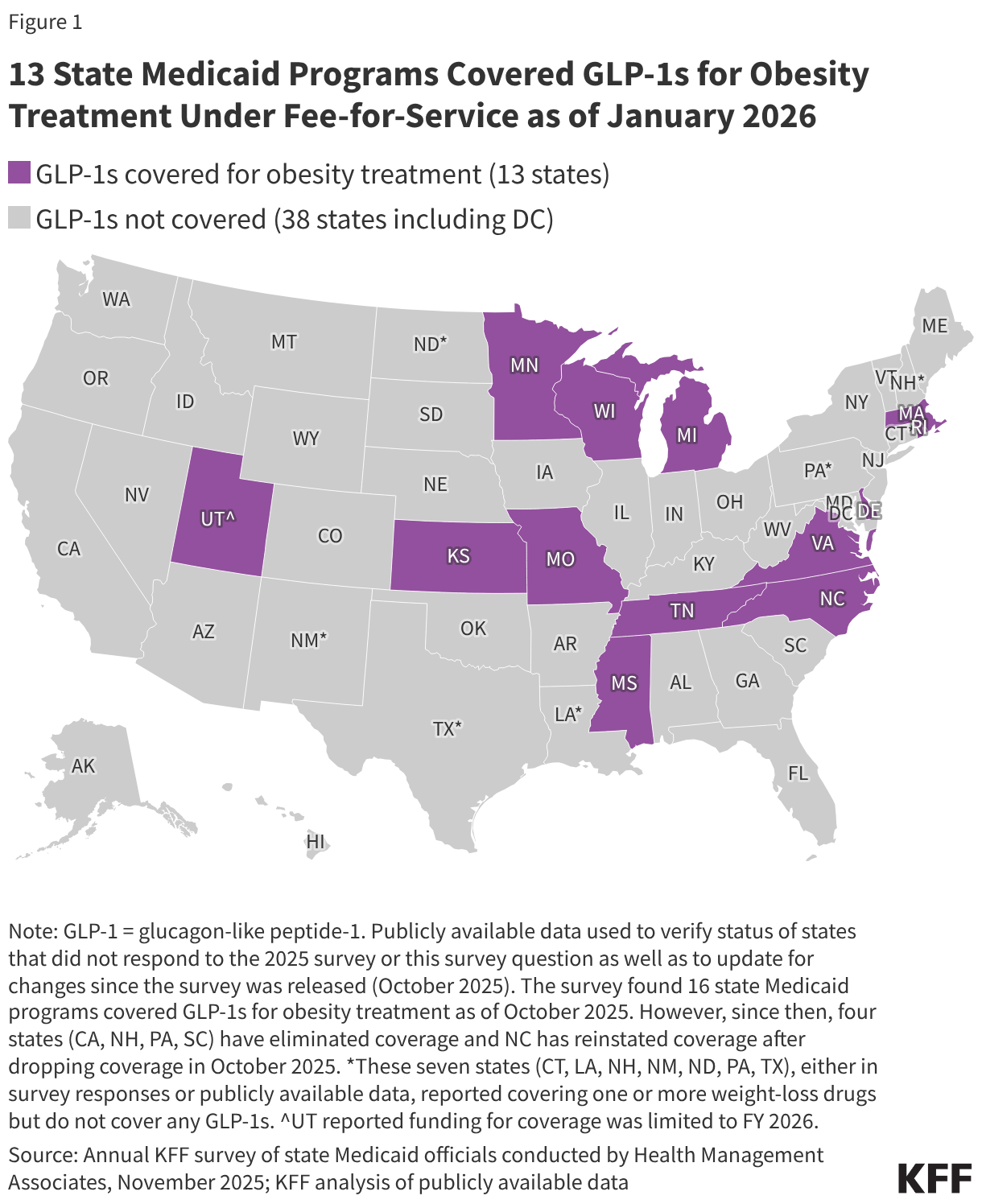
A new KFF analysis published January 16, 2026 finds that only 13 state Medicaid programs cover GLP-1 drugs for obesity treatment under fee-for-service as of January 2026, even as Medicaid prescriptions and spending on these drugs have grown sharply since 2019 [1].
The 13 states are Delaware, Kansas, Massachusetts, Michigan, Minnesota, Missouri, Mississippi, North Carolina, Rhode Island, Tennessee, Utah, Virginia and Wisconsin [1]. KFF counts 38 states, including the District of Columbia, as not covering GLP-1s for obesity [1]. Utah reported that its funding for coverage was limited to fiscal year 2026 [1].
The count is moving in the opposite direction from utilization. KFF's 2025 Medicaid budget survey found 16 programs covered GLP-1s for obesity as of October 2025. Since then, California, New Hampshire, Pennsylvania and South Carolina have eliminated coverage, which KFF says likely reflects state budget pressure and the high cost of the drugs [1]. North Carolina dropped coverage starting in October 2025 during a legislative budget stalemate, then reinstated it in December 2025, bringing the total to 13 [1].
Seven states — Connecticut, Louisiana, New Hampshire, New Mexico, North Dakota, Pennsylvania and Texas — reported covering one or more weight-loss drugs but no GLP-1s [1].
The spending numbers behind the pullback
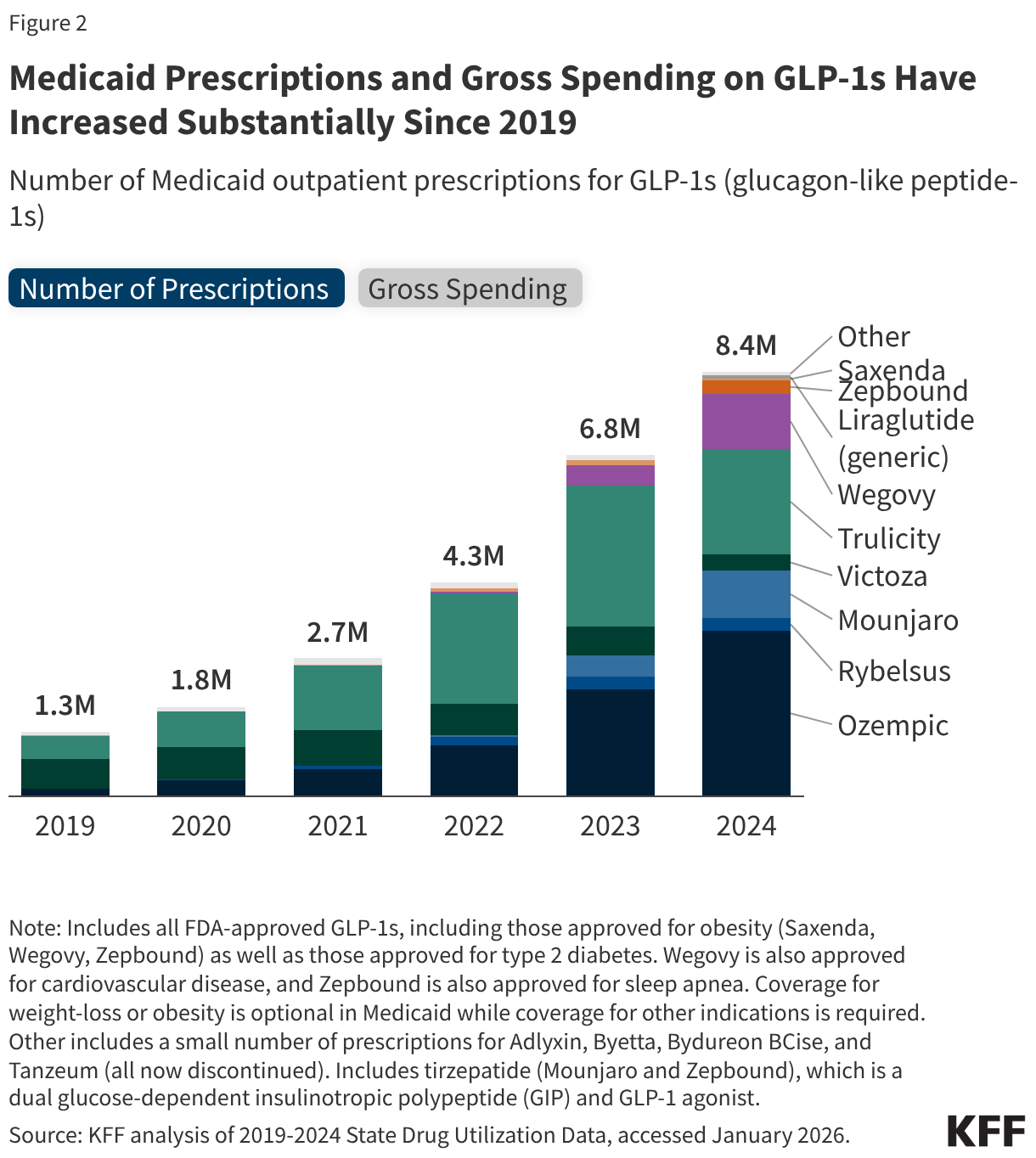
Medicaid GLP-1 prescriptions rose from about 1 million in 2019 to more than 8 million in 2024, while gross Medicaid spending on the drugs went from roughly $1 billion to almost $9 billion over the same period [1]. KFF attributes much of the recent growth to greater use of Ozempic and Wegovy (semaglutide) and Mounjaro and Zepbound (tirzepatide) [1]. Gross spending does not subtract the rebates Medicaid programs collect, so the net cost to states is lower than those figures suggest.
Coverage is optional because of a long-standing exception in federal law. State Medicaid programs generally must cover nearly all FDA-approved drugs from participating manufacturers, but weight-loss agents sit in a small group states are allowed to exclude [1]. Coverage is required for other approved uses: type 2 diabetes, cardiovascular risk reduction (Wegovy, approved for that use in March 2024), and moderate to severe obstructive sleep apnea in adults with obesity (Zepbound, approved in December 2024) [1]. Coverage is also required for children when deemed medically necessary under Medicaid's Early and Periodic Screening, Diagnostic and Treatment benefit [1].
KFF also notes that even in covering states, GLP-1s are typically subject to utilization controls such as prior authorization, which can further limit access [1].
Why it matters for patients
For someone on Medicaid, whether a GLP-1 is paid for often depends on the reason it is prescribed, not the drug itself. A prescription written for type 2 diabetes, heart risk in people with obesity, or sleep apnea falls under required coverage categories; the same molecule prescribed for obesity alone does not in 38 states and DC [1].
The state-level churn matters too. People in California, New Hampshire, Pennsylvania and South Carolina lost obesity coverage in recent months, and North Carolina enrollees saw coverage stop and then restart within about three months [1]. KFF says a few other states are planning or considering obesity drug restrictions in state fiscal year 2026 or 2027, and that state interest in expanding coverage is waning, with cost cited as the key factor [1].
KFF also notes the November 2025 federal deal with Eli Lilly and Novo Nordisk and the TrumpRx website will not change out-of-pocket costs for Medicaid enrollees, who already pay little or nothing for prescriptions, and that buying directly from manufacturers will likely remain unaffordable for people who must have a low income to qualify [1].
What happens next
CMS introduced the BALANCE model in December 2025, a five-year Innovation Center model meant to expand obesity drug access in Medicaid and Medicare by negotiating lower prices. Participation is voluntary for state Medicaid programs, Medicare Part D plans and manufacturers [1]. States and manufacturers were asked to submit their intentions to participate by January 8, 2026, and the model is expected to begin in May 2026 [1]. A separate short-term demonstration is set to let Medicare Part D enrollees access obesity drugs beginning in July 2026, with the Part D piece of BALANCE starting in January 2027 [1].
How many states join, and whether the negotiated prices beat what states already pay after rebates, is not yet known [1].
Images from the sources
Sources
Semaglutides.org is for information only and is not medical advice. Always talk to a licensed healthcare provider about your own care. Some links to telehealth services are affiliate links, labeled where they appear.