California, New Hampshire, Pennsylvania and South Carolina Medicaid programs end GLP-1 obesity coverage
Medicaid in California, New Hampshire, Pennsylvania and South Carolina stopped paying for GLP-1s prescribed for obesity on January 1, 2026, cutting the number of covering states to 13 [1][3].
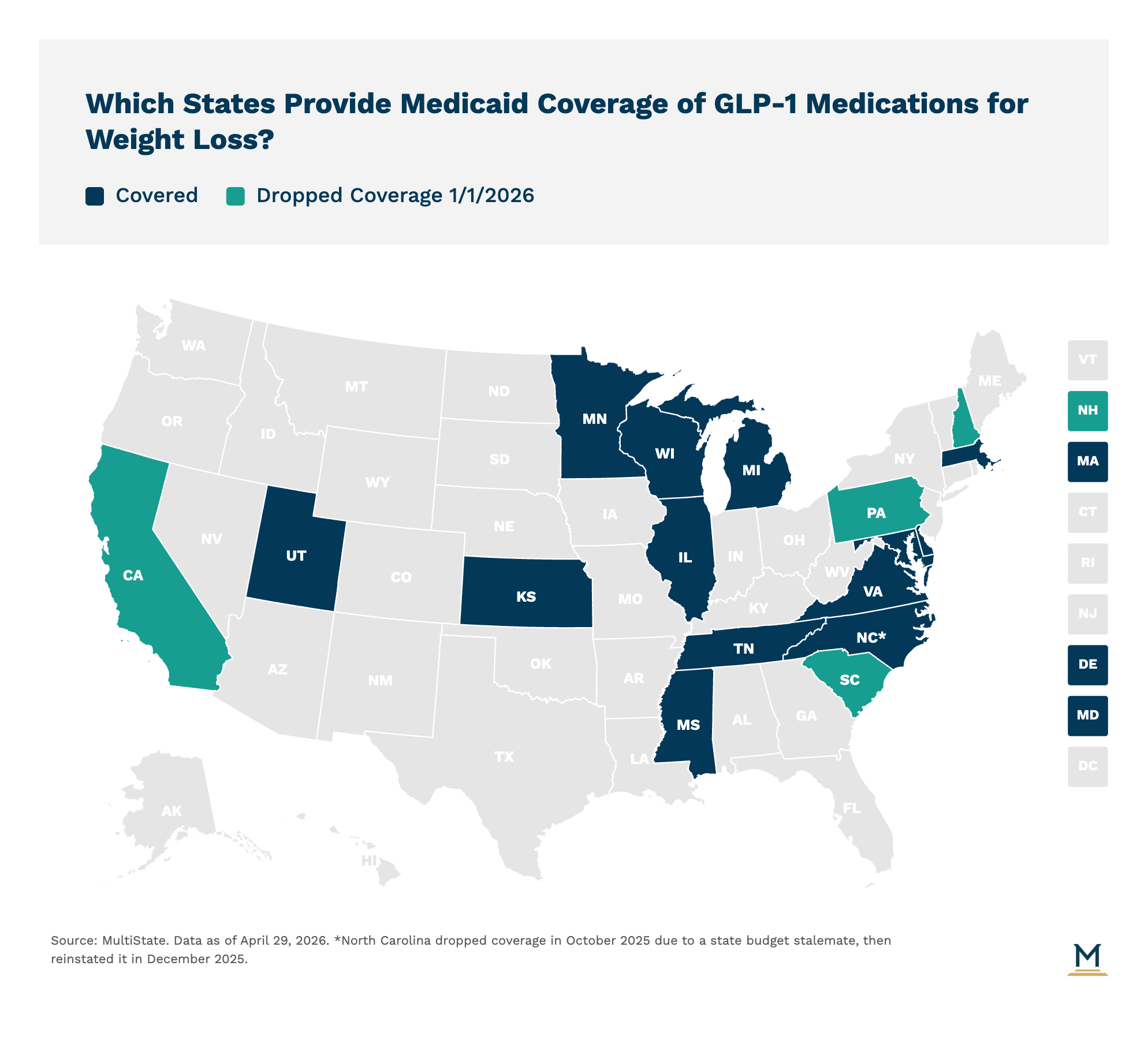
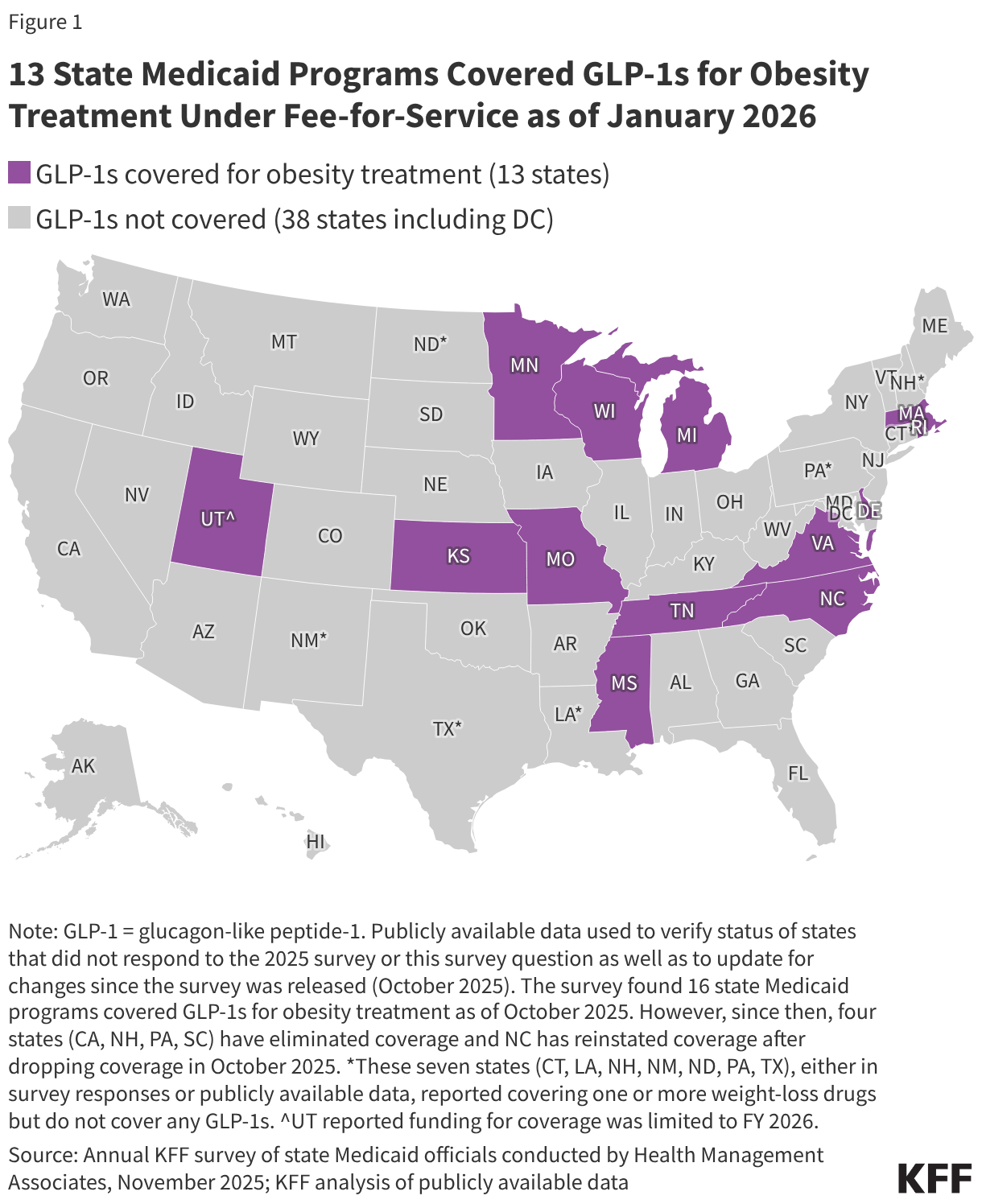
Four state Medicaid programs — California, New Hampshire, Pennsylvania and South Carolina — eliminated coverage of GLP-1 drugs for obesity treatment effective January 1, 2026, citing budget pressure and the high cost of the medications [1][3]. With those cuts, and with North Carolina restoring coverage in December 2025 after dropping it in October, 13 state Medicaid programs covered GLP-1s for obesity under fee-for-service as of January 2026, down from 16 in October 2025 [1].
The count comes from KFF, which tracks state Medicaid coverage of these drugs. Its 2025 Medicaid budget survey found 16 states covering GLP-1s for obesity as of October 2025 [1]. North Carolina had eliminated coverage starting October 2025 during a legislative budget stalemate, then reinstated it in December 2025 [1][4]. One tracker puts the pre-January total at 17 states rather than 16, so the exact starting number depends on whose count you use [3].
What changed is narrow but important: the four states cut coverage for obesity or weight management as the reason for the prescription. Under federal law, state Medicaid programs must cover nearly all FDA-approved drugs for medically accepted indications, but a long-standing exception lets states exclude drugs used for weight loss [1]. Coverage remains required for type 2 diabetes, for Wegovy's heart-risk indication approved in March 2024, and for Zepbound's obstructive sleep apnea indication approved in December 2024 [1]. Coverage is also required for people under 21 when medically necessary under Medicaid's EPSDT benefit; Pennsylvania explicitly kept that pathway open when it ended adult obesity coverage [4].
The money behind the decisions is large. Gross Medicaid spending on GLP-1 prescriptions — for diabetes and weight loss combined — rose from about $1 billion in 2019 to almost $9 billion in 2024 [2]. KFF attributes much of the recent growth to increased use of Ozempic and Wegovy (semaglutide) and Mounjaro and Zepbound (tirzepatide) [1]. At the same time, almost 40% of adults and a quarter of children with Medicaid have obesity [1][2]. States told KFF that cost is the key factor in their obesity drug coverage decisions, and interest in expanding coverage is waning [1].
Why it matters for patients
For a Medicaid enrollee in one of the four states whose only qualifying reason was obesity, the prescription that was covered in December 2025 was no longer a covered benefit in January 2026. Because Medicaid enrollees generally pay little or nothing in copays, there is no meaningful cash-price fallback: KFF notes that even the lower prices announced through the TrumpRx website will likely still be prohibitive for people who must have a low income to qualify for Medicaid [1].
The diagnosis on the prescription now matters more than the drug name. Semaglutide as Ozempic for diabetes, Wegovy for cardiovascular risk reduction, and tirzepatide as Zepbound for sleep apnea in adults with obesity remain covered nationwide, still subject to prior authorization and medical-necessity rules [1][4]. Weight loss alone is the optional category.
Even in covering states, approval is not automatic. Coverage typically comes with prior authorization, BMI thresholds and step therapy requiring documented failure of other approaches [1][3]. Michigan, which still covers the drugs, narrowed eligibility on January 1, 2026, to people with a BMI of 40 or higher who have failed other options and are seeking to avoid bariatric surgery — a change expected to save the state an estimated $240 million [2][4].
What happens next
CMS introduced the voluntary BALANCE model in December 2025, a five-year Innovation Center model intended to expand obesity drug access in Medicaid and Medicare through negotiated prices and standardized coverage criteria. States and manufacturers were asked to state their intentions by January 8, 2026, with the model expected to begin in May 2026 [1]. Medicare Part D implementation is set for January 2027, after a short-term demonstration allowing Part D enrollees access starting July 2026 [1].
The retreat continued after January. By April 2026, Massachusetts and Rhode Island governors had proposed ending Medicaid GLP-1 coverage for weight loss, while Louisiana lawmakers debated adding coverage for enrollees with a comorbidity such as prediabetes, hypertension or cardiovascular disease [2]. One independent tracker reported that Utah's pilot ended June 30, 2026, Massachusetts ended coverage July 1, 2026, and Rhode Island's enacted FY2027 budget limits coverage to type 2 diabetes starting October 1, 2026, leaving 11 verified covering states as of July 10, 2026 [4]. Which states will join BALANCE, and whether that reverses any cuts, is not yet known [1].
Images from the sources

Sources
- https://www.kff.org/medicaid/medicaid-coverage-of-and-spending-on-glp-1s
- https://stateline.org/2026/04/30/more-states-consider-dropping-glp-1-weight-loss-drugs-from-medicaid
- https://www.statevitals.us/blog/state-medicaid-glp1-coverage-weight-loss-2026
- https://therxindex.com/research/glp1-medicaid-coverage-by-state/
- https://www.kff.org/medicaid/medicaid-coverage-of-and-spending-on-glp-1s/
Semaglutides.org is for information only and is not medical advice. Always talk to a licensed healthcare provider about your own care. Some links to telehealth services are affiliate links, labeled where they appear.