2026 framed as the year of the obesity pill
Oral versions of Wegovy are now for sale and Eli Lilly's orforglipron pill is nearing FDA approval, a shift industry watchers say could widen the market by drawing in people who avoid needles or want a lower cash price.
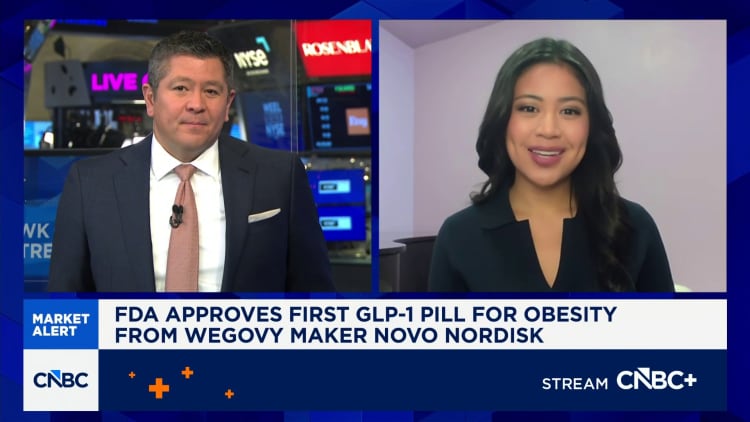
Novo Nordisk's Wegovy pill is now on pharmacy shelves in the United States, and a rival oral drug from Eli Lilly, orforglipron, is expected to win U.S. approval within months [1]. Coverage of the launch framed 2026 as a turning point for the GLP-1 market, which was built on weekly injections but may now expand through daily pills [1].
The Wegovy pill's cash price ranges from $149 to $299 per month depending on dose, somewhat less than the newly lowered cash prices for injections [1]. Novo Nordisk cut nearly all doses of injectable Wegovy to $349 per month in November, and Eli Lilly priced the highest doses of single-dose Zepbound vials at $449 per month in December [1]. Both companies' pills are also available at $149 per month for the starting dose through the Trump administration's TrumpRx website, under deals struck with both drugmakers in November [1]. Patients with insurance coverage for the oral drug can pay as little as $25 per month, though pills are not expected to change insurance coverage broadly, since cash prices for direct purchase are likely far lower than what employers and pharmacy benefit managers would pay [1].
Clinical trial data so far suggest pills bring less weight loss than injections. Zepbound has shown average weight loss of more than 20% in late-stage studies, higher than results for both the Wegovy injection and pill and for orforglipron in separate trials [1]. About 7% or fewer patients on Zepbound or Wegovy injections stopped treatment due to side effects, a rate similar for the Wegovy pill, while about 10.3% of patients on the highest dose of orforglipron discontinued because of side effects [1]. Goldman Sachs analysts forecast in August that pills could capture roughly 24%, or about $22 billion, of the global weight-loss drug market by 2030 [1].
About 1 in 8 U.S. adults said they were taking a GLP-1 drug for weight loss, diabetes, or another chronic condition as of November, according to a KFF poll cited in the coverage [1]. Doctors interviewed said pills could attract people who have avoided treatment altogether, including those with needle fear or those who don't view their condition as severe enough for a weekly shot [1].
Why it matters for patients
For people already doing well on injections, cost appears to be the main reason to consider switching, according to Dr. Caroline Apovian of Brigham and Women's Hospital, who said she still prefers injectables when prices are similar because weight loss tends to be greater and side effects fewer [1]. Eli Lilly released data in December showing patients who started on Wegovy or Zepbound shots kept most of their weight loss after switching to its pill, but real-world data comparing pills and injections directly is not yet available [1].
The two pills also differ in how they're taken. Novo Nordisk's pill, a peptide medication, requires patients to drink no more than four ounces of water with it and wait 30 minutes before eating or drinking anything else [1]. Eli Lilly's orforglipron is a small-molecule drug that does not carry the same dietary restrictions, which one analyst said could make it more convenient for some patients once it reaches the market [1].
Not everyone is drawn to the pill format. One patient using compounded semaglutide told CNBC she has no plans to switch, saying she prefers the "set-it-and-forget-it" nature of a weekly shot [1]. Analysts expect patients needing to lose a larger share of body weight to largely stick with injections, while pills may mainly draw people who are overweight or mildly obese seeking more modest weight loss [1].
What happens next
Eli Lilly's orforglipron is expected to receive a U.S. approval decision within months of January 2026, according to the coverage [1]. Some employers that already cover obesity injections may add pill coverage this year, though others have dropped GLP-1 coverage in 2026 because of high costs, according to an employee benefits consultancy cited in the report [1].
Images from the sources
Sources
Semaglutides.org is for information only and is not medical advice. Always talk to a licensed healthcare provider about your own care. Some links to telehealth services are affiliate links, labeled where they appear.