Novo Nordisk to cut US list prices for Wegovy, Ozempic and Rybelsus to $675 a month in 2027
The lower list price targets insured patients whose cost-sharing is tied to list price, while cash-paying and flat-copay patients see no change.
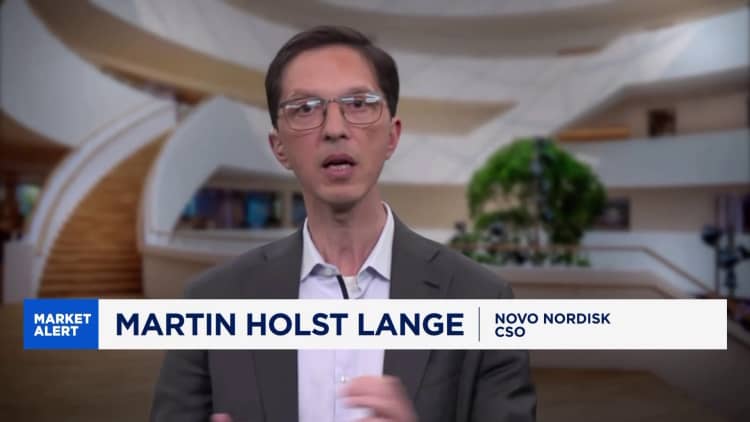
Novo Nordisk said on February 24, 2026 that it will cut the US list price of its semaglutide medicines — Wegovy, Ozempic and Rybelsus — to $675 a month, effective January 1, 2027 [1][3]. The company said the change amounts to a reduction of approximately 50% for Wegovy and 35% for Ozempic from current list prices [1].
The new price covers Wegovy injection 2.4 mg and Wegovy tablets 25 mg, Ozempic injection 0.5 mg, 1 mg and 2 mg, and Rybelsus tablets 7 mg and 14 mg [1]. List price, also called wholesale acquisition cost, is the price before the discounts and rebates that pharmacy benefit managers negotiate for insurers and employers [2][5]. CNBC reported that Wegovy's list price is currently around $1,350 a month, while the diabetes drugs list at around $1,027 [3].
Jamey Millar, Novo Nordisk's executive vice president of US operations, said in a statement that the lower list price "is intended to connect more people with our innovative medicines, specifically those whose out-of-pocket costs are linked to list price, such as individuals with high-deductible health plans or co-insurance benefit designs" [1]. He told CNBC that patients in high-deductible plans pay "more or less the full list price of a drug until they reach that" threshold, that some put off treatment because of the expense, and that other patients have 25% to 33% of their coinsurance tied to list prices [3].
Self-pay prices are not changing. Novo said the list price cut does not affect direct-to-patient prices through NovoCare Pharmacy [1]. Reuters reported that Novo sells Wegovy for about $349 on its own site, roughly one-third of its official list price [2][5], and CNBC reported that cash-paying patients can get the drugs for $149 to $499 a month depending on the product and dose [3].
Novo also said all doses of these medicines are fully available nationwide and that there is "no reason for patients to gamble with their health with knock-off products produced by compounders" [1]. Cheaper compounded versions are sold by telehealth platforms such as Hims & Hers, which Reuters said are allowed to make and sell the drugs in personalized doses or composition [2][5].
Analysts were cautious about how much the change will shift overall behavior. Citi's Geoffrey Meacham said the cut is likely to benefit only a relatively small share of new prescriptions compared with cash-pay channels, which hold "an overwhelming share" [2][5]. Bernstein's Courtney Breen said: "This isn't a silver bullet for Novo and in our view doesn't constitute the beginning of a price war, particularly with the White House deal providing a soft-floor for the next three years" [2][5]. US-listed Novo shares fell 2.6% that day, and Eli Lilly shares fell 1% [2][5].
Why it matters for patients
Whether this changes what a patient pays depends on how their coverage is built. People whose cost-sharing is a percentage of list price — coinsurance, or spending down a deductible — are the group Novo says it is targeting, and they could pay less at the pharmacy counter [1][3]. People who pay a flat copay, or who buy the drugs without insurance, are not affected by this change [1][2].
The benefits consulting firm Mercer wrote that Novo is expected to offset the lower list price by reducing rebates, so net costs after rebates may not change much for employers and insurers, though members who pay coinsurance may see lower costs and employers may pay a slightly larger share of the total [4]. Mercer also wrote that a smaller gap between list and net prices could give employers more flexibility to add or adjust coverage, because the rebate tradeoffs tied to managing the drugs become smaller [4]. The new list price is still higher than some direct-to-consumer offerings [4].
Cost already weighs heavily on decisions. About 7 in 10 people who have taken a GLP-1 medication said cost influenced their treatment decisions, and Navitus Health Solutions found 1 in 4 paid more than $250 per fill, according to a summary of coverage of the announcement [6]. Novo has not said how individual insurance plans will apply the change, and employers have not announced their 2027 coverage decisions, so the effect on any one patient's out-of-pocket cost has not been reported.
What happens next
The lower list price takes effect January 1, 2027, the same date that negotiated Medicare prices for Wegovy, Ozempic and Rybelsus — $274 a month — begin under the Inflation Reduction Act [3][4]. Mercer noted that pharmacies sometimes scale back inventory before a price change, which could cause temporary delays at the counter around that date [4]. Mercer also said a new oral weight loss product is expected to launch as soon as April 2026, and three additional injectable weight loss products could reach the market in 2027 [4].
Sources
- https://www.prnewswire.com/news-releases/novo-nordisk-announces-significant-reduction-in-us-list-price-for-wegovy-ozempic-and-rybelsus-semaglutide-medicines-building-on-continued-efforts-to-expand-access-302695705.html
- https://www.reuters.com/business/healthcare-pharmaceuticals/novo-nordisk-slash-us-list-prices-ozempic-wegovy-wsj-reports-2026-02-24/
- https://www.cnbc.com/2026/02/24/novo-nordisk-to-slash-wegovy-ozempic-us-list-prices-by-up-to-50percent.html
- https://www.mercer.com/en-us/insights/us-health-news/novo-nordisks-glp-1-list-price-cut-what-to-watch-next
- https://www.medscape.com/s/viewarticle/novo-nordisk-slash-us-list-prices-ozempic-and-wegovy-wsj-2026a10005sl
- https://ground.news/article/novo-nordisk-to-cut-us-list-prices-for-ozempic-wegovy-by-up-to-50
Semaglutides.org provides information only, not medical advice. Talk to a licensed provider about your own care before making changes. Some telehealth links are affiliate links and are labeled where they appear.